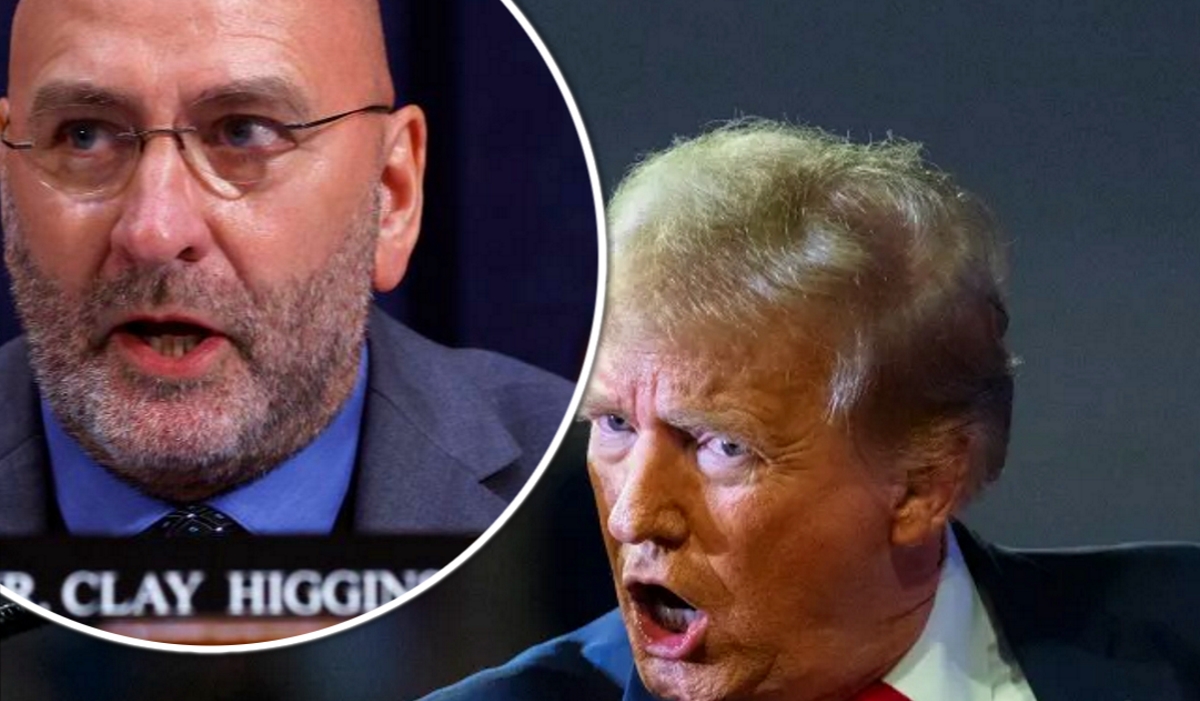
The House chamber was nearly silent when the final vote appeared on the board: 427 ayes, one lone no. The bill forcing the full release of Jeffrey Epstein’s long-sealed files had sailed through with historic bipartisan support — yet one man, Clay Higgins, stood completely alone. The moment the tally locked in, confusion turned to shock, and shock turned to fury that spread across the country. (a CBS report)
Higgins defended himself almost instantly. In a short, pointed message he claimed the bill would “reveal and injure thousands of innocent people,” warning of witnesses, relatives, and anyone whose name appeared even in passing. His justification — built on privacy, due process and procedural purity — echoed through media recaps like a Time analysis. But across survivor communities, his reasoning fell flat. For people who had waited decades for truth, one man’s sudden fear of exposure sounded like protection for the powerful.
The outrage hit social platforms immediately. Replies poured in from survivors, activists and ordinary citizens who felt they had been robbed of a long-promised moment of clarity. One user’s post captured the raw disbelief that shot across the country:
One man stops hundreds of votes for truth. Clay Higgins just told victims their suffering didn’t matter. We remember. We rage.— Angel Reed (@AngelsForTruth) Nov 19, 2025
Behind the scenes, journalists dug deeper. They found survivors who had been preparing themselves emotionally for this vote — people who had been ignored, silenced, doubted, or dismissed for years. The dissenting vote reopened wounds for communities who still live with trauma from Epstein’s crimes, a trauma documented in pieces like a Guardian breakdown. What was supposed to be a moment of reckoning suddenly felt fragile again.
The anger only built as details spread. The bill didn’t just force the release of scattered papers — it would unlock flight manifests, depositions, financial trails and name lists long buried behind sealed dockets. People pointed out that the files weren’t gossip — they were evidence. Evidence survivors had begged to see. Evidence that could rewrite decades of doubt. And for the U.S. government to finally act, only to be met with a solitary refusal, felt like betrayal. (an ABC update)
Even younger followers, who had grown up only hearing fragments of the Epstein story, reacted with disbelief. For many, the idea of someone blocking a transparency bill this widely supported felt surreal. One widely shared post said exactly what others were thinking:
427 to 1. Imagine choosing to be the 1. The vote to hide instead of reveal.— D. Castillo (@DrewCastillo_) Dec 1, 2025
Experts pointed out the historic weight of the moment. Epstein’s crimes spanned continents, courtrooms, private islands, and networks of power that still haven’t been fully mapped. For decades, reporters fought gag orders and sealed dockets. Families begged for names. Survivors fought the shadow of a man who died before answering for his crimes. The sudden refusal from one congressman felt like an echo of all the years institutions said nothing. (an Al Jazeera profile)
Meanwhile, activists in New York, Miami and Palm Beach — cities woven into the case’s darkest chapters — reported a surge of outrage. Meetings, vigils and forums filled with survivors and supporters who demanded not only the release of the files, but accountability for the years they remained hidden. It was a movement reminiscent of earlier pushes for truth, tracked closely in a Vox legal analysis.
Online, the debate intensified as people looked deeper into Higgins’s justification. Critics pointed out that transparency bills already contain redaction protections for minors and unrelated individuals. They argued that invoking “innocent people” felt like a shield — not for bystanders, but for influential names that might appear in the files. Articles like a Louisiana Illuminator breakdown described the vote as “a stand against history itself.”
One post that spread rapidly expressed the fear now shared by millions:
Silence is how Epstein operated. Silence from Congress is how the truth disappears again.— L. Moreno (@LMorenoWrites) Dec 1, 2025
As commentary unfolded, deeper questions rose to the surface. Who benefits from secrecy? Who fears the files? And what does it mean that 427 lawmakers chose sunlight, while one chose darkness? Cultural analysts and legal scholars pointed out that transparency around historical abuse is not symbolic — it shapes whether victims feel believed, whether institutions are held accountable, and whether cover-ups can survive. The emotional weight of those questions was captured in a Washington Post analysis.
For survivors, the files represent something deeper than documents. They represent acknowledgment — that what happened mattered, that their voices weren’t lost, and that the names they’ve whispered for decades might finally come to light. They know that the release won’t heal everything. But silence, especially from institutions, makes healing impossible.
As the rest of Congress — every Democrat, every Republican except one — moved forward with the bill, the lone dissent became more than a vote. It became a symbol of every attempt to bury truth behind procedure. A reminder that even when the world demands transparency, someone is always willing to argue for shadows.
And this time, millions aren’t letting the shadows win.