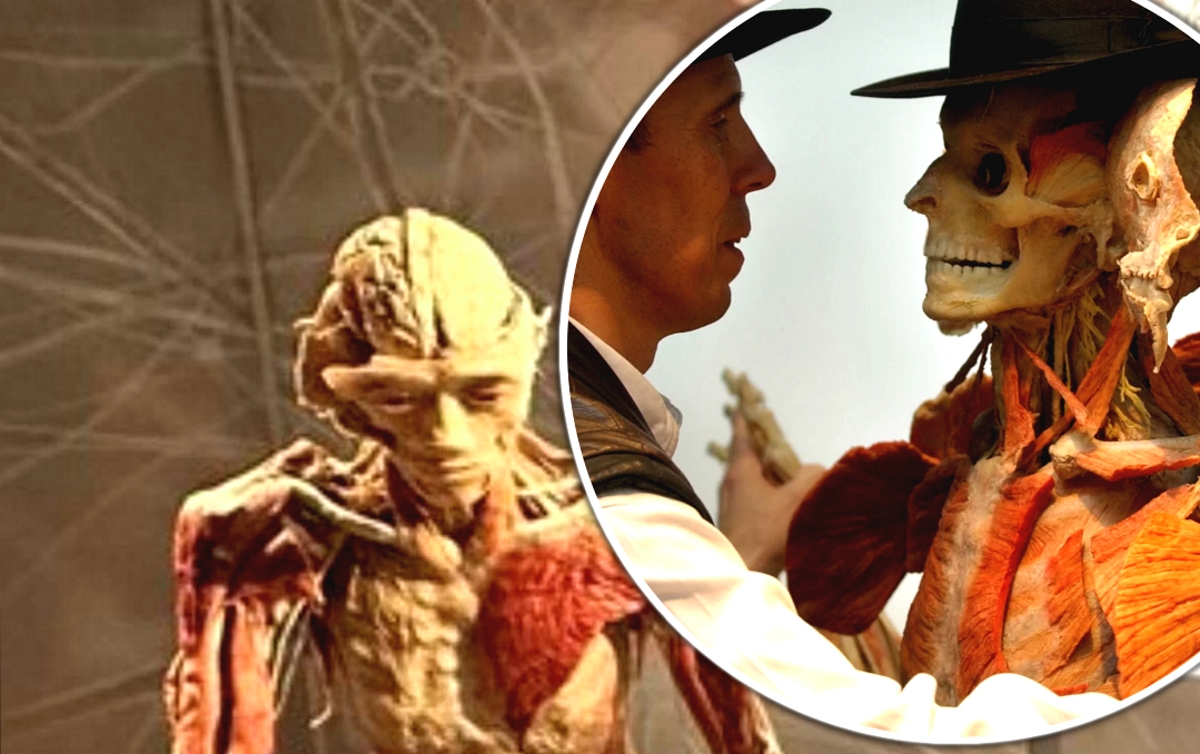
A U.S. museum has released a formal response after a mother alleged that a preserved body featured in one of its public exhibitions belonged to her missing son — a claim first described in a Newsweek report that outlined how the woman recognized identifying marks during her recent visit. The museum says it is cooperating with authorities and maintains that all human remains in the exhibit were obtained through legitimate channels.
The mother, whose identity remains private in early reporting, told investigators she recognized a unique combination of tattoos and physical characteristics, according to details summarized in the published account while also noting that law-enforcement officials have not yet confirmed whether the exhibit and the missing person are connected.
Public reaction intensified online as the unusual nature of the allegation circulated widely, prompting users to share concerns about the sourcing of human specimens used in anatomical displays. One early comment on X captured the mixture of shock and caution:
This story is incredibly unsettling, but we need to wait for verification. Identification of remains isn’t instant — it must be handled with care. — Dr. L. Watson (@ForensicWatson) Dec 6, 2025
According to museum representatives, the body in question is part of an educational anatomical display that has been toured publicly for years. Their statement emphasized compliance with acquisition standards regulated by international agreements, referencing documentation practices discussed in a Smithsonian review that explains how institutions verify provenance before displaying preserved remains.
Police have begun an evidence review that includes physical comparison, missing-person records, and any available medical identifiers. Investigators are also consulting resources similar to federal forensic guidelines that outline procedures for confirming identity when remains are altered through preservation or plastination.
The museum reiterated its position in a second public message, noting that human specimens used in the exhibit were acquired through long-established donation channels described in a prior investigative feature that explored how institutions secure legal consent for educational displays.
If the family’s identification proves correct, this would be an unprecedented failure of global donation oversight. But right now, it remains an allegation. — K. Ramirez (@EthicsInScience) Dec 6, 2025
Experts interviewed in earlier cases of disputed anatomical displays have noted that tattoo recognition alone cannot be used to verify remains, drawing from guidance outlined in a forensic identification brief that stresses the need for DNA testing or medical imaging comparisons before reaching conclusions.
While the investigation continues, the museum says it has voluntarily provided documentation of the exhibit’s acquisition history, mirroring transparency protocols seen in international museum ethics guidelines that require institutions to demonstrate lawful and ethical sourcing when concerns arise.
The case has raised broader public questions about how human-body exhibitions are vetted, transported, and regulated — a topic previously examined in a National Geographic overview that highlighted the ongoing debate around consent, international procurement, and donor verification.
Human-body exhibits must have ironclad documentation. If there’s a gap anywhere, investigations are absolutely warranted. — Prof. Dana Holt (@MuseumPolicyProf) Dec 6, 2025
Authorities say results of the identification process may take weeks, as DNA, dental comparison, and tissue sample analysis must be completed before any official pronouncement can be made. Until then, the museum and the family remain in contact through investigators as the case gradually moves forward.