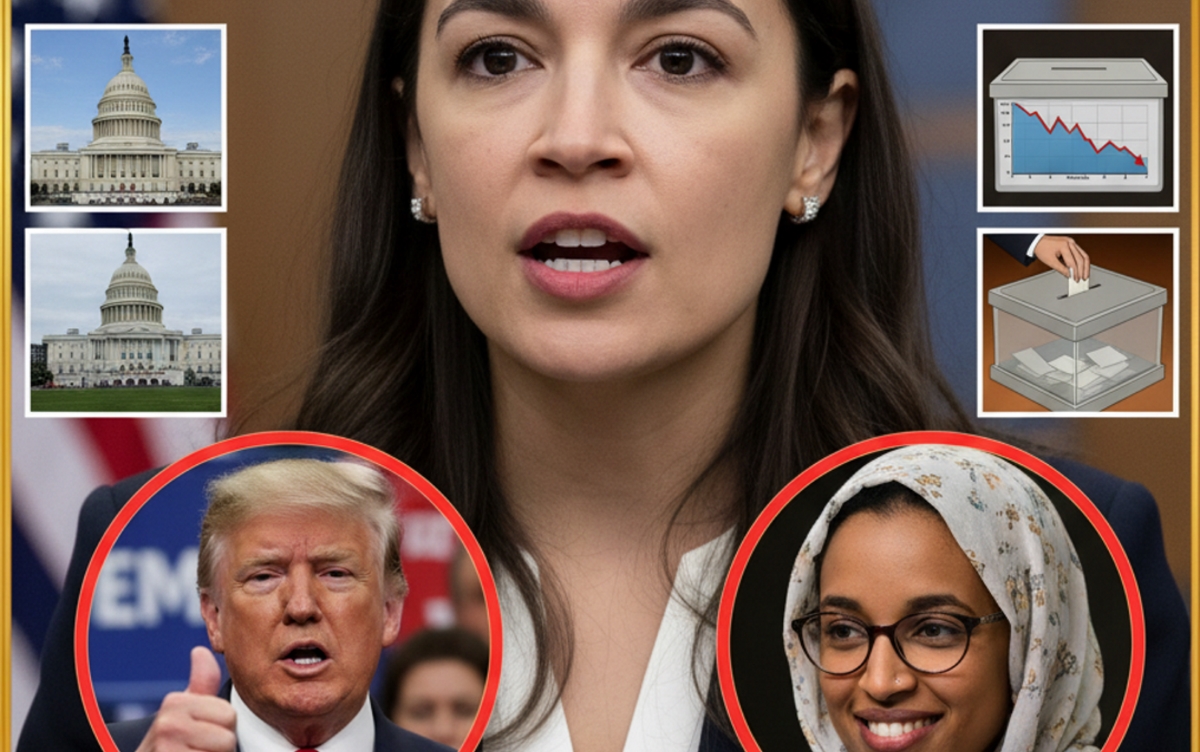
Rep. Alexandria Ocasio-Cortez unleashed a blistering post last night claiming Donald Trump is “less popular than ever,” citing national polling she said reflected steep declines across immigration, health care, and economic trust. Her argument drew heavily from numbers referenced in a comprehensive voter-attitude survey that tracked erosion within multiple demographic groups. But while AOC’s post spread rapidly, critics say the story behind those polls is far more complicated — and far more volatile — than her punchline suggests.
The clash erupted after AOC highlighted data showing Trump underwater with independents, particularly among younger voters, echoing patterns visible inside a long-running opinion tracker that mapped shifting approval ratings over the last year. She argued that the numbers demonstrate a “historic rejection” of Trump-era politics, a claim that instantly sparked a firestorm across political feeds.
AOC hit a nerve tonight. Posting those charts wasn’t just commentary — it was a shot straight at Trump’s campaign narrative. — K. Dwyer (@KDwyerPulse) Dec 10, 2025
Political analysts note that public opinion has fluctuated dramatically in the post-midterms landscape. Trump’s support took a measurable dip in key suburban districts, according to analyses embedded in an electoral review of suburban voting patterns. AOC’s post resurfaced that trend, arguing that Trump’s base is narrowing rather than expanding — a claim supporters quickly disputed.
What complicated the discourse were contrasts between the polls she referenced and other surveys with conflicting results. For example, Trump’s numbers on inflation and border policy appeared stronger in data summarized through a broad-spectrum policy confidence outline, revealing a more divided electorate than AOC implied. That nuance was lost instantly as her post swept across X, where users dissected the charts with partisan intensity.
One observer captured the chaos perfectly:
You can practically hear keyboards melting. Half the internet thinks Trump is collapsing, the other half thinks AOC cherry-picked. Wild night. — Jenna L. (@JennaReports) Dec 10, 2025
The numbers AOC cited appeared to align most closely with aggregated findings structured through a multi-survey compilation showing Trump with declining favorability among women under 45 and voters earning under $50,000. Strategists say those blocs hold disproportionate influence in swing-state outcomes. AOC’s focus on them was deliberate, signaling a broader Democratic strategy to weaponize demographic shifts.
Republican commentators fired back within minutes, accusing AOC of ignoring polls that showed Trump gaining ground with Latino and non-college voters — numbers reflected inside a demographic trend report that documented Trump’s surprising strength with specific groups. They argued that selectively emphasizing negative polls distorted the full picture.
AOC is using the polls Democrats LIKE, not the ones that scare them. Trump’s coalition is changing and nobody wants to talk about it. — R. McNeil (@RMcNeilCommentary) Dec 10, 2025
Still, the backlash didn’t slow AOC’s post — if anything, it accelerated it. Media critics resurfaced previous polling battles in which Democrats and Republicans clashed over methodology, especially during election cycles outlined in a polling-error analysis documenting the chaos of survey-based predictions. Researchers have long warned that relying too heavily on isolated polls can drive misinformation, even unintentionally.
But AOC’s argument wasn’t simply about numbers — it was about momentum. Democratic strategists said her timing was aimed at energizing younger voters frustrated with Trump’s legal controversies, many of which were covered in a Reuters timeline of Trump’s unresolved cases. They claim negative sentiment around his indictments continues to affect perception, even when polls fluctuate.
Trump allies responded by resurfacing older surveys that showed him neck-and-neck with Democrats on economic trust, highlighting data summarized inside a Pew issue-priorities report. The counterargument insisted that Trump remains competitive in every major battleground — a viewpoint that instantly clashed with AOC’s framing.
You can’t say Trump is “less popular than ever” if half the polls show a dead heat. The fight isn’t about data — it’s about narrative. — E. Sandoval (@ESandovalData) Dec 10, 2025
Political scientists say the blowup underscores a deeper issue: Americans no longer trust polls, yet use them like ammunition. The divide was explored inside a Brookings examination of polling skepticism, which noted that partisans increasingly weaponize favorable surveys while dismissing unfavorable ones as fraudulent. AOC’s post became the latest flashpoint in that ongoing battle.
Meanwhile, Minnesota and Michigan activists reported a surge in engagement following AOC’s comments, noting that criticisms of Trump’s immigration policies remain a potent mobilizer — a trend described in a turnout-focused analysis examining the political impact of immigration rhetoric. AOC’s post framed Trump’s polling as part of a broader rejection of his policy direction, not just his persona.
As the online war escalates, strategists warn that the next polling cycle is likely to become even more explosive, especially as campaigns seize on any data point — accurate or not — to shape national perception. And if last night proved anything, it’s that AOC knows exactly how to set that fight ablaze.