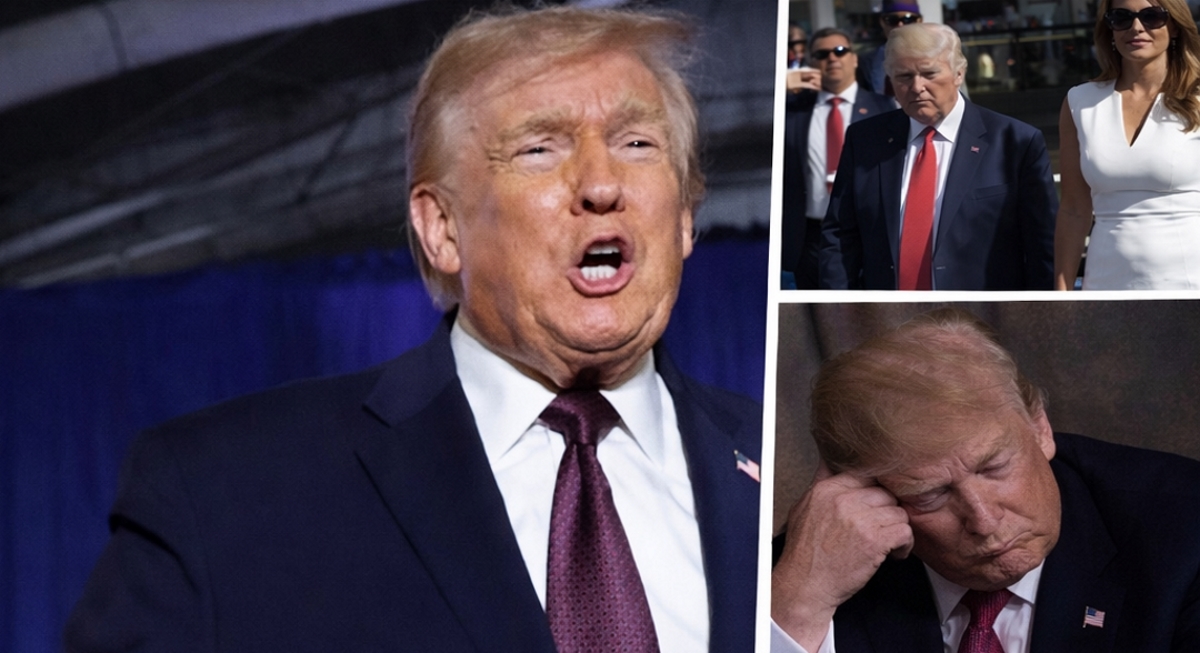
Donald Trump’s approval rating has dipped in a newly released survey from a polling firm widely viewed as one of the most accurate in American politics, setting off a wave of quiet concern among allies and renewed scrutiny from analysts. The shift is not dramatic, but coming from a pollster known for precision rather than hype, it has landed with unusual weight.
The firm behind the survey has built a reputation over multiple election cycles for capturing late-breaking trends that other polls often miss. That credibility is exactly why even a modest decline is being treated as more than background noise. In political circles, the reaction has been less panic and more recalibration.
According to the data, Trump’s approval has fallen several points compared to the pollster’s previous measurement, with the most noticeable erosion among independents and less-committed voters. Those voters rarely dominate headlines, but they often decide elections, a dynamic quietly explored in long-term voter behavior patterns that campaigns obsess over behind the scenes.
Poll analysts caution that approval ratings are not the same as vote share, but they remain a critical indicator of tolerance. Voters do not need to love a candidate to support them, but they must feel comfortable enough to accept them. The latest numbers suggest that comfort level may be softening.
When a high-accuracy pollster shows movement, campaigns take it seriously. — Election analyst (@NumbersMatter) Dec 2025
One striking aspect of the poll is where the decline is concentrated. Core supporters remain largely unmoved, but approval among suburban voters and older independents has slipped. These groups have historically acted as stabilizers during turbulent political periods, a role discussed often in research about the quiet middle of the electorate.
Respondents cited a mix of concerns, including exhaustion with constant conflict, unpredictability, and tone. While economic issues remain top of mind, many voters said they are increasingly sensitive to rhetoric and what it signals about governance rather than campaigning.
Trump allies moved quickly to downplay the findings, describing them as a snapshot shaped by recent negative headlines rather than a lasting trend. Several pointed to rally attendance and fundraising metrics as proof that enthusiasm remains strong, arguing that approval ratings fail to capture intensity.
Privately, however, some Republican strategists acknowledged that intensity alone does not win elections. One adviser described the poll as “a yellow light, not a red one,” noting that Trump does not need to lose his base to be vulnerable — only the voters who oscillate between engagement and disengagement.
You can be loved loudly by fewer people and still lose quietly. — Campaign veteran (@StrategyDesk) Dec 2025
The poll also highlighted a widening gap between emotional loyalty and practical approval. Trump continues to inspire fierce devotion among supporters who view politics as an existential struggle. But approval among voters who prioritize stability, predictability, and institutional calm appears to be thinning.
This pattern mirrors findings from previous cycles, when Trump performed best among voters motivated by disruption and grievance, but faced headwinds once attention shifted toward day-to-day governance. Analysts have long debated this tension, sometimes referencing broader discussions of political fatigue that cut across party lines.
Another notable element of the survey was the language respondents used. Rather than anger, many expressed weariness. Political psychologists say fatigue is often more dangerous than outrage because it suppresses participation rather than energizing opposition.
Several voters told pollsters they felt overwhelmed by constant political drama and were craving what one respondent described as “less noise and more normal.” That sentiment has surfaced repeatedly in recent years, even as it competes with highly charged cultural messaging.
Fatigue doesn’t trend, but it votes. — Political psychologist (@VoterMindset) Dec 2025
The timing of the dip has also drawn attention. The poll was conducted after a stretch of high-profile confrontations and rhetorical escalations that dominated news cycles. While Trump has historically thrived on attention, strategists warn that saturation can dull impact rather than amplify it.
There was also a small but notable decline among older voters, a group that has leaned conservative for decades but often values steadiness over spectacle. Even minor movement in this demographic can have outsized effects in closely contested states.
Democrats reacted with caution rather than celebration. Several party operatives stressed that approval ratings are not destiny and warned against underestimating Trump’s ability to rebound. They pointed to past elections where polls failed to capture turnout dynamics accurately.
Still, some Democrats privately acknowledged that the survey aligns with anecdotal feedback they have been hearing: voters who are not ideologically opposed to Trump, but increasingly uncertain about what another term would feel like. That emotional calculus, more than policy detail, often drives late decisions.
Trust emerged as another fault line in the data. While Trump retains credibility with supporters on certain issues, broader trust indicators showed erosion. Respondents cited concerns about consistency and follow-through, themes that researchers frequently tie to voter hesitation in studies of institutional confidence.
Campaigns tend to treat trust as a lagging indicator, slower to change but harder to repair once damaged. Unlike enthusiasm, which can be reignited quickly, trust often requires sustained reassurance.
Enthusiasm spikes fast. Trust rebuilds slow. — Governance scholar (@CivicSignals) Dec 2025
The pollster’s methodology has further intensified interest in the findings. Unlike firms that sample broad enthusiasm, this outfit emphasizes likely voters and weighting models designed to avoid overcounting high-intensity respondents. That approach has earned it credibility, particularly in tight races.
Because of that track record, campaigns tend to watch this firm closely even when the numbers are inconvenient. One strategist described the latest results as “quietly uncomfortable,” noting that they suggest softness where resilience is needed.
Trump himself has not directly addressed the poll, and allies insist the campaign remains confident. They point to strong engagement metrics and argue that approval ratings fluctuate while electoral coalitions endure.
History, however, offers cautionary tales. Many campaigns have mistaken loud support for broad support, only to discover too late that intensity and scale are not the same thing.
The central question now is whether this decline represents a temporary reaction or the early sign of a longer trend. If approval stabilizes, the moment will fade quickly. If it continues slipping across multiple surveys, it could signal a deeper challenge.
For voters watching from the sidelines, the poll offers a snapshot of a country still polarized but increasingly tired. Trump remains a dominant force, but dominance does not guarantee comfort — and comfort often decides close contests.
What makes this moment notable is not the size of the drop, but who measured it. When a pollster known for accuracy shows movement, it rarely goes ignored.
As the political calendar accelerates, every data point will be magnified. For Trump, the challenge may not be energizing supporters, but convincing uncertain voters that the future will feel steadier than the past.
Whether this survey marks a warning sign or a passing tremor will become clearer with time. For now, it stands as a reminder that even the most durable political figures are still subject to gravity — especially when voter patience wears thin.