
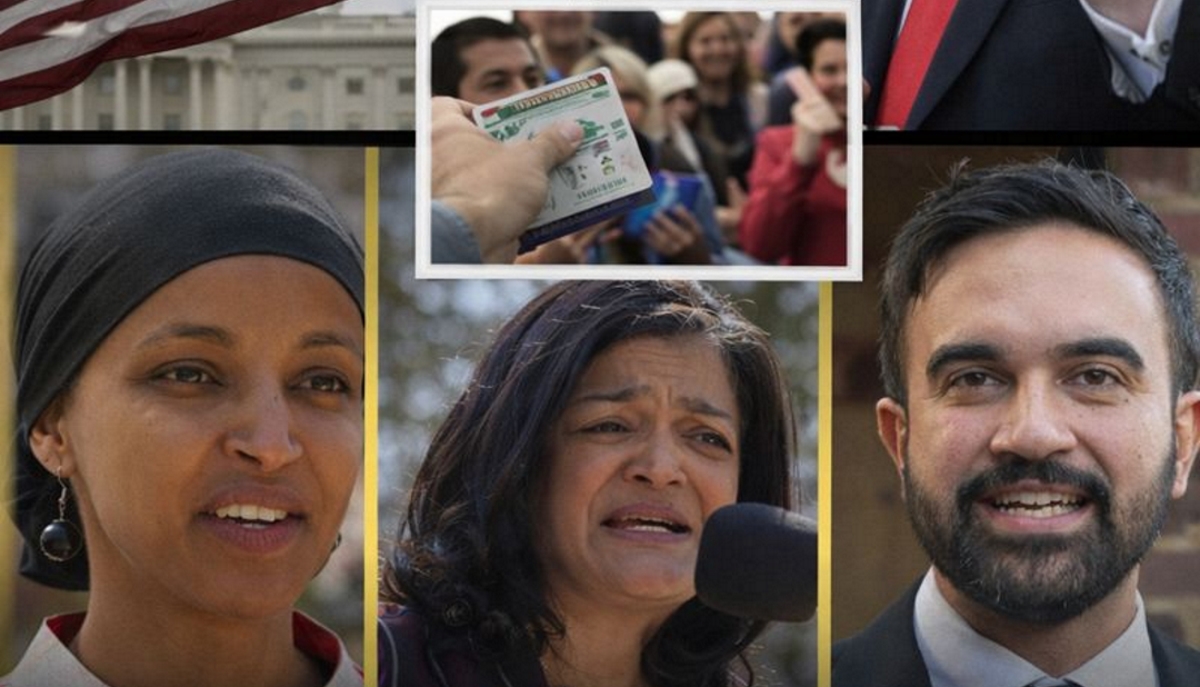
A simmering political argument has burst into the open as lawmakers, activists, and legal scholars clash over whether non-citizens should be allowed to hold certain public offices. What began as a technical discussion about local governance has rapidly escalated into a broader cultural and constitutional showdown over loyalty, representation, and the meaning of citizenship.
The controversy was reignited after several municipalities explored proposals that would allow non-citizen residents to serve on advisory boards or local councils. Supporters framed the idea as a pragmatic response to increasingly diverse communities, while critics warned it crosses a bright line that undermines national sovereignty.
At the heart of the debate is a basic question: should political power be reserved exclusively for citizens, or can representation extend to long-term residents who pay taxes and contribute to civic life? The issue has surfaced repeatedly over the years, but the current climate has made compromise far more elusive.
Advocates argue that non-citizens already influence public policy indirectly through community engagement and economic participation. Allowing them to hold limited local office, they say, simply acknowledges reality. That argument has appeared in places most people never read until the issue explodes.
Critics counter that voting and holding office are fundamentally different from paying taxes or attending meetings. They argue that public office carries symbolic and legal authority that should be exercised only by those who have formally pledged allegiance to the country.
If citizenship doesn’t matter for holding office, what does it matter for? — Constitutional lawyer (@CivicBoundaries) Dec 2025
The legal landscape is murky. Federal law bars non-citizens from holding most federal offices, and many state constitutions impose similar restrictions. But local governments often have more discretion, particularly when it comes to appointed or advisory roles. That gray area has fueled experimentation — and backlash.
Some cities have already allowed non-citizens to vote in local elections or serve on school boards, moves that sparked lawsuits and legislative pushback. Opponents say these measures create a slippery slope, a concern raised repeatedly in coverage that keeps resurfacing whenever a new proposal appears.
Supporters reject the slippery-slope framing, insisting that citizenship requirements for national leadership remain untouched. They emphasize that proposals are narrowly tailored to local issues like housing, education, and transportation — areas where non-citizen residents are directly affected.
The emotional intensity of the debate reflects broader anxieties about immigration and national identity. For some Americans, the idea of non-citizens holding office feels like erosion. For others, it feels like inclusion catching up with demographic reality.
Polling suggests the public is sharply divided. Many respondents express openness to non-citizens participating in civic life but draw the line at formal authority. That tension appears in survey data that rarely fits into slogans.
People want inclusion — but they also want clear rules. — Political researcher (@PolicySignals) Dec 2025
Immigrant advocacy groups argue that excluding non-citizens from office perpetuates second-class status, especially for legal residents who may wait years or decades for citizenship. They point out that many non-citizens are barred not by choice but by bureaucratic backlogs.
Opponents respond that citizenship is not merely paperwork, but a civic contract. They argue that the path to office should remain a reward for completing that process, not something bypassed through local exceptions.
The debate has also exposed fractures within political parties. Some progressives support expanded participation as a moral imperative, while others worry about electoral backlash. Conservatives, meanwhile, range from hardline opposition to cautious skepticism focused on scope rather than principle.
Legal scholars warn that inconsistent local rules could invite confusion and litigation. If one city allows non-citizens to serve while another prohibits it, courts may eventually be forced to draw clearer boundaries. That possibility has been discussed quietly in analysis few voters ever see.
This issue is headed for the courts sooner or later. — Legal analyst (@CourtWatchers) Dec 2025
Beyond law and policy, the argument taps into symbolism. Holding office is not just about decision-making; it signals belonging. Who is allowed to sit at the table becomes a statement about who fully counts.
Some community leaders worry that the fight itself is doing damage, hardening attitudes and overshadowing practical governance. They note that many local boards struggle to find volunteers at all, regardless of citizenship status.
Others argue that avoiding the debate is worse. As communities grow more diverse, unresolved questions about representation will only intensify. Pretending the issue doesn’t exist, they say, guarantees future conflict.
For now, the debate shows no sign of cooling. Bills are being drafted, lawsuits prepared, and campaigns launched on both sides. Each new proposal becomes a proxy battle for larger fears and hopes about the country’s direction.
Whether non-citizens ultimately gain broader access to public office or face firmer barriers, the argument has already revealed something fundamental: citizenship remains one of the most powerful — and contested — concepts in American democracy.
And as communities continue to wrestle with who gets a voice and how far inclusion should go, the line between participation and power is likely to remain one of the most volatile fault lines in public life.