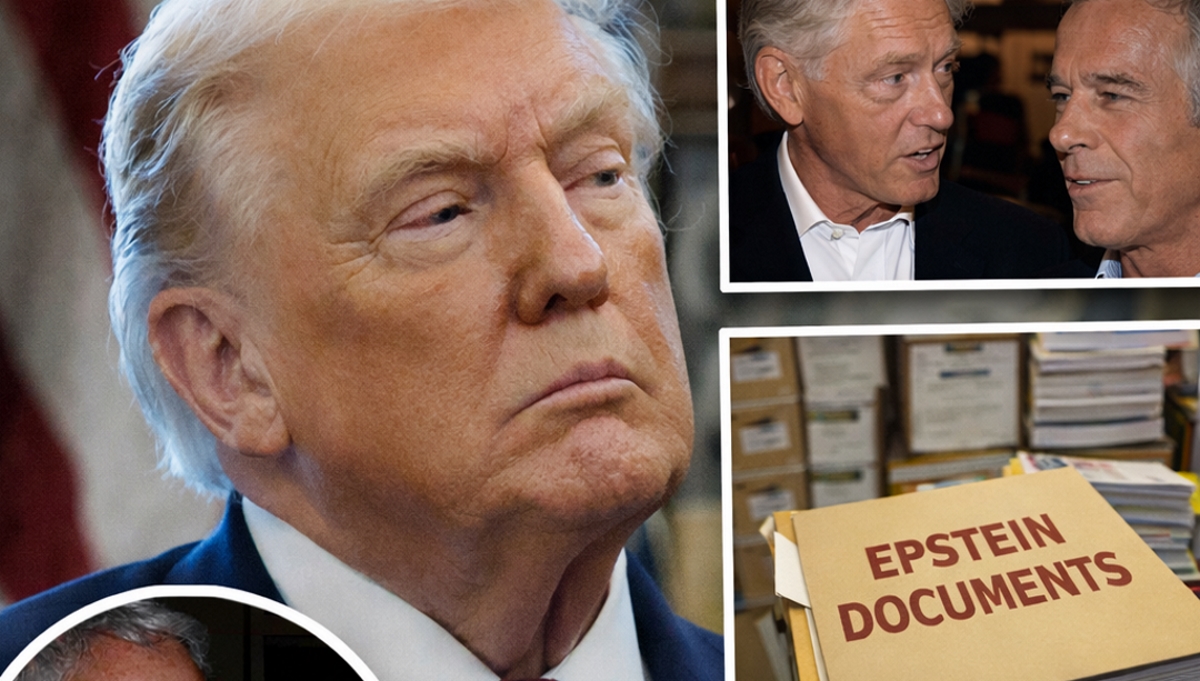
What began as a technical debate inside legal circles has exploded into a political crisis after legal analysts and transparency advocates pointed out a glaring reality: large portions of the Jeffrey Epstein files could be un-redacted with minimal effort. As awareness spread, pressure mounted on the Justice Department, triggering a quiet but frantic response behind the scenes.
The documents, released in heavily redacted form, were initially framed as the maximum level of transparency legally possible. But within days, independent researchers began showing how redactions often concealed information already public elsewhere, including names tied to depositions, flight records, and civil filings that have circulated for years.
Former federal prosecutors noted that many blacked-out sections do not meet traditional standards for protecting victims or active investigations. One analyst pointed to standard disclosure rules and argued that the redactions appear overly cautious, if not deliberately defensive.
The realization spread quickly online. Legal forums, social media threads, and investigative journalists began cross-referencing court filings with previously leaked records, reconstructing portions of the narrative the public was never meant to see in one place. The result was not new allegations, but a clearer map of Epstein’s network.
Inside the Justice Department, officials reportedly grew concerned that selective transparency would backfire. One source familiar with internal discussions described a growing fear that partial disclosure now looks worse than full release, especially as public confidence continues to erode.
The problem, critics argue, isn’t just Epstein. It’s precedent. If these files can be safely un-redacted without harming victims or cases, why weren’t they released that way in the first place? That question has fueled accusations of institutional protection and selective accountability.
Some attention has focused on how similar cases were handled in the past, including comparisons to government transparency fights where agencies initially resisted disclosure before quietly conceding ground. Observers say the Epstein files follow a familiar pattern: delay, partial release, public outrage, and eventual retreat.
The political implications are impossible to ignore. During Trump’s tenure, the Justice Department often emphasized law-and-order messaging while resisting scrutiny of powerful figures. Now, critics argue, that posture has left a paper trail that is difficult to defend.
Legal scholars stress that un-redaction does not automatically mean chaos. Names can be contextualized, false implications clarified, and victim protections preserved. What the public is asking for, they say, is consistency and honesty, not spectacle.
Still, the department faces a dilemma. Fully un-redacting the files could revive scrutiny of individuals long absent from headlines. Keeping them sealed risks reinforcing the belief that justice operates differently for the elite.
Advocacy groups have seized on the moment, filing new requests and amplifying calls for oversight. One coalition cited longstanding access laws and argued that the Epstein case has become a stress test for public trust in federal institutions.
Meanwhile, Trump allies have pushed back, accusing critics of weaponizing old scandals for political gain. They argue that Epstein’s crimes are being repackaged to smear unrelated figures, even as supporters demand evidence rather than implication.
That defense has done little to slow the momentum. The more the public learns about what could be revealed, the harder it becomes to justify what remains hidden. Transparency advocates warn that selective secrecy invites speculation far more dangerous than disclosure.
As pressure builds, the Justice Department may soon face a choice it hoped to avoid. Either explain, in precise legal terms, why the redactions are necessary, or begin lifting them and accept the consequences.
The Epstein files were never just about one man. They are about power, access, and whether the system can withstand scrutiny when the spotlight turns inward. And now that the public understands how thin the black bars may be, that spotlight isn’t going away.