
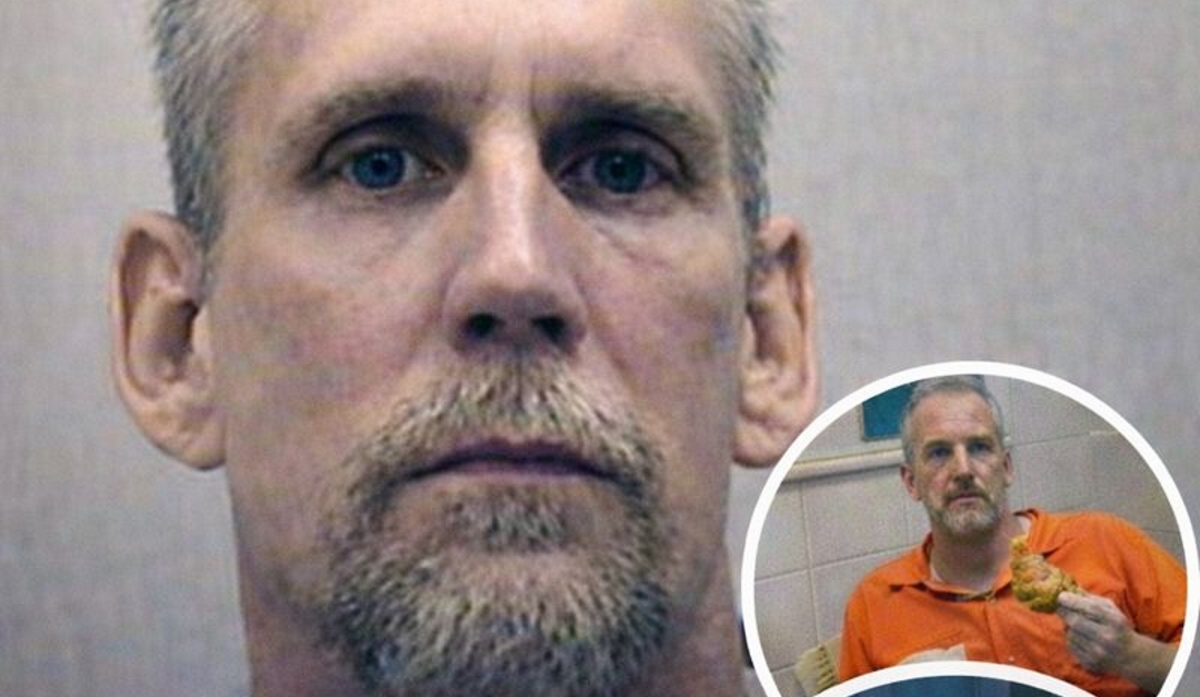
The execution was meant to follow a tightly controlled script, one designed to appear clinical, predictable, and humane. Instead, witnesses say it unraveled into a prolonged and visibly agonizing ordeal after what officials later described as a “last meal complication” that no one anticipated.
The prisoner, who had spent decades on death row, entered the execution chamber already showing signs of physical distress. According to observers, he appeared nauseated and weak, struggling to steady his breathing even before the procedure began.
Hours earlier, he had requested a final meal that included foods later flagged by medical staff as potentially problematic when combined with the execution drugs. While prisons routinely allow condemned inmates to choose their last meal, protocols assume the body will tolerate the process normally. This time, it did not.
Witnesses reported that shortly after the lethal injection began, the prisoner began convulsing and gasping for air. What was expected to take minutes stretched far longer, with visible signs of suffering that left observers shaken.
Corrections officials initially attributed the reaction to “individual variability,” but independent experts quickly raised alarms. Specialists familiar with execution drug protocols say gastrointestinal distress can interfere with absorption and circulation, potentially delaying or intensifying the body’s response.
The room reportedly fell silent as the prisoner continued to move long after he should have been unconscious. One witness described the scene as “disturbing beyond anything I expected,” noting that guards appeared uncertain about how to proceed.
Medical ethicists say the case exposes a rarely discussed vulnerability in execution procedures. While lethal injections are presented as precise, the human body is not a machine. Variables like stress, illness, and digestion can dramatically alter outcomes.
Research into documented execution complications shows that prolonged deaths are far more common than states publicly acknowledge, often tied to improper drug delivery or physiological interference.
The prisoner was pronounced dead well after the expected timeframe. Officials later confirmed that the execution exceeded standard duration benchmarks but stopped short of labeling it botched.
Advocates immediately challenged that characterization. To them, visible suffering is the definition of failure, regardless of whether the sentence was ultimately carried out.
If an execution takes that long and the person is visibly suffering, calling it “protocol” is just avoiding accountability.— Justice Monitor (@JusticeMonitor) April 2025
The “last meal mistake” has become a focal point of the controversy. Prison officials acknowledged that no medical review was conducted on the meal choice, stating that current policy does not require one.
That admission has drawn fierce criticism from physicians, who argue that ignoring pre-execution health variables contradicts the very premise of humane punishment. One doctor noted that interactions between food intake and sedatives are well understood in medical settings, making the oversight especially troubling.
Legal analysts also raised concerns about whether the execution violated constitutional protections against cruel and unusual punishment. Courts have previously ruled that unnecessary suffering during execution may cross that line, depending on circumstances.
Historical reviews of capital punishment litigation show that many reforms only followed public exposure of disturbing executions, not proactive policy review.
Family members of the prisoner released a brief statement saying they were “horrified but not surprised,” arguing that the system prioritizes speed and optics over humanity. They called the death “a punishment layered on top of punishment.”
State officials defended their procedures, emphasizing that the execution followed approved protocols. They declined to say whether last meal policies would be reviewed in response to the incident.
Behind the scenes, corrections staff reportedly expressed distress. Sources familiar with the execution said several guards sought counseling afterward, shaken by what they witnessed.
Opponents of the death penalty argue that such reactions underscore a deeper truth: executions are not abstract legal acts, but human events that leave psychological damage on everyone involved.
Even supporters of capital punishment acknowledged discomfort. Some conceded that if the system cannot guarantee a painless process, its moral justification becomes harder to defend.
Studies examining systemic error in executions suggest that complexity increases the likelihood of failure, especially as drug availability, medical participation, and oversight continue to erode.
Public reaction has intensified calls for transparency. Advocacy groups are demanding the release of execution logs, medical records, and internal communications related to the incident.
This execution shows how fragile the illusion of “humane” death really is.— Penal Reform Watch (@PenalReformNow) April 2025
For critics, the case reinforces a long-standing argument: that the death penalty cannot be separated from suffering, no matter how carefully it is framed.
The prisoner’s final hours, meant to bring closure, have instead reopened wounds and questions that the system has never fully answered.
As investigations continue, one fact remains unavoidable. A process designed to be controlled, quiet, and final became chaotic and painful, exposing how easily human error can turn punishment into something far worse.