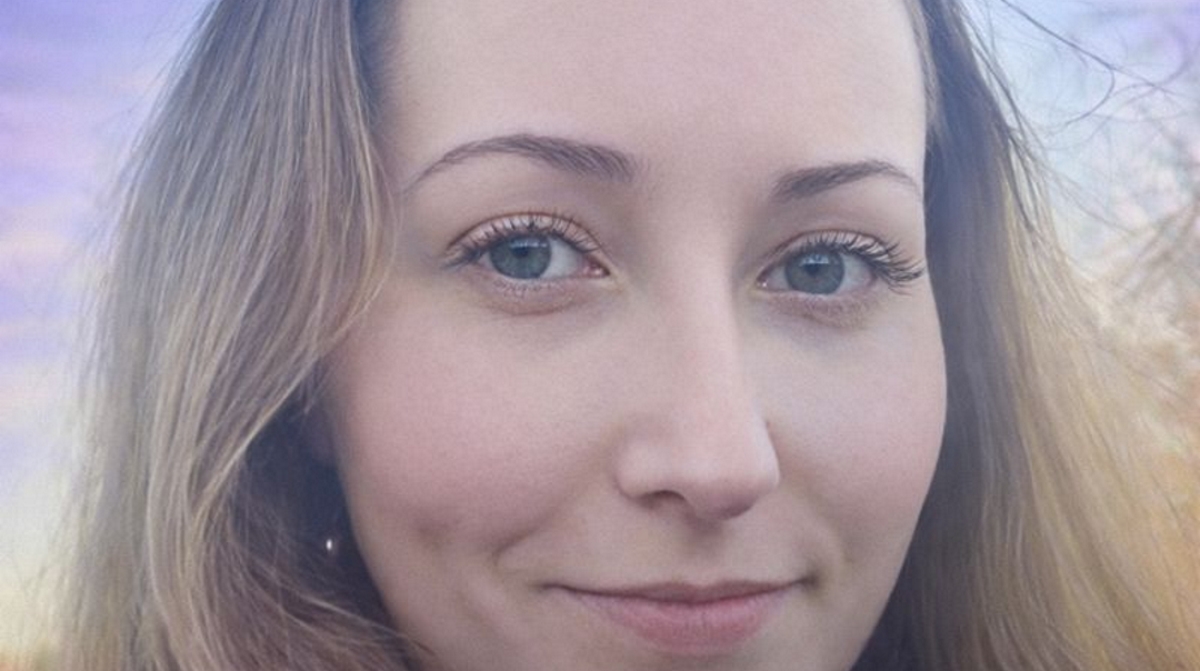
The image unsettles people immediately. A young woman with clear eyes and a soft smile, labeled “in good health,” paired with the words “assisted death.” For many, those two ideas simply don’t belong together. And yet, her story is now being shared precisely because of that discomfort.
At 29, she does not have a terminal illness. Doctors have not given her a countdown. There is no visible physical deterioration. Instead, she says the suffering that led her to consider assisted death is invisible, constant, and misunderstood — and that’s exactly why she chose to speak publicly.
In interviews, she describes years of severe mental illness that resisted every treatment offered. Medications. Therapy. Hospitalizations. Lifestyle changes. Nothing brought sustained relief. What outsiders often interpret as “functioning” masked a daily internal crisis.
“People see my body,” she explained, “but they don’t live in my mind.”
Her case has reignited a fierce debate in countries where medical assistance in dying (MAiD) laws are expanding to include psychiatric conditions. Advocates argue that excluding mental illness creates a hierarchy of suffering. Critics warn that it risks normalizing death as a solution to pain that might still be treatable.
Legal scholars tracking recent international developments say her story illustrates the hardest edge of the debate: autonomy versus protection.
She insists her choice is not impulsive. According to her account, it followed years of assessments, waiting periods, and evaluations by independent clinicians. She says the process forced her to articulate her reasoning more clearly than any therapy session ever had.
Still, the public reaction has been intense.
Some accuse the system of failing her. Others argue that granting assisted death to young people with mental illness sends a dangerous message. Supporters counter that denying her agency is its own form of harm.
Bioethicists examining end-of-life ethics note that societies are struggling to reconcile two values they hold dearly: preventing suicide and respecting individual autonomy.
What complicates her case is that she does not fit the stereotype many people rely on to make moral judgments. She is articulate. She has friends. She appears calm. Those qualities make it harder for critics to dismiss her as confused or coerced.
“If I were older, people might listen,” she said. “Because I’m young, they assume I don’t know my own limits.”
Mental health professionals are deeply divided. Some argue that no mental illness should ever qualify, pointing to evidence that symptoms can fluctuate dramatically over time. Others acknowledge that a small subset of patients experience decades of refractory suffering despite exhaustive treatment.
Research into treatment-resistant psychiatric conditions confirms that outcomes vary widely, making blanket policies difficult.
Online, the conversation has been raw.
This story makes people uncomfortable because it forces us to admit we don’t have answers for every kind of suffering.— ethics watch (@ethicswatch) July 2025
Others expressed fear that stories like hers could influence vulnerable people. Mental health advocates emphasize the importance of context — stressing that assisted dying laws are tightly regulated and not a substitute for care.
Clinicians studying risk communication warn that public narratives must avoid simplifying complex decisions into soundbites.
She has been clear that she does not want her story used to persuade anyone else. “This is about my life,” she said, “not a template for others.”
That distinction matters. Experts note that ethical reporting on assisted death must avoid romanticizing or prescribing. The focus, they say, should remain on understanding the systems, safeguards, and disagreements involved.
Her family’s response adds another layer. Some relatives support her autonomy, even as they grieve the possibility of losing her. Others hope she will change her mind. She says those conversations have been the hardest part.
Policy makers are watching closely. In several countries, lawmakers are revisiting eligibility criteria, citing cases like hers as proof that the law is moving faster than public consensus.
Whether one agrees with her decision or not, most observers acknowledge one thing: her story exposes gaps in how societies address long-term mental suffering. Access to care, social support, disability benefits, and stigma all intersect here.
You can oppose assisted dying for mental illness and still admit our mental health systems fail people every day.— public health lens (@publichealthlens) July 2025
She says she wishes the conversation focused less on judging her and more on why so many people with severe mental illness feel unheard until they reach extremes.
For now, her decision remains a possibility, not a conclusion. She continues to undergo evaluations, and the process itself requires ongoing consent.
Her story does not offer easy answers. It forces difficult questions — about compassion, autonomy, risk, and responsibility — into the open.
If nothing else, it has made one thing clear: suffering is not always visible, and the debates around assisted death are far more complex than a single image can capture.
If you or someone you know is struggling with thoughts of self-harm or overwhelming distress, confidential help is available in many countries through local crisis lines and mental health services.