
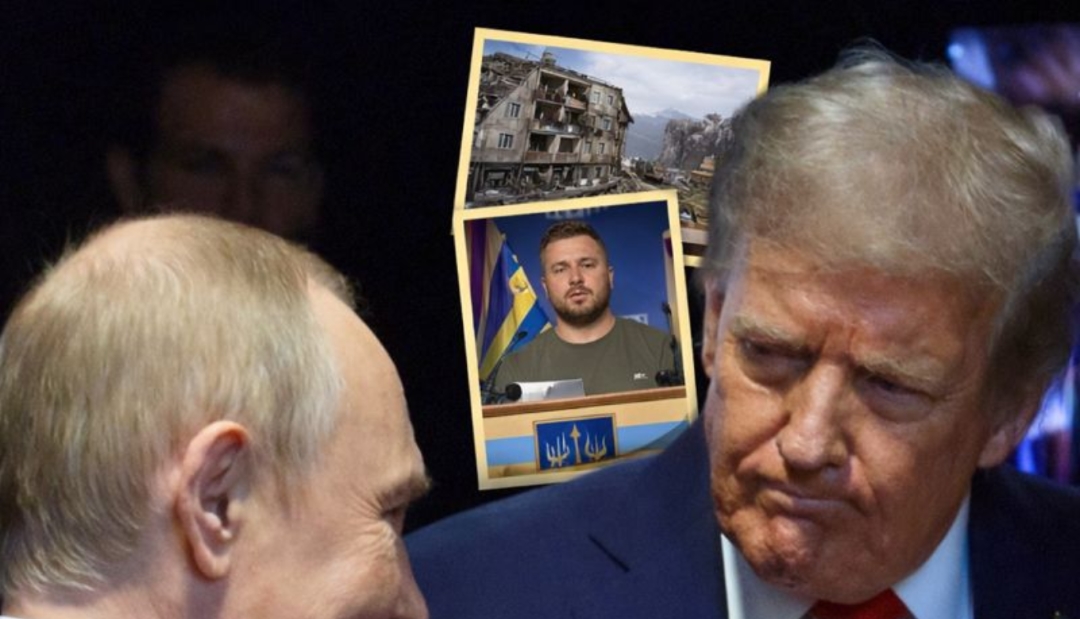
The already volatile war narrative between Moscow and Kyiv took a sharp turn after Putin publicly claimed that a Ukrainian strike had crossed a red line, allegedly hitting a residential property inside Russia itself. The accusation landed like a grenade in diplomatic circles, immediately raising fears of escalation and retaliation.
Russian state media amplified the claim within minutes, circulating images of damaged buildings and blurred nighttime footage while anchors repeated the same phrase over and over — an attack on “Russian soil.” The implication was unmistakable, designed to suggest that the war had now spilled irreversibly beyond Ukraine’s borders.
But the response from Kyiv was swift and unambiguous, categorically denied the allegation, calling it a fabrication meant to distract from Russia’s own intensifying bombardment. Speaking during a late-night address, Zelenskyy dismissed the story as “another information operation,” pointing instead to ongoing Russian strikes across Ukrainian cities, a moment echoed across international monitors watching the conflict closely.
The disputed claim centers on a structure Russian officials described as a civilian home, though independent verification remains elusive. Analysts following satellite imagery and open-source intelligence noted inconsistencies in the timeline, with some pointing to recent damage patterns that did not match the weapons Russia claimed were used.
Within hours, social media became a battleground of its own. Pro-Kremlin accounts pushed the narrative aggressively, while Ukrainian officials and journalists shared counterclaims, citing ongoing front-line activity and accusing Moscow of manufacturing a pretext. The online clash mirrored the broader war itself — chaotic, emotionally charged, and deeply polarized.
We do not strike civilian homes in Russia. This claim is a lie meant to justify more terror against Ukraine. The world must see this for what it is. — Volodymyr Zelenskyy (@ZelenskyyUa)
Behind the rhetoric lies a deeper strategic question. If Moscow convinces its domestic audience that Ukraine has attacked inside Russia, it gains political cover for harsher measures. Military analysts warn that such narratives have historically preceded escalations, citing past moments when similar accusations were followed by intensified strikes.
The Kremlin, for its part, doubled down. Officials suggested that evidence would be presented “at the appropriate time,” while state commentators openly discussed retaliation. The tone marked a noticeable shift, with less emphasis on defense and more on punishment — language that immediately set off alarms among Western diplomats.
Meanwhile, residents in Ukraine woke to yet another wave of air raid sirens. In cities already scarred by months of shelling, the argument over a single alleged strike felt surreal. “They accuse us while our homes burn every night,” one Kyiv resident told reporters, a sentiment echoed in on-the-ground accounts shared throughout the day.
International reactions were cautious but telling. Several governments urged restraint while quietly questioning the Russian version of events. A senior European official, speaking anonymously, noted that “claims without verification do not change the facts on the ground,” referencing previous disputed incidents that later unraveled under scrutiny.
False flag narratives thrive in war. Independent verification isцин matters now more than ever. — Conflict Watch (@ConflictWatch)
As night fell, the information fog thickened rather than cleared. Russia insisted it had been wronged; Ukraine insisted the story was invented. Between those competing realities lies a dangerous space where miscalculation can thrive. Every unverified claim, every amplified image, carries the risk of pushing the conflict into darker territory.
For now, the world watches and waits. The truth of what happened — if anything happened at all — may emerge slowly, through satellite data, independent reporting, and time. Until then, the accusation itself may be as consequential as any missile, shaping decisions, hardening positions, and fueling a war where perception is often wielded as power.