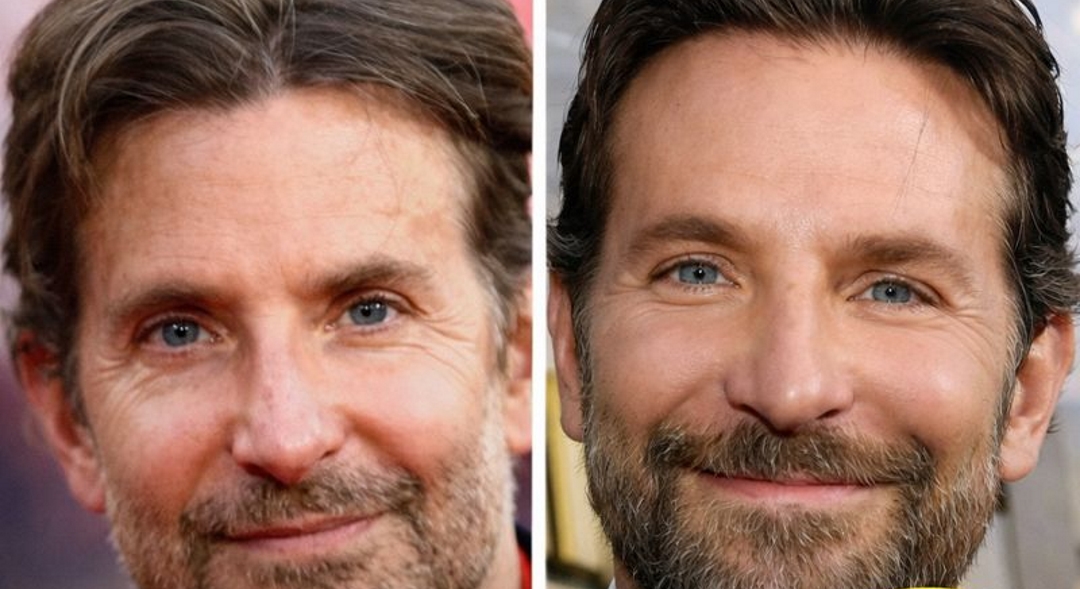
For more than a decade, Bradley Cooper has been the subject of relentless speculation about his appearance. Side-by-side photos circulate every few months, social media threads dissect his jawline and eyes, and plastic surgeons weigh in from afar. Now, after years of silence, Cooper has finally addressed the rumors directly.
The conversation resurfaced following Cooper’s recent public appearances, where fans noted subtle changes compared to his early career roles. The comparisons intensified after his awards-season run, with some claiming his face looked “too refreshed” to be natural. Others pushed back, pointing to lighting, aging, and weight changes rather than surgery.
In a candid interview referenced by a longform profile, Cooper pushed back on the narrative, calling the rumors “wildly overstated” and emotionally exhausting. He acknowledged that Hollywood magnifies every perceived change but denied undergoing cosmetic procedures to alter his face.
“People forget what stress, exhaustion, and time do to a face,” Cooper said, according to excerpts shared widely online. He added that working back-to-back intense roles, combined with aging in the public eye, creates an illusion of dramatic transformation.
Plastic surgery rumors are nothing new for leading men, but Cooper’s case has been unusually persistent. From his early days in romantic comedies to darker dramatic roles, fans have tracked every shift. Commentary exploded again after his work on A Star Is Born, when side-by-side images trended across platforms.
According to industry commentary, non-invasive treatments like weight fluctuation, beard styling, facial hair density, and even sleep deprivation can dramatically alter perceived facial structure. Several board-certified surgeons have publicly stated that Cooper’s changes appear consistent with natural aging.
Still, online speculation rarely waits for nuance. Viral posts zoomed in on his eyes and cheeks, suggesting everything from fillers to blepharoplasty. Cooper said those conversations felt “dehumanizing,” especially when they overshadowed his work.
Bradley Cooper saying what a lot of actors won’t: aging in public messes with people’s perception more than surgery ever could. — Film Culture (@filmculturetalk) February 2026
The actor emphasized that his focus remains on craft, not optics. He described long rehearsal schedules, physical transformations for roles, and emotional strain as factors that change how someone looks on camera versus red carpets.
Entertainment analysts note that Cooper’s response reflects a broader shift. More male actors are starting to speak openly about the pressure to appear untouched by age while simultaneously being criticized for looking “different.” It’s a contradiction that rarely resolves cleanly.
A recent Hollywood deep dive highlighted how male celebrities face increasing scrutiny once reserved mostly for women. The piece argued that the myth of effortless male aging has collapsed under the weight of high-definition cameras and social media obsession.
Cooper also touched on how rumors affect family life. He said speculation bleeds into personal spaces, forcing conversations he never expected to have with loved ones. “You start defending your face instead of your work,” he said.
Online reaction to his comments has been sharply divided. Supporters praised his honesty and restraint, while skeptics dismissed the explanation as Hollywood deflection. Still, many fans expressed fatigue with dissecting faces rather than performances.
Whether he’s had work done or not, it’s strange how comfortable people feel diagnosing a stranger’s face. — Pop Media Lens (@PopMediaLens) February 2026
For Cooper, the takeaway seems simple. He’s done engaging in speculation cycles that offer no resolution. “If you live long enough in this business,” he said, “people will eventually decide you changed. That’s just time.”
As Hollywood continues grappling with authenticity, aging, and unrealistic expectations, Cooper’s response may not end the rumors—but it reframes them. The question shifts from what he’s done to his face, to why the public feels entitled to the answer.