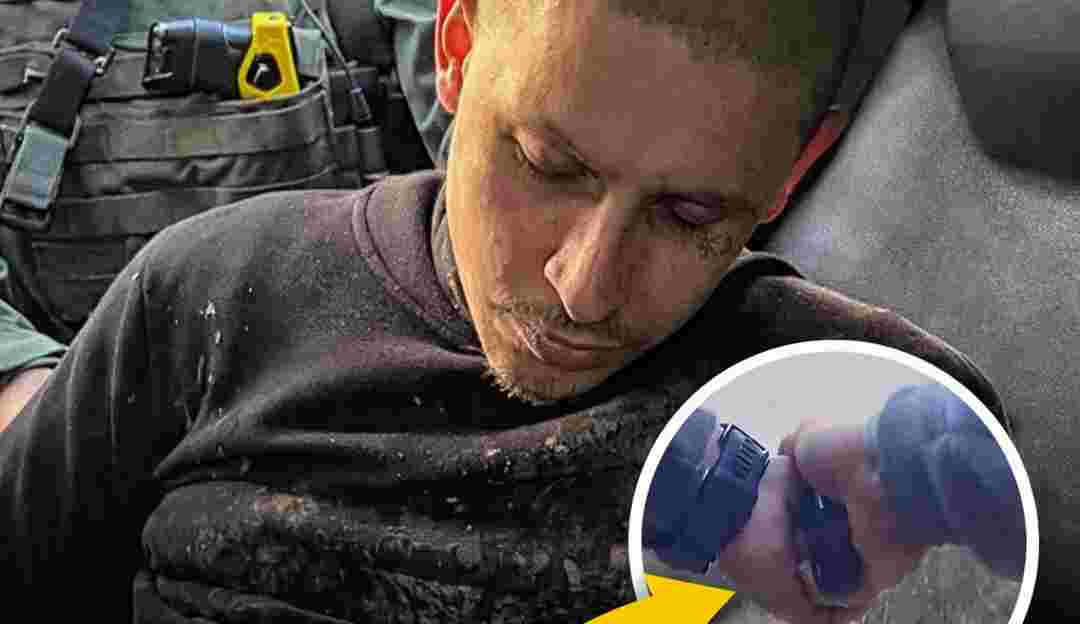

It started with a single line buried inside a federal statement, but it landed like a bomb. The Department of Homeland Security now claims the ICE agent who shot and killed Renee Good was suffering from internal bleeding at the time of the encounter — a detail officials say explains everything, and critics say explains nothing.
Renee Good’s name had already become a rallying cry across Minneapolis after her death during an immigration enforcement operation. Candlelight vigils appeared almost overnight. Posters reading “RIP Renee” were taped to poles, storefronts, and barricades. Now, DHS’s latest explanation has poured gasoline on a fire that was already burning.
According to the agency, the agent involved experienced a sudden medical emergency — described as internal bleeding — moments before the fatal shooting. Officials suggest the condition impaired judgment and reaction time. But the claim has triggered immediate backlash from legal experts, medical professionals, and activists who say the timeline doesn’t add up.
Former prosecutors reviewing the statement noted that medical distress is rarely cited in federal use-of-force cases, especially after the fact. One civil rights attorney pointed to past federal shooting reviews that show medical explanations are almost never introduced without contemporaneous evidence.
What’s striking is that the internal bleeding claim did not appear in early incident reports. It surfaced days later, after public pressure mounted and video footage began circulating online. That delay has fueled suspicion that the explanation is less about transparency and more about legal insulation.
Witnesses at the scene previously described the agent as aggressive and alert, issuing commands before firing. None recalled signs of medical distress. No ambulance was seen rushing the agent away. No immediate hospitalization was publicly disclosed. DHS has not clarified whether the condition was diagnosed before or after the shooting.
So now they’re saying the officer who killed Renee Good was having internal bleeding — but somehow still cleared to carry a weapon? This story keeps changing. — JusticeForRenee (@Justice4Renee) March 2026
Medical professionals were quick to raise red flags. Internal bleeding severe enough to impair cognition would likely present visible symptoms — dizziness, collapse, confusion — symptoms that would normally trigger immediate medical intervention. Several doctors cited in recent trauma analyses questioned whether someone in that condition should have been on duty at all.
The implication is troubling either way. If the agent was medically compromised, why was he armed and conducting an enforcement operation? And if he wasn’t, why introduce a medical explanation after public outrage erupted?
Renee Good’s family has rejected the DHS narrative outright. Through their attorney, they said the explanation feels like an attempt to shift focus away from the decision to use lethal force. “Medical conditions don’t pull triggers,” the family’s statement read.
Advocates argue this case exposes a deeper issue: the lack of independent oversight when federal agents kill civilians. Unlike local police departments, federal agencies often investigate themselves, a practice examined in investigations into accountability gaps.
The internal bleeding claim also raises questions about training and fitness-for-duty protocols. ICE agents undergo periodic medical evaluations, but critics say those standards are opaque. If an agent with a life-threatening condition was deployed, it suggests a systemic failure far beyond one individual.
Internal bleeding is not a justification — it’s an indictment of the system that put a weapon in his hands. — ACLU Minnesota (@ACLU_MN) March 2026
Community organizers say the explanation has only hardened resolve. Protests that had begun to slow surged again after DHS’s statement, with demonstrators chanting Renee’s name and demanding an independent investigation. City officials, caught between federal authority and local anger, have called for the release of all medical records and body camera footage.
Legal analysts note that introducing a medical defense could complicate any future civil or criminal proceedings. It may limit personal liability while opening the door to broader institutional accountability — a trade-off that could reshape how the case unfolds.
For now, the image that lingers isn’t the DHS statement or the medical terminology. It’s the posters flapping in the cold, the candles melting into the pavement, and a growing sense that the truth is being filtered through layers of bureaucracy.
Whether the internal bleeding claim changes the outcome remains to be seen. But in the court of public opinion, it has already done something else entirely: convinced many that the full story of Renee Good’s death has yet to be told.