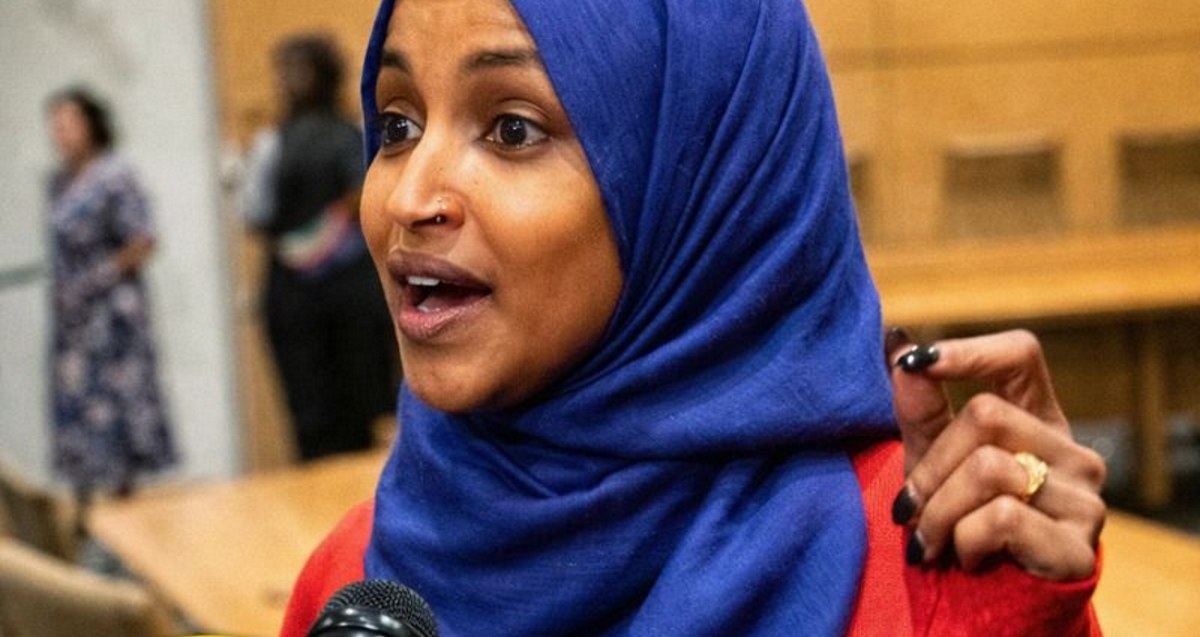
The moment unfolded quickly, but the fallout has been anything but quiet. During a passionate speech addressing U.S. immigration policy, Rep. Ilhan Omar delivered remarks that critics say crossed a line, igniting a political firestorm that spread far beyond the room where she spoke.
Video clips circulated almost immediately, capturing Omar mid-sentence as she forcefully criticized America’s immigration system and broader political culture. Within hours, fragments of the speech were clipped, captioned, and shared across social media platforms, where reaction quickly hardened into outrage on one side and fierce defense on the other.
Supporters argue the remarks reflected raw frustration rooted in humanitarian concerns, pointing to long-standing policy failures and images from the southern border. Critics, however, accused the Minnesota lawmaker of showing disrespect toward the country she serves, with some lawmakers calling the language “reckless” and “divisive.”
The controversy reignited debates that have followed Omar for years, particularly regarding her rhetoric and tone when discussing U.S. foreign and domestic policy. Analysts noted that moments like this often become symbolic flashpoints, less about policy specifics and more about national identity and political allegiance, a pattern explored in recent political breakdowns.
Omar did not walk back her comments. Instead, she doubled down, emphasizing that emotional language reflects the urgency of human suffering she says lawmakers too often ignore. In follow-up remarks, she framed the backlash as an attempt to silence criticism rather than address the substance of the immigration crisis.
Immigration advocates echoed that sentiment, arguing the uproar distracts from overcrowded detention facilities, asylum backlogs, and family separations. One organizer referenced ongoing civil rights reports documenting conditions at border facilities as evidence that strong language is sometimes the only way to break through political gridlock.
People are mad at the words, not the reality those words describe. That tells you everything. — Rep. Ilhan Omar (@IlhanMN) March 2026
Republican lawmakers were swift to respond. Several demanded formal censure, while conservative commentators framed the remarks as proof of what they describe as deep ideological hostility toward American institutions. Some linked the moment to broader concerns about political polarization, a theme examined in recent cultural analysis.
Meanwhile, Democratic leadership largely avoided direct condemnation, opting instead to redirect attention toward legislative negotiations over border funding and asylum reform. Behind closed doors, aides acknowledged the remarks complicated messaging efforts at a moment when the party is attempting to project unity on immigration.
Public opinion fractured along familiar lines. Polling snapshots shared online suggested partisan responses hardened almost instantly, with little evidence of minds being changed. Media scholars note that viral political moments often function this way, becoming emotional signals rather than deliberative conversations, as outlined in media impact studies.
Language matters in politics, but so does honesty. The tension between the two isn’t going away. — Kara Swisher (@karaswisher) March 2026
For Omar, the episode adds another chapter to a career defined by confrontation and visibility. Whether praised or criticized, she remains one of the most closely watched figures in Congress, particularly on issues tied to immigration, foreign policy, and civil rights.
As the uproar continues, immigration itself remains unresolved. Border crossings, asylum backlogs, and humanitarian concerns persist regardless of rhetoric. Some observers argue that focusing exclusively on tone risks allowing policy paralysis to continue unchecked, an argument raised frequently in policy-focused commentary.
The controversy may fade from headlines in days or weeks, but it underscores a deeper truth about American politics: the words used to describe the nation can provoke as much reaction as the policies shaping it. In an era of instant amplification, every phrase carries consequences far beyond the moment it’s spoken.