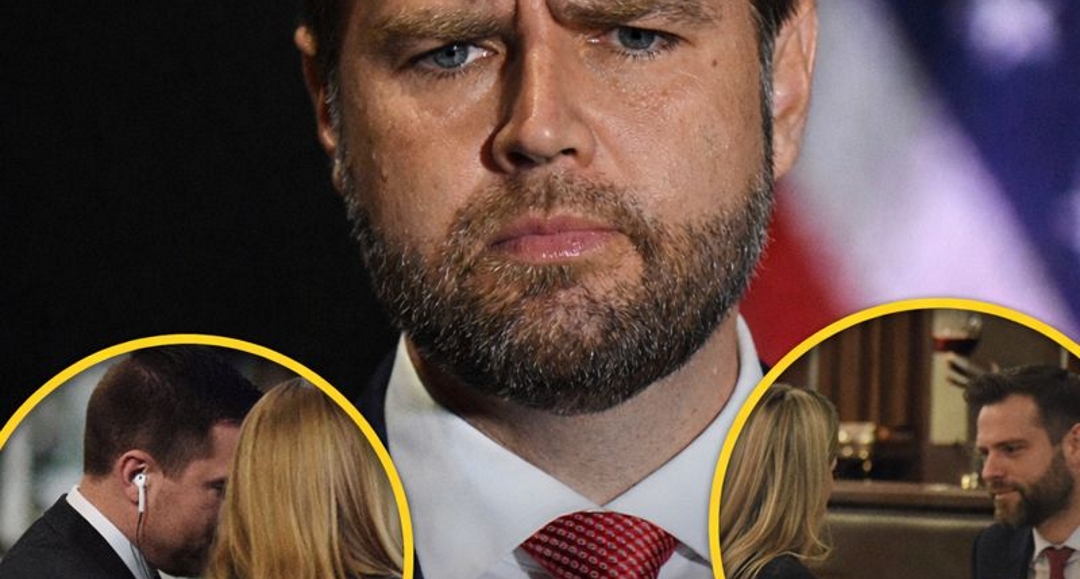
What began as an unusual social interaction has now exploded into a serious internal controversy, after allegations emerged that a Secret Service agent disclosed sensitive personal details about Senator JD Vance during what officials are describing as a fabricated social encounter.
According to multiple sources familiar with the matter, the incident allegedly took place during what was later determined to be a staged or misleading personal meeting, raising immediate red flags within federal security circles. The details shared were not classified, but they were reportedly private enough to trigger alarm once supervisors became aware.
People briefed on the situation say the concern was not only about what was said, but how easily boundaries appeared to blur. In an era where security protocols are under constant strain, even minor lapses can spiral into credibility crises, especially when high-profile political figures are involved.
Internal discussions reportedly intensified after the interaction surfaced through informal channels. One official described the mood as “tense and corrective,” with leadership focused on determining whether policy violations occurred or whether the incident reflects broader gaps in training and oversight.
Security analysts have long warned about the risks of social engineering — scenarios where individuals are manipulated into revealing information without realizing the full implications. Similar dynamics have been outlined in federal cybersecurity guidance, though such concerns are often discussed in digital contexts rather than face-to-face encounters.
JD Vance has not publicly commented in detail on the incident, but sources close to his office say there is frustration that personal boundaries may have been crossed, even if unintentionally. Allies emphasize that elected officials rely on the absolute discretion of protective services, especially outside formal events.
Within the agency, the alleged leak has reportedly prompted internal reviews, including interviews and documentation checks. Officials are said to be examining whether the interaction violated conduct rules or if it represents a misunderstanding amplified by optics and timing.
Situations like this are often compared to prior cases where trust erosion created ripple effects across agencies, as seen in past federal reviews. While outcomes vary, the emphasis is almost always on restoring confidence quickly.
Security work depends on trust and restraint. Even perceived lapses can undermine public confidence. — Policy Watch (@PolicyWatchNow) January 2026
Former agents and security experts say the case highlights a gray area that training does not always fully address — informal interactions that feel harmless in the moment but later raise serious questions. One retired official noted that “off-duty doesn’t mean off-responsibility.”
Some observers believe the reaction inside the agency reflects heightened sensitivity following a series of recent scrutiny moments involving protective services nationwide. Public trust, once shaken, can take years to rebuild, making leadership especially cautious.
The situation has also sparked debate about how public figures navigate personal spaces while under protection. Analysts point to evolving norms around privacy, dating, and social interactions, particularly when political figures are involved, as discussed in recent governance research.
At the same time, officials stress that no operational security was compromised and that there is no indication of malicious intent. Still, the optics alone were enough to trigger a response aimed at reinforcing internal discipline.
This isn’t about scandal — it’s about safeguarding standards in high-stakes roles. — Civic Affairs (@CivicAffairs) January 2026
As reviews continue, agency leadership is expected to issue updated guidance or reminders reinforcing boundaries, discretion, and professional distance. Whether disciplinary action follows remains unclear, but insiders say the incident will likely be referenced in future training.
For now, the episode stands as a reminder that even brief, seemingly personal moments can carry weighty consequences when power, protection, and public trust intersect. In environments where silence is often the strongest safeguard, even a few words can echo loudly.