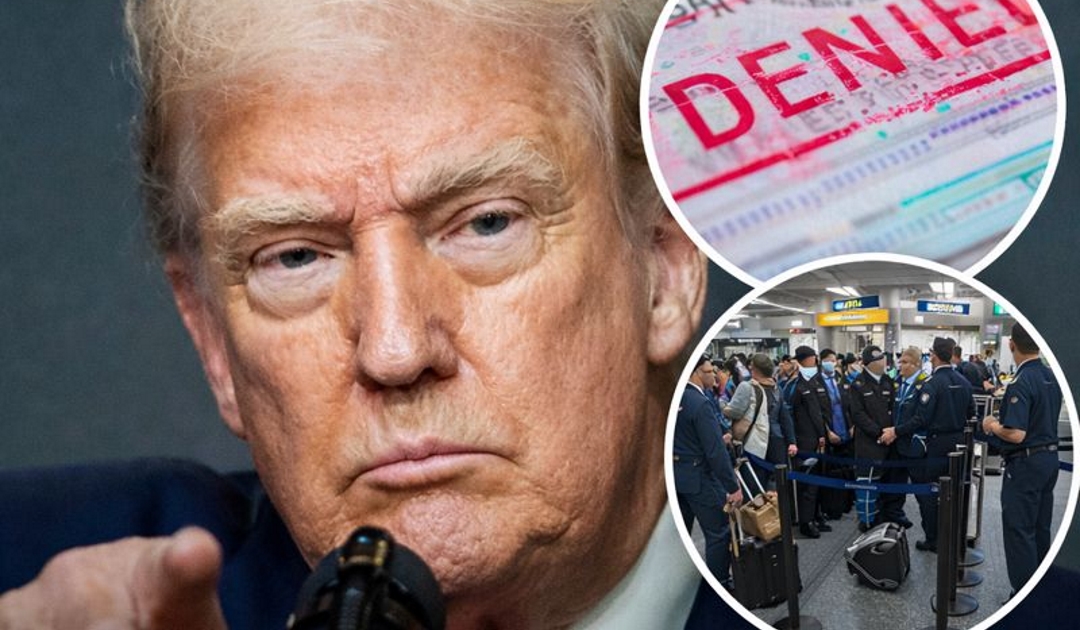
The image is blunt and unmistakable. Donald Trump pointing forward, a red “DENIED” stamp hovering nearby, and long airport lines frozen in place. Together, they signal a moment that immediately sparked confusion, fear, and a flood of misinformation across social media feeds.
Despite the viral framing, the reality is more layered than a single sweeping ban. The United States has expanded entry restrictions affecting travelers connected to roughly 75 countries, but the policy is not a universal shutdown of borders. Instead, it’s a complex mix of visa suspensions, heightened screening rules, and country-specific limitations that vary widely depending on travel purpose and documentation.
According to immigration attorneys and policy analysts, the restrictions primarily impact certain visa categories rather than tourists as a whole. In many cases, student visas, temporary work visas, or specific travel programs are paused or slowed due to security reviews or diplomatic disputes. A breakdown circulating among legal experts referenced longstanding immigration authority powers that allow presidents to act quickly during perceived national security concerns.
At airports, the effect is already visible. Travelers from affected regions report additional interviews, longer waits, and in some cases last-minute refusals at boarding gates. Airlines have quietly updated internal guidance, while consular offices overseas are delaying interviews. One frequent flyer described the process as “death by paperwork,” echoing warnings found in official visa advisories.
People think this means nobody can come in. That’s not true. It means uncertainty, delays, and selective enforcement — which is sometimes worse. — Immigration Attorney (@immigrationlaw) January 2026
The political framing has amplified anxiety. Critics argue the move revives memories of earlier travel restrictions that triggered court challenges and global backlash. Supporters, however, insist the policy is narrowly tailored and rooted in intelligence assessments. Both sides cite precedent, including past Supreme Court rulings that affirmed broad executive authority over entry decisions.
One key detail often missing from viral headlines is who remains unaffected. U.S. citizens, permanent residents, diplomats, and many family-based travelers are exempt. Emergency humanitarian cases are also reviewed separately, though advocates warn the process is inconsistent. A human rights group pointed to documented disparities in enforcement as a reason transparency matters.
Universities are scrambling to reassure international students, many of whom are already in the U.S. and fear leaving could prevent reentry. Several institutions issued internal memos advising students to delay nonessential travel. One dean cited “administrative whiplash,” a phrase that has gained traction in academic circles and appears in recent higher education briefings.
This isn’t just about borders. It affects research labs, hospitals, classrooms, and families who live in legal gray zones. — Policy Watch (@PolicyWatchUS) January 2026
Business leaders are also watching closely. Industries reliant on global talent, including tech and healthcare, worry about staffing gaps and delayed onboarding. A trade association memo circulated this week warned that even short-term uncertainty can ripple through hiring cycles, echoing concerns raised in previous economic impact reports.
For travelers abroad, the message is caution rather than panic. Experts advise checking visa status daily, avoiding assumptions based on nationality alone, and consulting legal counsel before making travel plans. The restrictions are evolving, and enforcement appears uneven, which means two people with similar profiles may experience very different outcomes.
What the image captures is not just a policy shift, but a climate of unpredictability. While the headline number sounds sweeping, the lived reality is fragmented and bureaucratic, shaped less by a single announcement and more by how rules are interpreted on the ground. For now, movement continues — just slower, quieter, and with far more paperwork than before.