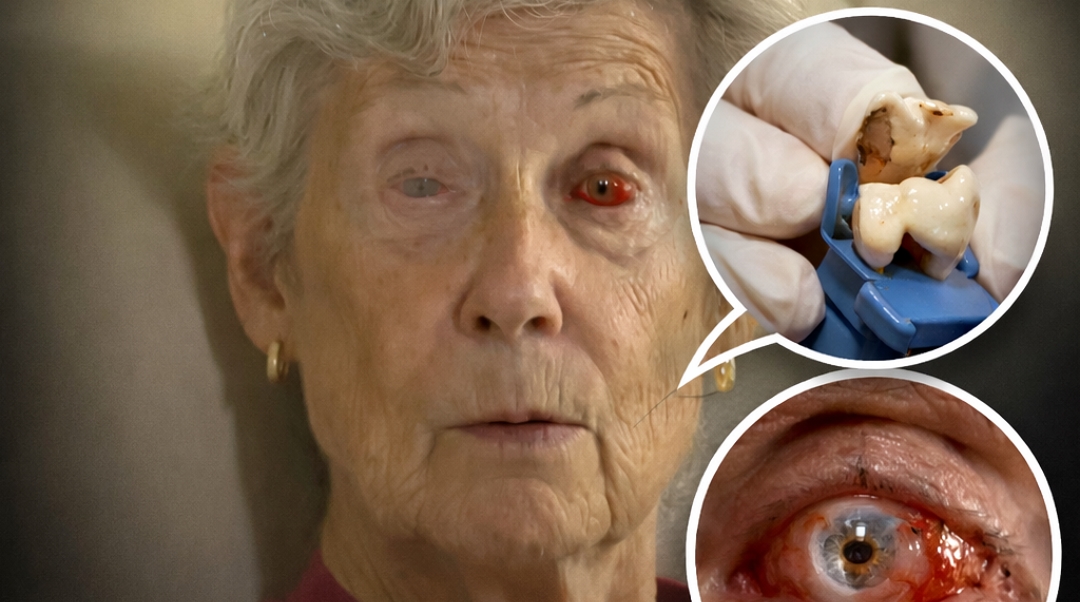
For nearly a decade, Margaret Lewis had grown used to navigating the world through sound and memory rather than sight. The 74-year-old from Ohio lost most of her vision gradually, first noticing a blur in her left eye, then a dimming that eventually made everyday tasks feel impossible.
At first, she assumed it was just age catching up with her. Reading menus became difficult. Street signs faded into gray shapes. Eventually even faces were reduced to shadows.
Doctors later confirmed what she had feared: severe damage to her cornea and surrounding eye tissue had left her legally blind. Traditional treatments weren’t helping. Surgeries offered only limited hope.
“I remember the moment they told me my eyesight probably wouldn’t come back,” Lewis said in a recent interview. “You start thinking about all the things you’ll never see again — your grandchildren growing up, a sunrise, even your own reflection.”
For years, she adapted to a new routine. A cane guided her through grocery stores. Audio books replaced the stack of novels she once read every month. Family members rearranged the house to make moving around easier.
Then, last year, something unexpected happened.
Her ophthalmologist mentioned a relatively new medical procedure being studied at several research hospitals. It wasn’t guaranteed to work. In fact, the odds were uncertain. But for patients with certain types of eye damage, it offered a possibility that hadn’t existed before.