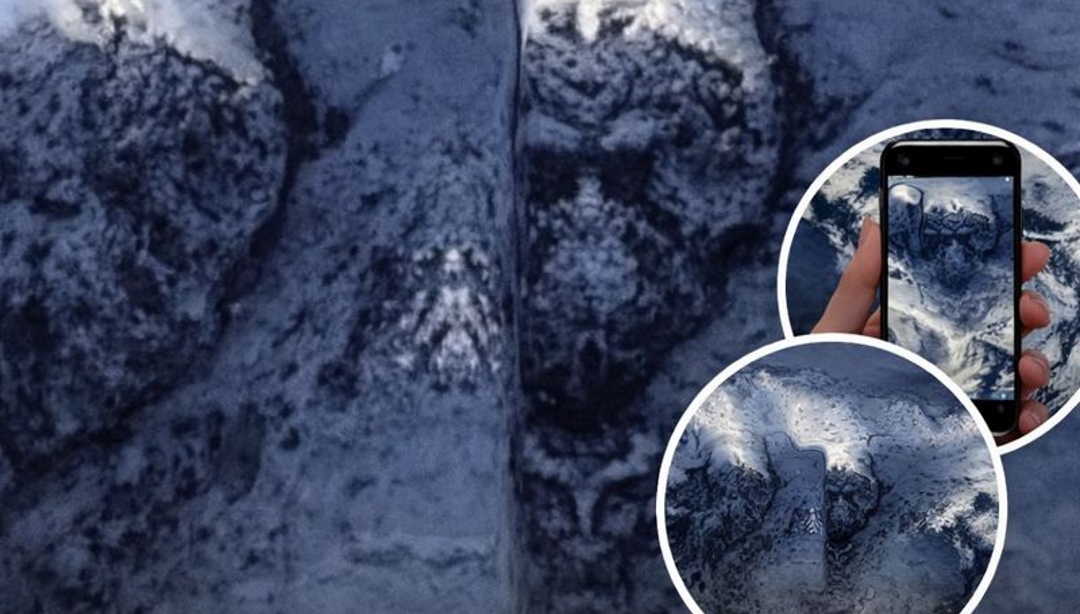
Online reaction was swift and polarized. Skeptics dismissed it immediately as pareidolia — the human tendency to see familiar patterns, especially faces, in random stimuli. Others weren’t so sure. Comment sections filled with speculation, folklore references, and theories ranging from ancient carvings to something far more unsettling.
One widely shared post described the image as “too precise to be accidental,” while another joked that Google Maps had “accidentally documented hell’s front door.” But beneath the humor was genuine discomfort. People weren’t just amused — they were rattled.
Experts were quick to point out that satellite imagery exaggerates contrast and shadow, especially in rugged terrain. When sunlight hits mountains at low angles, ridges cast elongated shadows that can create the illusion of depth where none exists. According to geologists, what looks like eyes and a mouth is simply a combination of valleys, rock formations, and shadowed slopes aligning just right.
Still, knowing the explanation didn’t fully erase the unease. The brain is wired to recognize faces — it’s one of the earliest survival mechanisms humans develop. When a “face” appears where it shouldn’t, especially at a massive scale, it can trigger an instinctive sense of alarm.