
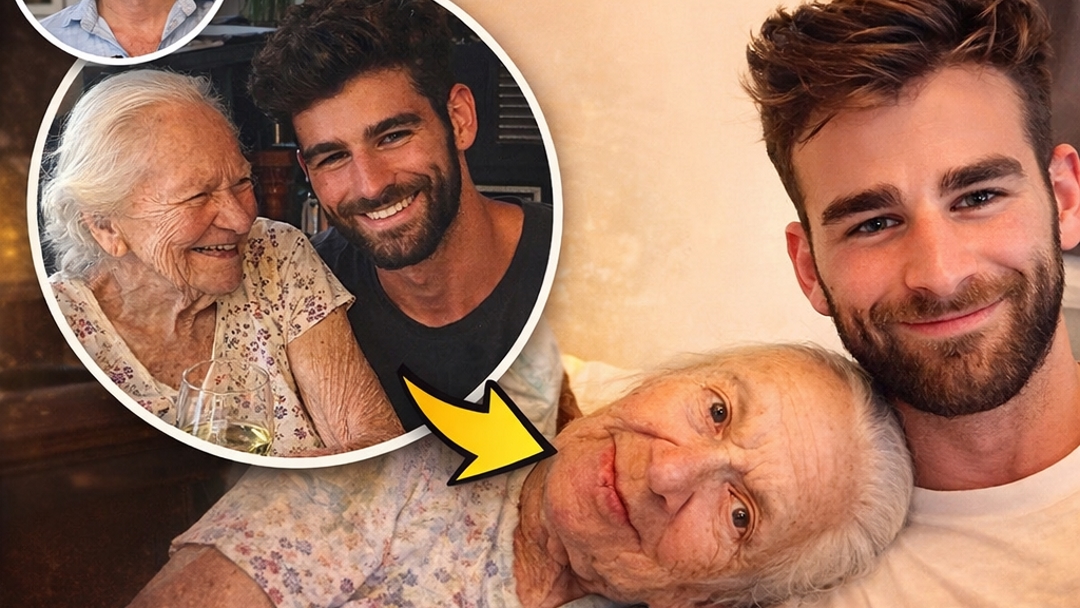
When neighbors first noticed the moving van outside the small suburban home, they assumed a family member was coming to stay. Instead, what unfolded was something far quieter — and far more powerful.
A 31-year-old man had invited his elderly neighbor, an 89-year-old woman battling severe illness, to move into his home so she wouldn’t spend her final months alone.
The story began in the ordinary rhythm of neighborhood life. For years, the two had exchanged simple greetings across the yard, the kind of polite conversations that rarely last more than a few minutes. She lived alone after losing her husband decades earlier. He had moved into the area several years before, drawn by the quiet streets and modest homes.
At first, their relationship was nothing more than friendly small talk. But over time, the conversations grew longer.
Sometimes he helped carry groceries inside. Other times he checked in after storms or brought over extra food he had cooked. The small acts of kindness slowly built a quiet friendship.
Then came the diagnosis.
The elderly woman’s health had been declining, but the news still came as a shock. Doctors told her that her condition was terminal and that she would likely require increasing care. Her remaining family lived far away, and the idea of facing the final chapter of her life alone weighed heavily on her.
Neighbors recall that the change in her demeanor was noticeable.
“She used to sit on her porch every morning,” one resident said. “After the diagnosis, we didn’t see her outside as much.”
The man next door noticed it too.
One evening, during a quiet conversation over tea in her kitchen, the subject surfaced naturally. She spoke openly about her fears — not just about illness, but about loneliness.
“I’m not afraid of dying,” she reportedly told him. “I’m afraid of doing it by myself.”
The words lingered long after the conversation ended.
For the 31-year-old, the decision came quickly, though it would change both of their lives. A few days later, he knocked on her door with a simple proposal: she could move into his house.
At first, she laughed, thinking he was joking. But he insisted.
He cleared out a spare bedroom, rearranged furniture to make the space accessible, and helped coordinate medical visits and daily care. Slowly, her belongings moved across the yard — photographs, books, and a lifetime of memories packed into boxes.
What could have been a clinical arrangement quickly became something more personal.
They shared meals together most evenings. Sometimes they watched old movies. Other nights they simply talked — about her childhood, about the decades she spent raising a family, about the quiet joys and regrets that come with nearly nine decades of life.
“She had the most incredible stories,” he later said. “I realized how much history lives inside people if someone just takes the time to listen.”
Caregiving, however, brought challenges.
Her health fluctuated. There were hospital visits, sleepless nights, and moments when the reality of her illness became impossible to ignore. Yet those difficult days also deepened the bond between them.
Neighbors occasionally saw them sitting together outside in the late afternoon sun, talking quietly. To many in the community, the scene carried a kind of quiet dignity — a reminder that compassion can appear in unexpected places.
For the elderly woman, the change transformed her final months.
Instead of silence, there was conversation. Instead of isolation, there was companionship. She often told visitors that the arrangement had given her something priceless: the feeling of still belonging somewhere.
“I thought my life had already shrunk to just waiting,” she once said softly. “But now every day feels like it matters again.”
The story has since spread beyond the neighborhood, resonating with people who see in it a rare example of everyday humanity.
In a world where headlines often focus on conflict and division, small gestures of empathy can carry extraordinary weight. Experts who study aging note that loneliness among elderly populations has become a growing public health concern, with many seniors living their final years with limited social contact.
Acts like this, they say, remind communities that connection doesn’t always require grand institutions or programs. Sometimes it begins with something as simple as noticing a neighbor.
For the man who opened his home, the experience has been life-changing in ways he didn’t expect.
“I thought I was helping her,” he said. “But honestly, she’s helped me understand what really matters.”
And for the woman now spending her final chapter surrounded by conversation instead of silence, the arrangement has given her something she once feared she had lost: the comfort of knowing she will not face the end of life alone.