
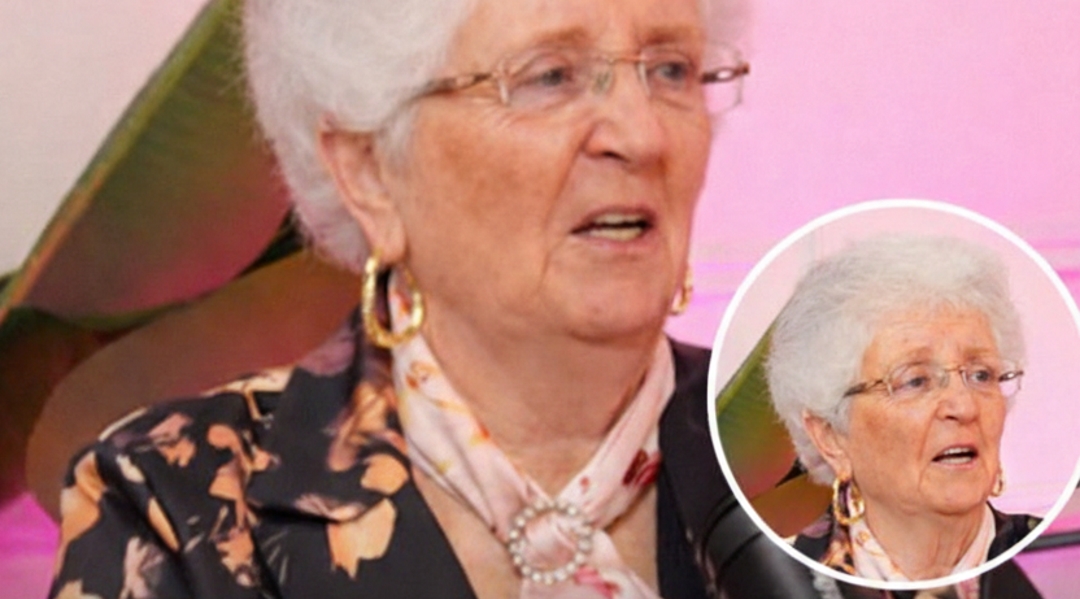
For most of her adult life, she lived quietly, raising a family and keeping her personal desires firmly in the background. By her own account, she spent more than four decades celibate, convinced that intimacy belonged to a chapter of life already closed. At 73, she says she was wrong — and her decision to become an escort forced her to rethink nearly everything she believed about aging, sexuality, and self-worth.
The grandmother, who has chosen to speak publicly while keeping parts of her identity private, says her journey didn’t begin with money or rebellion. It began with loneliness. After years of caring for others and placing her own needs last, she reached a point where the silence of her personal life felt heavier than the social rules she’d followed for decades.
She describes celibacy as something that crept up gradually rather than a conscious vow. Relationships ended, responsibilities multiplied, and intimacy slowly disappeared. Over time, she stopped seeing herself as someone who was allowed to want desire at all. “You start thinking passion has an expiration date,” she explains. “And once you pass it, that’s it.”
That belief cracked when she began reading about older women reclaiming their sexuality later in life. She encountered stories of women challenging assumptions about age and desire, including research and reporting on how intimacy doesn’t simply vanish with time, as discussed in coverage examining sexuality in later life. For the first time, she felt curiosity instead of shame.
What followed was not a sudden leap into escorting, but months of self-reflection. She questioned whether intimacy could be meaningful without romance, whether companionship could exist without long-term commitment, and whether her age disqualified her from being desired. She says the most difficult hurdle wasn’t logistics or legality — it was unlearning decades of internalized rules.
Eventually, she made the decision to explore escorting on her own terms. She emphasizes that consent, boundaries, and safety were central from the beginning. “This wasn’t about being reckless,” she says. “It was about taking control of a part of my life I’d ignored for far too long.”
Her clients, she explains, are often surprised to meet someone her age. But she says many seek conversation as much as physical intimacy. Some are widowers, others divorced, and many simply want connection without the pressures of traditional dating. “People assume it’s all about sex,” she says. “But often it’s about being seen.”
She rejects the stereotype that escorting at her age is an act of desperation. Instead, she frames it as empowerment. Financial independence is part of it, but not the whole story. She describes a sense of confidence returning — not because of external validation, but because she reclaimed agency over her body and choices.
Criticism, of course, has followed. She says reactions range from admiration to outright condemnation, often from people who believe sexuality should be reserved for the young. “There’s this idea that once you’re a grandmother, you should become invisible,” she says. “As if your body stops belonging to you.”
Experts on aging and intimacy say her experience reflects a broader cultural shift. Studies consistently show that many older adults remain sexually active and emotionally curious, even as society pretends otherwise. Yet conversations around sex work rarely include older women, leaving stories like hers both shocking and revealing.
She is careful to stress that escorting is not a universal solution, nor something she encourages others to do lightly. For her, it worked because it aligned with her boundaries and circumstances. She believes the larger takeaway isn’t about the profession itself, but about the freedom to redefine oneself at any age.
“We talk so much about reinvention when you’re young,” she says. “But no one tells you that you’re allowed to reinvent yourself at 70.”
Her family’s reaction has been mixed. Some relatives know the full story, others only pieces. She says honesty came gradually, and not everyone was supportive. Still, she maintains that living authentically mattered more than preserving comfort at the expense of truth.
Public conversations about sex work remain polarizing, and she understands why. But she believes nuance is missing. Many people, she argues, conflate exploitation with autonomy, ignoring the voices of those who choose their path deliberately. Reporting on the complexity of sex work and consent has increasingly highlighted these distinctions, including long-form discussions examining agency and stigma.
Today, she says she feels more present in her own life than she has in years. The escorting chapter may not last forever, but its impact already has. It forced her to confront assumptions about age, desire, and dignity — not just in others, but in herself.
Looking back on 40 years of celibacy, she doesn’t express regret so much as understanding. “I did what I thought was expected,” she says. “Now I’m doing what feels true.”
Her story challenges an uncomfortable question: who gets to decide when a woman’s desire should end? For her, the answer is simple. “I do,” she says. “And I wish I’d realized that sooner.”