
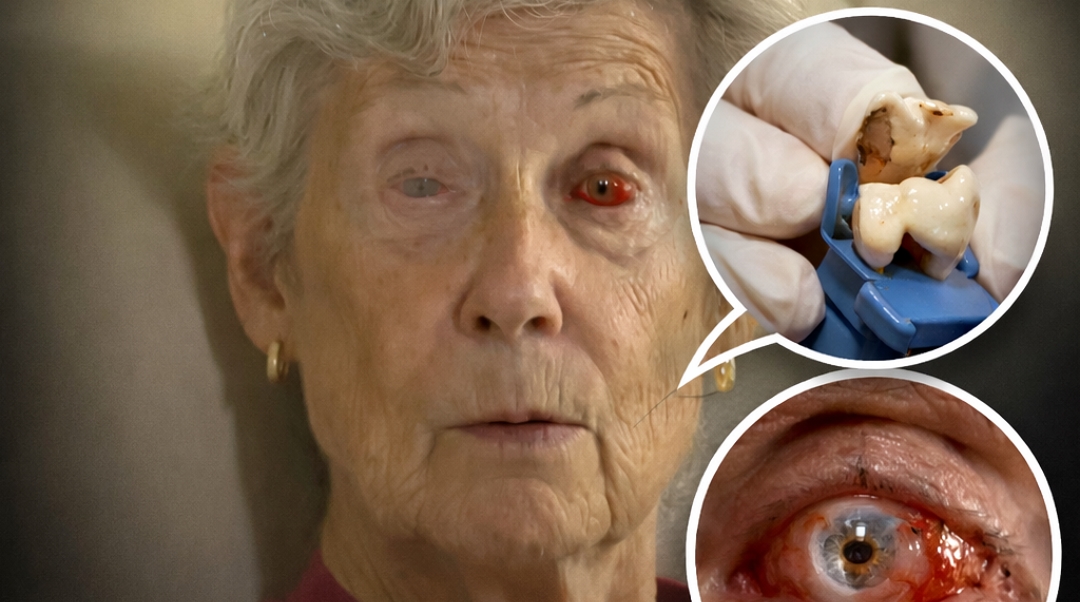
For nearly a decade, Margaret Lewis had grown used to navigating the world through sound and memory rather than sight. The 74-year-old from Ohio lost most of her vision gradually, first noticing a blur in her left eye, then a dimming that eventually made everyday tasks feel impossible.
At first, she assumed it was just age catching up with her. Reading menus became difficult. Street signs faded into gray shapes. Eventually even faces were reduced to shadows.
Doctors later confirmed what she had feared: severe damage to her cornea and surrounding eye tissue had left her legally blind. Traditional treatments weren’t helping. Surgeries offered only limited hope.
“I remember the moment they told me my eyesight probably wouldn’t come back,” Lewis said in a recent interview. “You start thinking about all the things you’ll never see again — your grandchildren growing up, a sunrise, even your own reflection.”
For years, she adapted to a new routine. A cane guided her through grocery stores. Audio books replaced the stack of novels she once read every month. Family members rearranged the house to make moving around easier.
Then, last year, something unexpected happened.
Her ophthalmologist mentioned a relatively new medical procedure being studied at several research hospitals. It wasn’t guaranteed to work. In fact, the odds were uncertain. But for patients with certain types of eye damage, it offered a possibility that hadn’t existed before.
Lewis didn’t hesitate long.
“I figured I’d already lost my vision,” she said. “If there was even a small chance, it was worth trying.”
The procedure she underwent involves replacing or repairing damaged eye tissue using advanced graft techniques and regenerative medicine. In some cases, doctors combine donor tissue with lab-grown cells designed to help the eye heal and function again.
It’s part of a growing field of research focused on restoring vision rather than simply slowing its decline.
Dr. Alan Rivera, a specialist involved in similar treatments, says the science has progressed rapidly in the past decade.
“Years ago, certain kinds of corneal damage were essentially irreversible,” Rivera explained. “But improvements in transplantation, stem-cell therapy, and micro-surgical tools have opened doors that didn’t exist before.”
Still, success isn’t guaranteed.
The surgery itself took several hours. Lewis remembers the quiet tension in the operating room, the careful instructions from nurses, and the long recovery period afterward when doctors monitored every small change in her eye.
At first, nothing seemed different.
Days passed. Then weeks.
Vision restoration, specialists say, can be slow because the brain must relearn how to interpret signals from the repaired eye.
Then one morning, something changed.
Lewis was sitting near a window when she noticed a faint glow cutting through the darkness she had grown used to. At first she assumed it was her imagination. But the light remained.
“It was blurry and bright,” she said. “But it was definitely light.”
Doctors confirmed what she was experiencing — the transplanted tissue was beginning to function.
Over the following months, shapes began to emerge. Outlines sharpened. Colors slowly returned. The improvement wasn’t perfect vision, but it was something she hadn’t experienced in years.
The first face she clearly recognized again was her daughter’s.
“That was the moment it hit me,” Lewis said. “I hadn’t seen her smile in so long.”
Medical researchers caution that stories like hers represent progress but not a universal cure. Vision loss can come from many different conditions, and treatments that work for one patient may not help another.
Still, specialists say developments in regenerative eye medicine are accelerating.
Clinical trials around the world are exploring ways to repair damaged retinas, regrow nerve connections, and develop artificial implants that can transmit visual signals to the brain. Some techniques remain experimental, but the results are encouraging enough that researchers believe the next decade could bring major advances.
For patients like Lewis, even partial success can be life-changing.
She now spends time outdoors again, something she avoided during the years when light meant nothing to her eyes. She watches birds land in the yard and has started reading large-print books with the help of magnification tools.
“It’s not the same eyesight I had when I was young,” she said with a laugh. “But it’s a gift I never thought I’d get back.”
Doctors who treated her say stories like this are why the research continues.
Because for millions of people living with vision loss, the line between darkness and sight may no longer be as permanent as it once seemed.