
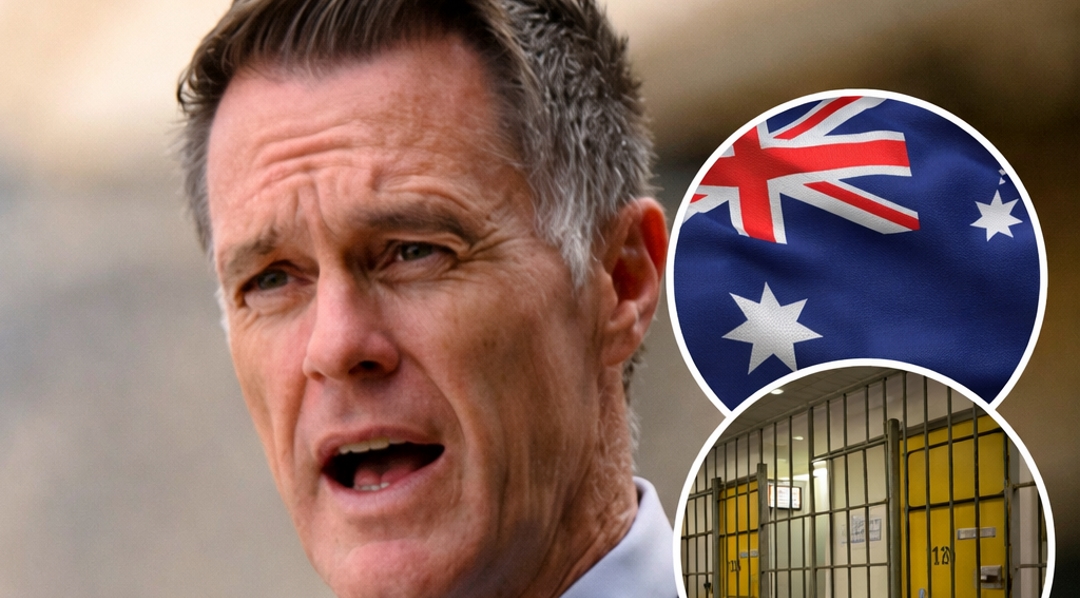
An Australian state government has ignited a fierce national debate after introducing legislation that would criminalize the public use of a specific six-word phrase, with penalties that could include up to two years behind bars.
The proposal, framed by officials as a response to rising extremism and public disorder, would expand existing public order and hate-speech laws to cover language authorities say is increasingly being used to intimidate, threaten, or incite hostility in public spaces.
While lawmakers have avoided repeatedly amplifying the phrase itself during parliamentary debate, they have confirmed it is a slogan that has appeared frequently at recent protests, rallies, and online campaigns, triggering complaints from community groups and law-enforcement agencies.
Under the draft legislation, using the phrase in a public setting — including demonstrations, speeches, or potentially online posts linked to real-world events — could constitute a criminal offense if authorities determine it carries an implied threat, endorsement of violence, or intent to intimidate.
The state’s attorney general defended the move, arguing that the law is not about suppressing political opinion, but about preventing language that authorities believe has crossed the line from expression into coercion. “We are responding to real-world harm,” the attorney general said, emphasizing that police would retain discretion in enforcement.
Critics, however, say the law dangerously blurs the line between speech and criminal conduct. Civil liberties organizations warned that the vague framing could open the door to selective enforcement, chilling lawful protest and political dissent.
Legal scholars have raised concerns about how courts would interpret intent. Because the phrase itself is not universally agreed upon as inherently violent, prosecutors would need to demonstrate context, audience, and perceived impact — a process that could vary widely from case to case.
The controversy has intensified due to the proposed penalty. A maximum sentence of two years in jail places the offense in the same category as serious public order crimes, prompting critics to question whether the punishment fits the alleged harm.
Supporters of the legislation argue that existing laws have proven inadequate. Police representatives have testified that current statutes make it difficult to intervene early when language is used to escalate tensions at protests or intimidate targeted groups.
Opposition lawmakers have accused the government of rushing the bill under public pressure, warning that poorly defined speech restrictions often face constitutional challenges. Several have called for amendments that would narrow the scope of the law or introduce stronger safeguards for political expression.
The debate has not stayed confined to the state. National media coverage and commentary have turned the bill into a flashpoint in Australia’s broader conversation about free speech, protest rights, and the role of government in regulating language.
Online reaction has been sharply divided. Some Australians have applauded the move as a necessary response to rising social tensions, while others fear it sets a precedent that future governments could exploit to silence unpopular viewpoints.
Human rights advocates have pointed out that international law generally protects political expression, even when controversial, unless it directly incites violence. They argue the proposed law risks overreach by criminalizing language based on interpretation rather than clear harm.
The government has countered that safeguards exist, including prosecutorial oversight and judicial review. Officials insist the law targets behavior, not belief, and would only be applied in cases where the phrase is used in a threatening or coercive manner.
As the bill moves through the legislative process, amendments remain possible. Parliamentary committees are expected to hear testimony from legal experts, civil liberties groups, and law-enforcement officials before a final vote.
If passed, the law would make the state one of the most aggressive jurisdictions in Australia when it comes to criminalizing specific protest language, a distinction that has already drawn international attention.
For now, the proposal stands as a stark illustration of how language itself has become a legal battleground — one where the consequences could extend well beyond words.
More details on the proposed legislation can be found in national reporting on the bill’s introduction and analysis of the free-speech concerns raised by critics.