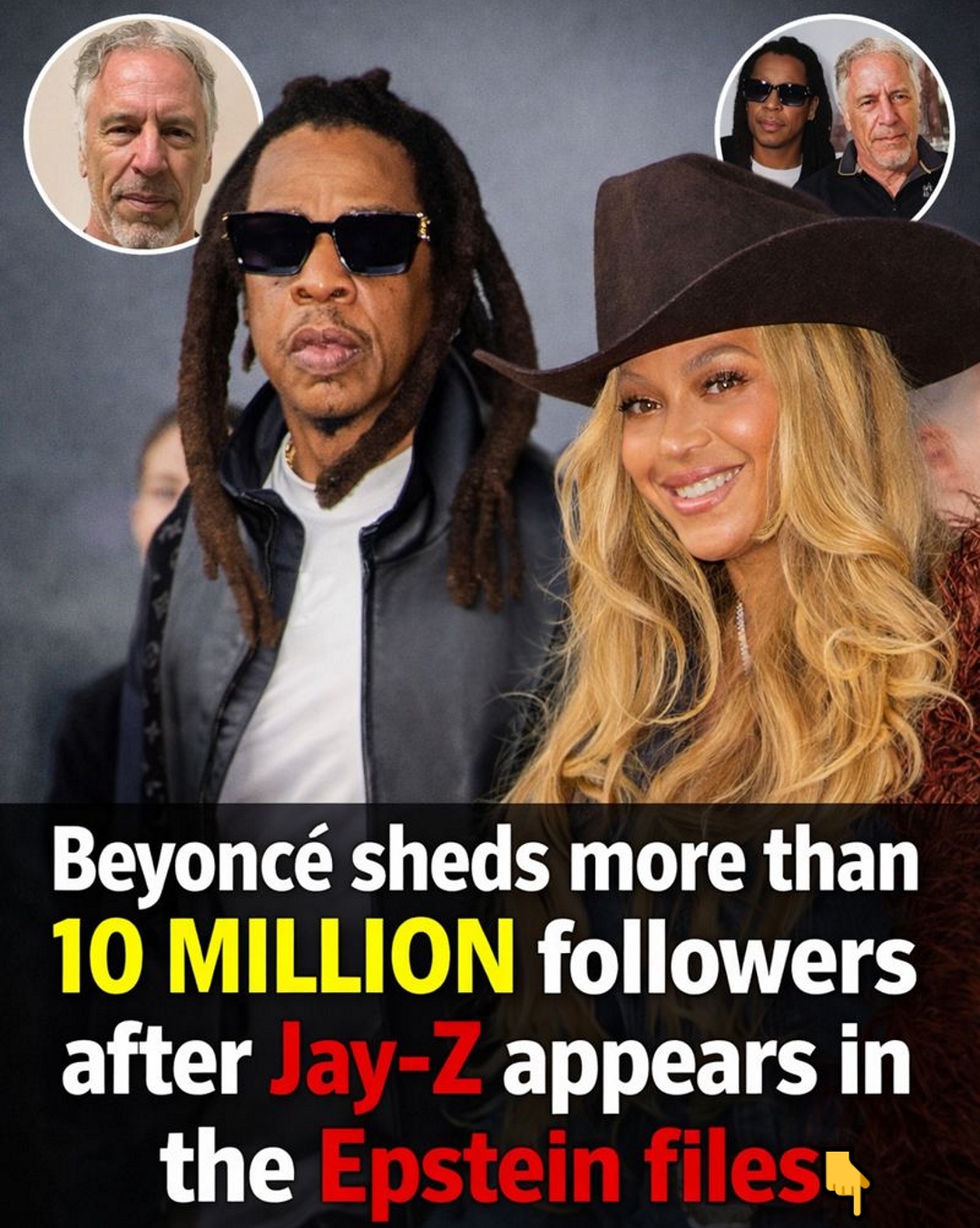
In the days after a new tranche of court documents connected to Jeffrey Epstein entered the public record, an unexpected ripple moved across social media. Beyoncé’s Instagram following dipped by millions, sparking a heated debate about guilt by association, online outrage, and how quickly public perception can turn in the algorithm age.
The drop appeared to accelerate after online users highlighted that the name of her husband, Jay-Z, appeared in the recently unsealed Epstein-related materials. Within hours, screenshots circulated claiming Beyoncé had lost more than ten million followers, with timelines showing a sudden, steep decline rather than a slow, organic shift.
It’s important to clarify what the documents do — and do not — say. The files are part of long-running civil litigation tied to Epstein’s network and contain references to numerous high-profile individuals. Being named in these materials does not constitute an accusation or evidence of wrongdoing. In many cases, names appear through second-hand testimony, flight logs, or contextual mentions without any allegation attached.
Still, nuance struggled to survive the internet’s reaction. As soon as Jay-Z’s name was flagged, social platforms lit up with speculation, commentary, and misinformation. For some users, the mere appearance of a familiar celebrity name was enough to trigger unfollows, despite no claim of illegal behavior being made against him.