
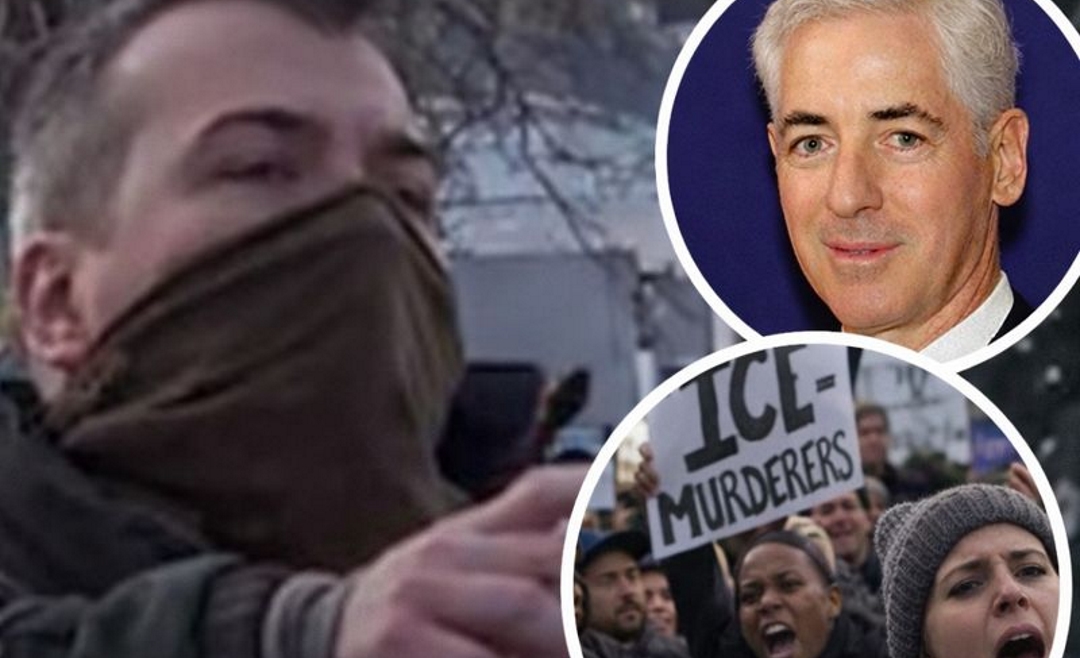
The image spread in fragments before the full story caught up. A masked ICE officer at the center of a chaotic confrontation. Protesters screaming, signs reading “ICE MURDERERS,” and then one name cutting through the noise: Bill Ackman.
Within hours of news breaking about a fatal ICE shooting, the billionaire hedge fund manager’s $10,000 donation to support the agent involved ignited a firestorm. To supporters, it was a gesture of solidarity. To critics, it was proof of everything they believe is broken about power, policing, and accountability in America.
The shooting itself unfolded during an immigration enforcement operation that quickly spiraled. Details remain contested, but the death of a civilian — followed by images of grieving demonstrators and aggressive law enforcement response — turned the incident into a national flashpoint, echoing patterns seen in recent enforcement controversies that already had the country on edge.
Ackman’s donation didn’t remain quiet for long. Once it surfaced online, outrage erupted almost instantly. Critics argued that a billionaire stepping in with financial support before investigations were complete sent a chilling message about whose lives are valued. The sum itself became symbolic — not because it was large for Ackman, but because of what it represented in a moment of grief.
Social media users flooded platforms with comparisons, noting how often families of victims are forced to rely on GoFundMe campaigns while powerful figures rally behind law enforcement. Many pointed to past reporting on ICE accountability, arguing the donation reinforced a pattern of shielding agents from scrutiny.
Supporters of Ackman pushed back hard. They framed the donation as a principled stand against what they see as a growing culture of demonizing officers before facts are established. Some cited law enforcement commentary that warns morale is collapsing under constant public attack.
A billionaire backing ICE after a fatal shooting tells you exactly how power works in this country. — Justice Watch (@JusticeWatchOrg) January 2026
The reaction quickly outgrew Ackman himself. His name became shorthand for a broader debate about money, influence, and justice. Protesters chanted outside federal buildings, while commentators debated whether wealthy donors should stay silent during active investigations — or whether silence itself is a form of complicity.
Adding fuel to the fire was Ackman’s past record of outspoken political engagement. His willingness to publicly wade into controversial issues made it impossible for this donation to be dismissed as neutral charity. Critics resurfaced previous statements and decisions, weaving them into a narrative of elite detachment from lived consequences.
Immigration advocates emphasized the human cost, urging the public not to lose sight of the person who died amid the outrage cycle. Several shared resources highlighting systemic enforcement failures, arguing that the focus on Ackman risked overshadowing structural problems that make these confrontations inevitable.
If billionaires can rush to fund agents before facts are known, what chance do victims’ families ever have? — Borderline (@Borderline_US) January 2026
Law enforcement groups, meanwhile, warned that the backlash could discourage officers from performing their duties. Some cited broader political pressure surrounding immigration enforcement, arguing that public vilification creates dangerous hesitation in life-or-death moments.
As investigations continue, Ackman has not publicly walked back the donation. That decision alone has kept the controversy alive, with every new detail about the shooting reframed through the lens of his involvement.
What began as a single check has become a national mirror — reflecting anger, fear, distrust, and deep divides over immigration and power. The donation may fade from headlines, but the questions it raised about influence, accountability, and whose voices matter most are unlikely to disappear anytime soon.