
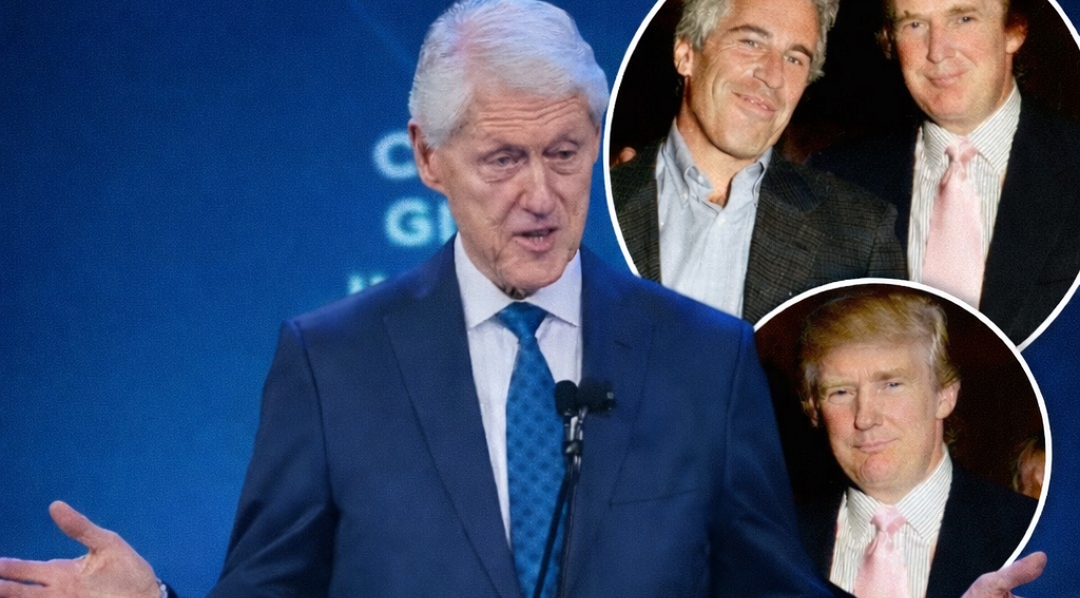
The whisper campaign around Jeffrey Epstein never really stopped — it just kept mutating, reshaping itself into whatever the moment needed. Now it’s back in a sharper form, fueled by a fresh political fight on Capitol Hill and a single, explosive idea: Bill Clinton is preparing to lay out what he knows about Epstein, and what he believes he knows about Donald Trump’s orbit around that world.
What’s actually confirmed is narrower, but still consequential. Bill and Hillary Clinton have agreed to appear for testimony tied to the House Oversight Committee’s expanding Epstein investigation, according to a detailed report on the committee’s plans and the contempt threat still hanging over them as lawmakers keep pushing for public answers.
That “he’s going to expose everything” framing is how the internet tells stories — with a sledgehammer, not a scalpel. In reality, the Clintons’ agreement to testify doesn’t automatically mean a dramatic tell-all, and it doesn’t guarantee any single allegation gets proven or disproven in one sitting.
But the moment matters because the political temperature around Epstein has changed. It isn’t just about what happened years ago, or what prosecutors already put on the record; it’s about who gets to control the narrative now, who gets blamed for delays, and who can turn public disgust into leverage.
Epstein’s crimes and trafficking network left a scorched trail of survivors, lawsuits, and unanswered questions that never fully resolved in the public mind. Each time the topic resurfaces, it drags in powerful names, old photos, flight logs, sealed material, and the uncomfortable reality that “association” is not the same thing as “proof,” even when people desperately want it to be.
That distinction is why testimony like Clinton’s is combustible. It can include direct recollections, timelines, the nature of relationships, and behind-the-scenes details about who said what, who introduced whom, and what warnings were ignored — but it can also become a stage for insinuation, selective memory, and political theater.
The Oversight Committee’s approach has been to widen the net, pressing for testimony and documents that could clarify how Epstein’s world operated and how institutions responded. The threat of contempt votes, even with witness cooperation, signals the committee isn’t treating this like a routine appearance — it’s treating it like a battle for control of the story.
And that’s where Trump enters the picture, because Trump is the gravitational center of modern Republican politics. Even when the underlying issue is bigger than any one person, the way it’s discussed becomes instantly partisan: Democrats accused of protecting their own, Republicans accused of weaponizing survivors’ trauma, and both sides accused of caring more about headlines than justice.
On the Trump side, the political incentive is obvious. If the public conversation can be steered into “everyone was connected, therefore everyone is guilty,” it becomes a fog machine — a way to blur accountability until nothing is clear and nobody pays a price.
On the Democratic side, there’s a different risk. If Clinton’s testimony contains messy, complicated, or ambiguous details, it can become a blunt object used to paint the entire party as compromised, regardless of what the evidence ultimately supports.
Axios captured that tension recently, describing how even some Democrats appear wary about being seen as shielding Clinton from consequences in this fight, with lawmakers openly discussing contempt as the committee keeps applying pressure and the politics get uglier by the day.
What Clinton actually says — and what he refuses to say — is where the real story will live. If his testimony is tightly limited to what he can personally confirm, it may disappoint the people expecting a cinematic “exposure,” but it could still sharpen key facts about who had access to Epstein, what social circles overlapped, and how warnings moved (or didn’t) through elite networks.
If, instead, Clinton’s appearance turns into a sprawling argument about Trump, it could become an accelerant. That wouldn’t automatically make it more truthful or more useful, but it would guarantee the clip economy goes into overdrive — the kind of moments that get chopped into ten-second fragments and blasted as “proof” by people who never read transcripts.
Behind all of this is the core frustration the public keeps returning to: Epstein’s case feels unfinished. The outcome left too many people convinced that crucial information is hidden, that powerful names were protected, and that institutions prioritized stability over transparency.
That’s why these hearings — even when they’re messy — land with such force. People aren’t just hungry for scandal; they’re hungry for a coherent record, a timeline that doesn’t change every election cycle, and consequences that don’t depend on which party is louder on cable news that week.
There’s also a human reality that gets buried beneath the political shouting. Survivors have spent years fighting to be heard, fighting to be believed, and fighting to keep their trauma from becoming a convenient prop. When politicians turn the Epstein story into a partisan weapon, it can feel like the victims are being erased all over again — replaced by a never-ending feud between famous men.
That’s the tightrope Congress is walking now, whether it admits it or not. If the committee’s push produces concrete documentation, verified timelines, and real institutional accountability, the process could move the public conversation closer to something serious.
If it devolves into innuendo and vengeance, it will harden the worst instincts on every side — people will pick the version of reality that flatters their politics, and the survivors will be left watching the country argue about celebrities instead of systemic failure.
Clinton’s testimony won’t end the Epstein saga, and it won’t satisfy everyone who’s convinced there’s a single secret file that explains everything. But it could still matter in a quieter, more dangerous way: by confirming certain relationships, clarifying certain sequences, and exposing exactly how much of this story is still being fought over in the dark.