
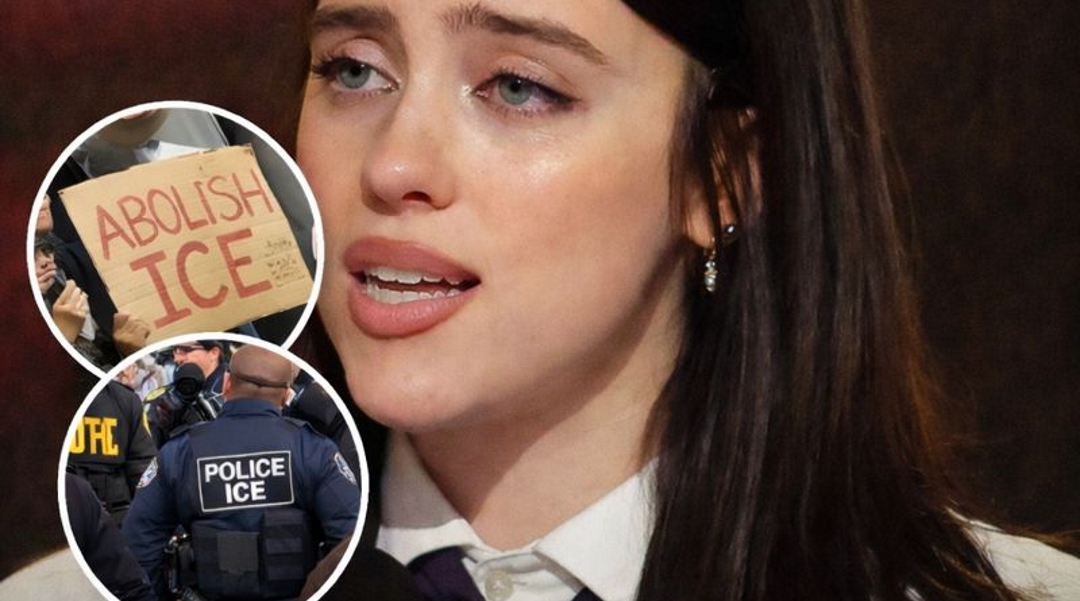
Billie Eilish walked onto the Grammys stage to accept Song of the Year and instantly turned the room from glittery celebration into something sharper. What should have been a routine thank-you speech became a public statement about immigration, protest, and anger at ICE, and it landed with the kind of force that makes an awards show feel like live news.
Eilish accepted the award alongside her brother and longtime collaborator Finneas, smiling at first, visibly grateful, and then suddenly serious. She told the crowd she didn’t feel like she needed to say much beyond one line that cut straight through the room: “No one is illegal on stolen land,” a phrase that has been used for years in activist spaces, now blasted into millions of living rooms at once.
The speech didn’t stop there. Eilish urged people to keep fighting, keep speaking up, keep protesting, and reminded viewers that voices matter. Then came the line that made the moment explode online—her closing jab at ICE—which was partly censored on broadcast but still unmistakable in intent and tone.
Within minutes, the clip was everywhere. Some people praised her for using the platform, others argued artists should “stick to music,” and plenty of viewers were simply stunned that the Grammys had turned into a protest stage in prime time. The reaction was fast because it didn’t feel rehearsed; it felt like a person deciding, in real time, that winning didn’t matter more than saying what she believed.
Context mattered too. Eilish and Finneas were reported to be wearing “ICE OUT” pins at the ceremony, a quiet visual statement that turned into a loud one once she spoke. It was the kind of detail that people latch onto after the fact, because it suggests intention, not impulse—the message wasn’t an accident, it was part of the night.
Her win itself was major. Song of the Year is one of the Grammys’ biggest honors, and it often comes with a polished, diplomatic speech designed to offend no one. Eilish didn’t do that. She thanked the other nominees, expressed disbelief, and then pivoted hard into activism, refusing to soften the edges for the sake of “tone.”
Reporting on the moment noted that she used the win as a megaphone for immigrants and for resistance to aggressive enforcement, with the speech framed as a direct response to a political climate she sees as harmful. A detailed recap of what she said, and how the room reacted, appeared in a full breakdown of her acceptance speech and the immigration message that followed as the clip kept spreading.
Online, the response split into familiar camps. Supporters called the speech brave, especially given how quickly backlash can form when a celebrity touches immigration. Critics accused her of virtue signaling or “making it political,” as if the lives affected by policy are somehow separate from politics. And in the middle were fans who weren’t surprised at all, saying this is exactly who Eilish has been for years—someone willing to throw a wrench into the expected script.
What made the moment feel even bigger was that Eilish wasn’t alone. Other artists reportedly used their time in the spotlight to echo similar themes, with pins, comments, and speeches that leaned into immigrant dignity and human stakes rather than abstract debate. That broader wave gave her words more weight, turning one speech into part of a night-long mood rather than an isolated outburst.
But the line that truly stuck—“No one is illegal on stolen land”—was the one people kept reposting because it doesn’t just argue about law. It reframes the entire conversation as history, power, and belonging, forcing listeners to confront the contradiction between “illegal” and the country’s origins. Whether someone agreed or not, the phrase is built to linger.
There’s also the uncomfortable truth that the Grammys are one of the last places where a mainstream pop star can still hijack the moment in a way that feels uncontrollable. Social media has made celebrity statements constant, but live television still adds electricity. You can feel the room listening. You can feel the risk. And you can feel the backlash forming before the applause even ends.
Eilish’s critics seized on the profanity and the direct ICE reference, arguing it was too harsh, too inflammatory, too disrespectful to law enforcement. Her supporters countered that harsh language is sometimes the only language that matches what people feel when families are separated and fear becomes routine. The debate wasn’t just about what she said—it was about who gets to speak, and how politely they’re expected to plead for humanity.
Meanwhile, the win itself became partially overshadowed by the speech, which is often what happens when an artist takes a massive award and refuses to play it safe. For Eilish, that tradeoff may be the point. A trophy lasts forever, but so does a moment that makes millions of people argue about something they might otherwise ignore.
Coverage of the wider Grammys night suggested the protest tone wasn’t accidental, with multiple celebrities showing signs of coordinated messaging around ICE and immigration. One roundup described how musicians used their visibility to push back against enforcement and call for solidarity, including a recap of the artists who spoke out and the symbols they wore on the carpet while the debate continued to spread across platforms.
By the time the show moved on, the damage—or the impact, depending on your view—was already done. Eilish had taken a polished industry moment and made it messy, human, and confrontational. The Grammys kept rolling, but the clip didn’t stop rolling with it, because the internet rarely lets a moment like that die quietly.
And maybe that’s the clearest takeaway: people don’t only watch awards shows for winners anymore. They watch for ruptures. They watch for the seconds when someone decides the script isn’t worth following, and the stage becomes a microphone for something bigger than music.