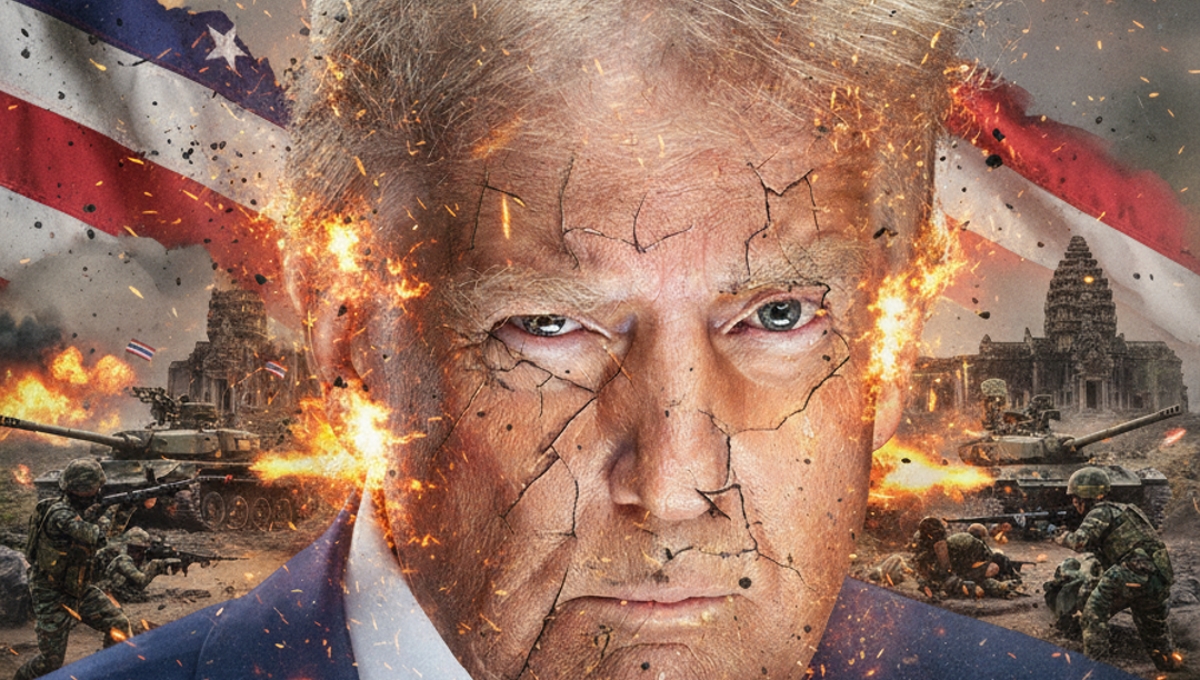
Gunfire and shelling continued to echo along the Thailand-Cambodia border even as political statements claimed the violence was nearing an end, exposing a widening gap between diplomatic messaging and realities on the ground. Local officials and regional observers said clashes persisted in contested areas despite public assertions that both sides had agreed to de-escalate, a contradiction highlighted in ongoing regional security coverage tracking developments hour by hour.
The renewed attention followed remarks by former U.S. President Donald Trump, who told supporters that Thailand and Cambodia had “agreed to a ceasefire,” comments that quickly spread online and were amplified by partisan media before being met with skepticism from analysts familiar with Southeast Asian diplomacy, as discussed in recent reporting on the conflict zone examining what officials from both governments were actually saying.
On the ground, however, there was little sign of calm. Residents near disputed border regions reported hearing exchanges of fire overnight, while local authorities issued fresh warnings urging civilians to avoid travel near military positions — a situation mirrored in past flare-ups described in historical coverage of Thailand-Cambodia tensions that shows how ceasefire claims often unravel before troops stand down.
They say “ceasefire” on TV, but we still hear explosions at night. People here don’t feel any peace yet. — Dara S. (@DaraBorderWatch) Dec 2025
Thai military spokespeople acknowledged there had been “ongoing incidents,” while stopping short of confirming a formal ceasefire agreement, language consistent with statements reviewed in regional diplomatic reporting that noted both governments were using carefully measured words amid rising pressure to show control.
Cambodian officials, meanwhile, accused Thai forces of continuing operations in sensitive areas, arguing that no binding ceasefire document had been signed — a claim echoed by analysts cited in conflict-monitoring analysis explaining how informal assurances often fail without third-party verification.
The contradiction fueled confusion internationally, especially after Trump’s comments were replayed widely online. Political observers noted that while former U.S. presidents frequently comment on global affairs, there was no indication that Washington had formally mediated the dispute, a point clarified by experts interviewed in coverage of unofficial diplomatic claims and their real-world limits.
Saying “they agreed” doesn’t make it so. Ceasefires require signatures, mechanisms, and trust — none of which exist yet. — Lina K. (@LinaGeoRisk) Dec 2025
The fighting itself is rooted in long-standing disputes over border demarcations, particularly around temple complexes and forested areas claimed by both sides — tensions that date back decades and were reignited during previous standoffs detailed in a comprehensive regional backgrounder outlining why the conflict remains so volatile.
Military analysts say even limited skirmishes can escalate quickly, especially when nationalist rhetoric rises domestically. That dynamic was visible this week as social media in both countries filled with calls for toughness, a pattern examined in analysis of regional nationalism showing how online pressure can box leaders into hardline positions.
Diplomats from neighboring ASEAN nations have reportedly urged restraint, warning that prolonged clashes risk destabilizing trade routes and cross-border communities, concerns reflected in broader coverage of Southeast Asian security emphasizing the economic stakes of continued fighting.
Ceasefire talk without ceasefire action only raises expectations — and anger — when the shooting doesn’t stop. — Mark T. (@MarkPolicyAsia) Dec 2025
For civilians caught near the border, the debate over who said what matters far less than whether the gunfire ends. Aid groups monitoring displacement said even short-lived clashes can force families to flee temporarily, a humanitarian concern raised in regional displacement updates tracking movement along the frontier.
As of now, no independent monitors have confirmed a full cessation of hostilities. Observers caution that until commanders on both sides receive clear, enforceable orders — and follow them — claims of peace remain aspirational rather than real.