
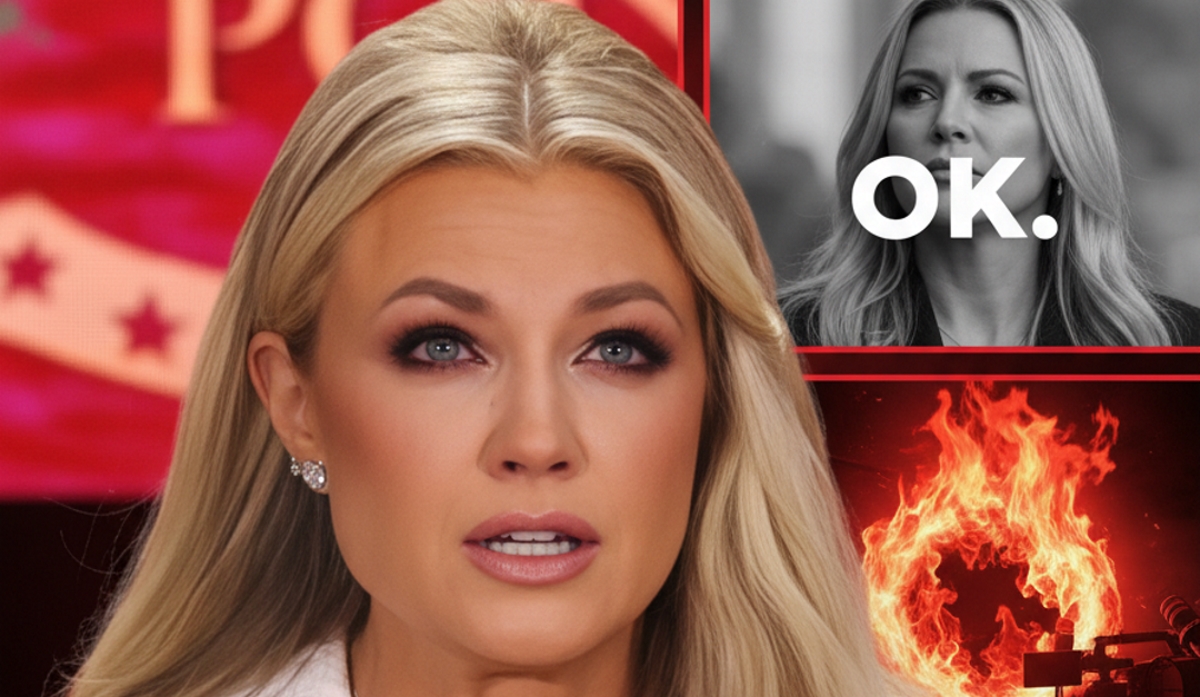
Candace Owens escalated an already volatile online feud after issuing a blistering message aimed at Erika Kirk, the widow who has publicly pushed back against conspiracy theories surrounding her husband’s death. The clash erupted after Kirk responded to Owens’ commentary with a single defiant word, a moment that immediately ricocheted across social media and reignited debates about misinformation, grief, and the ethics of online commentary, dynamics closely examined in recent reporting on viral misinformation cycles that explains how disputes like this spiral so quickly.
The controversy centers on Owens’ long-running criticism of mainstream narratives, which she frequently shares through podcasts and social platforms. In this case, her remarks intersected with a deeply personal tragedy, prompting Kirk to publicly reject the speculation. Observers noted that the widow’s brief response carried outsized weight because it cut directly through weeks of online theorizing, a reaction pattern explored in analysis of how families confront conspiracy culture when private loss becomes public spectacle.
One word from someone actually living this pain was louder than hours of speculation. — Maya L. (@MayaObserves) Dec 2025
Owens did not let the response pass quietly. She answered with a sharp message questioning Kirk’s credibility and reiterating her belief that unanswered questions remain, framing her comments as skepticism rather than accusation. That distinction — between questioning and alleging — has been central to Owens’ public persona, a strategy dissected in profiles examining her influence and how she mobilizes doubt without making formal claims.
Supporters of Kirk, however, argued that the exchange crossed a line. Advocacy groups focused on media responsibility warned that high-profile figures amplifying speculation can retraumatize families, a concern echoed in coverage of online harassment faced by grieving relatives when tragedies are politicized.
Grief isn’t a debate topic. It’s not content. Let the widow live. — Jordan P. (@JordanProtects) Dec 2025
The clash quickly evolved into a broader argument about free speech and accountability. Owens’ defenders insisted she has the right to question official narratives and criticize public statements, pointing to past moments when skepticism later proved justified, examples often cited in media analysis of conspiracy culture that examines why audiences gravitate toward alternative explanations.
Critics countered that this case was different because it involved a private individual thrust into the spotlight by circumstance, not a government agency or corporation. Legal experts have noted that while public commentary is protected, ethical considerations shift when commentary targets individuals coping with loss, a nuance discussed in expert discussions on speech and harm in the digital age.
There’s a difference between questioning power and questioning a widow’s pain. That line matters. — Elena R. (@ElenaRights) Dec 2025
As the exchange unfolded, platforms filled with side-by-side screenshots of Owens’ statements and Kirk’s response, turning a personal dispute into a viral referendum on conspiracy theories themselves. Researchers studying online behavior have noted that such moments often act as accelerants, drawing in users who may not know the full context but feel compelled to choose sides, a phenomenon outlined in recent research on digital polarization.
Neither woman appeared inclined to de-escalate. Owens continued to frame her comments as principled skepticism, while Kirk’s supporters praised her restraint, arguing that her refusal to engage further was a form of self-protection. Mental-health professionals have emphasized that disengagement can be a healthy response to online scrutiny, a recommendation included in guidance on coping with public backlash.
The episode highlights a recurring tension in modern media: when commentary collides with personal tragedy, the boundary between debate and harm becomes painfully thin. Owens’ message may resonate with followers who distrust official narratives, but the backlash underscores how quickly skepticism can be perceived as cruelty when aimed at someone still navigating loss.
As the argument continues to ripple outward, it leaves behind a familiar question with no easy answer — where responsibility begins when influence meets grief, and whether online platforms are equipped to handle conflicts that blend ideology with deeply human pain.