
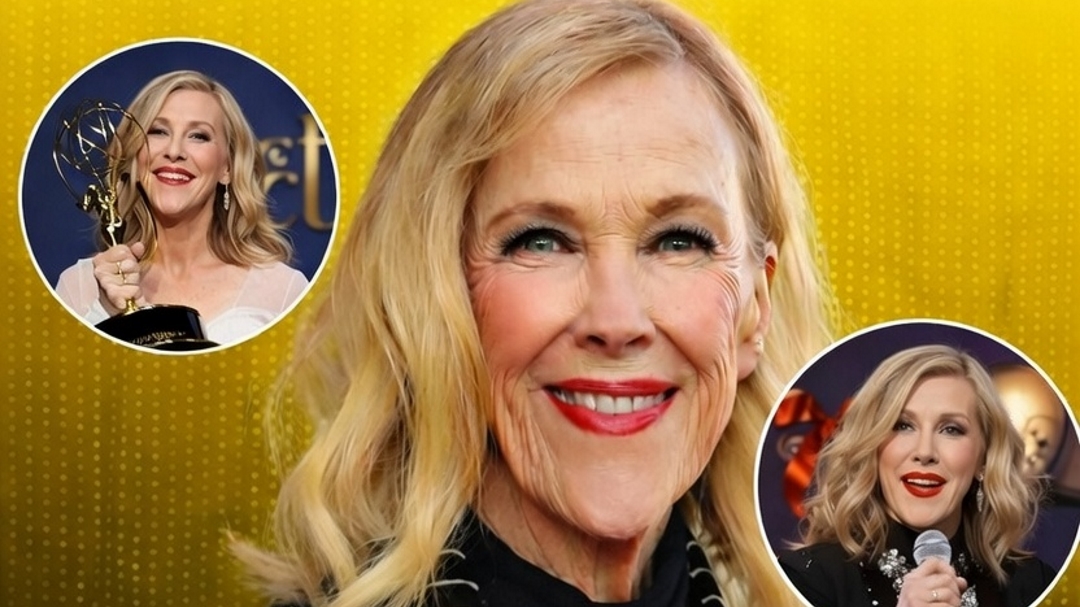
For a few hours, it felt like the internet did what it always does when grief meets celebrity: it sped up. A single “cause of death revealed” graphic started ricocheting through feeds, cropped and reposted so many times it lost any sense of where it came from, and people began reacting to the headline before they even knew the basic facts.
What’s now been confirmed is heartbreaking on its own, without the extra noise layered on top. Catherine O’Hara, a performer who made whole generations laugh without ever seeming to chase the spotlight, has died at 71. After a brief illness, her passing was confirmed through her representation, and the reporting that followed has filled in what many people were anxiously asking, even as others were already arguing in comment sections.
According to a death certificate reported by Rolling Stone’s report on the documented cause, O’Hara died from a pulmonary embolism, with cancer listed as an underlying factor, and that clinical phrasing landed like a punch because it’s so blunt compared with the warmth she poured into every role. It’s the kind of detail that, in the wrong hands, turns into content bait, but in reality it’s a stark reminder of how fast health crises can move, even when someone looks like they’re still in the middle of a creative run.
The reaction online has been split between stunned sadness and that familiar, ugly reflex to treat tragedy like a debate prompt. There were people sharing old clips of her as Moira Rose, the perfect storm of vanity and vulnerability, and others posting Home Alone scenes like they were family memories. Then there were the accounts that tried to turn the moment into a “gotcha,” ripping the story out of context, repeating the most graphic wording, and chasing engagement with the same cold tone you see in scammy “breaking” pages.
Part of what made the rumor mill feel especially cruel is that O’Hara didn’t live like a constant headline. She wasn’t the celebrity who flooded the internet with updates, so when real information was scarce early on, the vacuum filled with whatever looked “official” enough to share. A screenshot. A template graphic. A made-up “exclusive.” By the time people realized they’d reposted something unreliable, it had already been scraped and duplicated hundreds of times.
Still, there’s a reason the real confirmations hit harder than the sensational posts. O’Hara’s career wasn’t built on one viral moment; it was built on decades of careful, fearless work that made absurd characters feel human. Whether she was playing a mother on the edge, an eccentric artist, or a woman using humor as armor, she had that rare ability to let a joke land while you still felt the ache behind it.
For many fans, the loss feels personal because her work got woven into everyday life. People didn’t just “watch” her; they grew up with her. They quoted her. They played her scenes when they needed comfort. And in the last stretch of her career, she wasn’t coasting on nostalgia—she was still showing up with sharpness and surprise, still being rediscovered by younger viewers who had no idea how deep her résumé ran.
That’s why the tributes have carried a specific kind of gratitude rather than generic mourning. You can feel it in the way people talk about her: not as a distant icon, but as someone whose comedic precision made their homes lighter. There’s also a protective anger underneath, aimed at the way the internet sometimes turns a human death into a scrolling spectacle.
A pulmonary embolism is not a dramatic plot twist; it’s a medical emergency that can happen quickly and catastrophically, often linked to blood clots that travel to the lungs. When it shows up in the context of cancer, it can reflect the way serious illness increases risk factors in the body. Even stating that plainly can feel brutal, because it replaces the person we recognize—smiling on a red carpet, delivering a perfectly timed line—with the sterile language of a document.
What’s also been striking is how fast people have reached for her “best of” highlights, as if trying to hold onto something solid while the news still feels unreal. The obituary coverage has leaned into that, reminding readers that her gift wasn’t just loud comedy; it was the radical sincerity inside it, the way she could make a ridiculous character feel like someone you understood. In Time’s look back at her legacy and late-career renaissance, that through-line is clear: she played delusion, arrogance, and chaos, but she never played them empty.
And maybe that’s the final reason this story has hit the way it has. O’Hara made people feel seen through humor. She didn’t just deliver jokes—she delivered permission to be messy, dramatic, scared, and still lovable. When someone like that is suddenly gone, the world feels sharper for a minute, like the protective layer of laughter has been peeled back.
If there’s one thing worth taking from the storm of posts and reposts, it’s this: the facts matter, and so does the way we carry them. The confirmed details don’t need to be dressed up to be devastating. Catherine O’Hara’s work will keep playing in living rooms, on late-night rewatches, in clips passed between friends, and in that quiet moment when someone realizes they’re laughing through tears.