
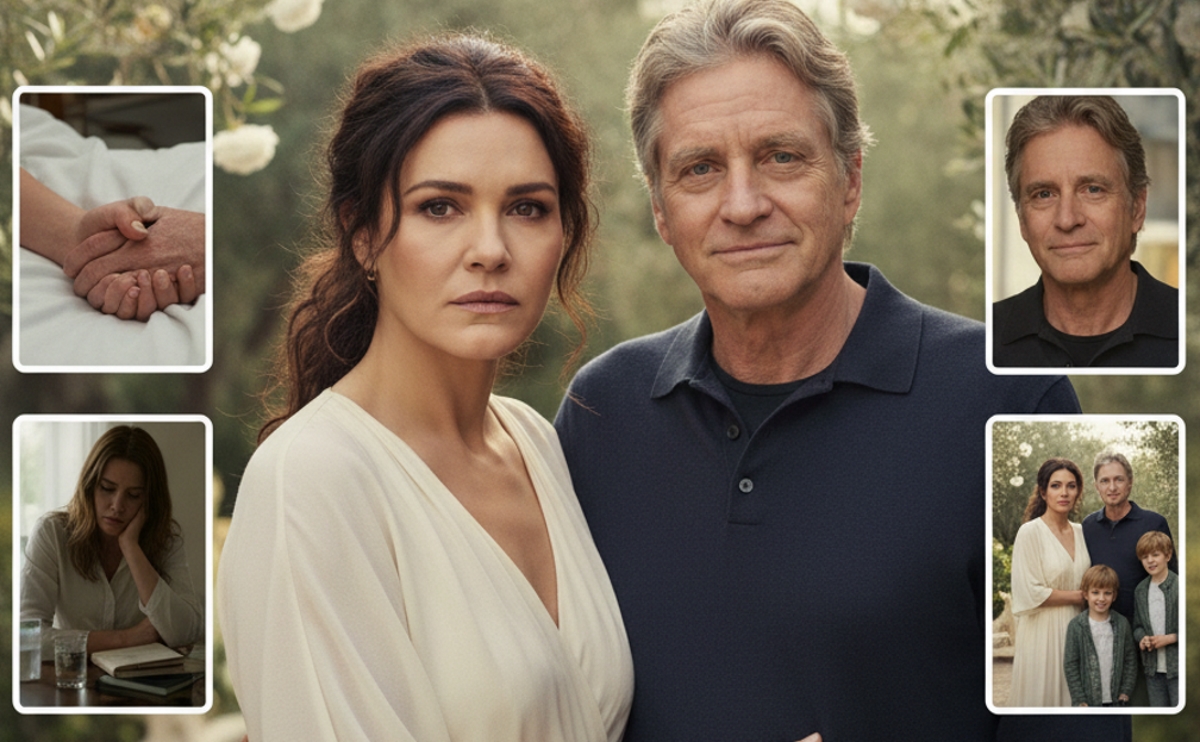
Catherine Zeta-Jones is finally telling the story she kept buried for years — the emotional unraveling she experienced behind closed doors as her husband, Michael Douglas, battled cancer. For the first time, she has opened up about the “dark period” she hid from the world, a revelation that has resurfaced discussions of celebrity vulnerability, mental health, and the private cost of surviving a loved one’s illness. Her reflections echo themes explored in a long-form relationship timeline documenting the couple’s most difficult moments.
Douglas’ diagnosis, which stunned the world, marked the beginning of a grueling fight that involved aggressive radiation therapy, chemotherapy, and intense medical supervision. His treatment was widely reported at the time, with updates appearing in features similar to international health reports tracking the actor’s public recovery. But while the cameras documented his strength, very few saw Catherine’s tears, fear, and emotionally destructive coping behind the scenes.
In new reflections that mirror the raw confessions shared in celebrity health-journey profiles, Zeta-Jones explained that watching Douglas fight for survival felt like “losing pieces of the world” one day at a time. She struggled with sleepless nights, panic, and the crushing pressure to appear strong in interviews, school events, and public appearances.
Behind every cancer patient is someone terrified of losing them. Catherine’s honesty hits hard — it’s a side we rarely hear. — HollywoodFeels (@CelebRealTalk) Dec 12, 2025
During the height of Douglas’ treatment, Zeta-Jones was forced into the role of emotional anchor — responsible for protecting their children, shielding the family from relentless media attention, and absorbing the medical updates that shifted from hopeful to frightening on a weekly basis. This burden mirrors the experiences described in health analyses such as caregiver mental-health studies that outline how spouses often experience deep, lasting psychological wounds.
Friends close to the actress say this was also the time when Catherine began confronting her own mental health. She would later publicly acknowledge episodes of depression that emerged during Douglas’ illness — episodes consistent with the quiet emotional breakdowns many caregivers face, a pattern documented in Harvard’s research on caregiver distress.
People forget the emotional injuries caregivers live with. Catherine’s story shows how heavy that invisible load can be. — MindfulHealth (@CareTalk) Dec 12, 2025
While the public saw occasional photos of the couple smiling outside treatment centers, Catherine’s internal world was collapsing. She revealed that she felt “alone in a room full of people,” forced to be the calm voice for her children while quietly fearing the worst. Her unspoken struggles echo countless accounts captured in caregiver coping guides that stress the emotional shock spouses endure while supporting loved ones through cancer.
Douglas, meanwhile, continued undergoing strenuous treatments that left him physically drained. His battle was extensively documented at the time through outlets that followed his recovery closely, such as early entertainment-news updates that captured the highs and lows of his journey. But Catherine says the public optimism surrounding his treatment did little to lift the intense dread she felt, especially during nights when she stayed awake listening for signs of distress.
Her “dark period,” she said, was characterized by emotional isolation — a conflict between her public persona and private agony. As Douglas’ condition improved, Zeta-Jones eventually sought help, a decision widely praised when she later spoke openly about her mental health, echoing the bravery highlighted in mental-health awareness editorials featuring her journey.
During that time, the couple continued to lean on each other, navigating the immense strain that serious illness places on marriages. Their bond — forged over decades, children, careers, and public scrutiny — deepened through shared vulnerability. Douglas would later speak about the experience with gratitude, recalling how his wife’s unwavering support held their family together, a sentiment reflected in interviews recapped through celebrity survivor profiles.
Catherine Zeta-Jones carried the weight of a family in crisis. Her honesty reminds us that the strongest people often suffer silently. — SharedJourneys (@LifeStories) Dec 12, 2025
As Douglas’ health stabilized and he entered remission, Zeta-Jones slowly emerged from the emotional fog she had endured. She described feeling “rebuilt,” changed by the trauma but also strengthened by the love that carried them through it — a sentiment mirrored in long-term survivor narratives featured in cancer recovery reflections.
Today, the couple remains one of Hollywood’s most enduring partnerships. Their story — marked by fame, hardship, healing, and resilience — continues to resonate far beyond the screen. Zeta-Jones’ decision to finally reveal the truth about her darkest chapter offers comfort to countless families who have carried similar fears in silence. It shows that even icons can break, even stars can fall into darkness, and even the strongest partners can face emotional storms they never saw coming.