
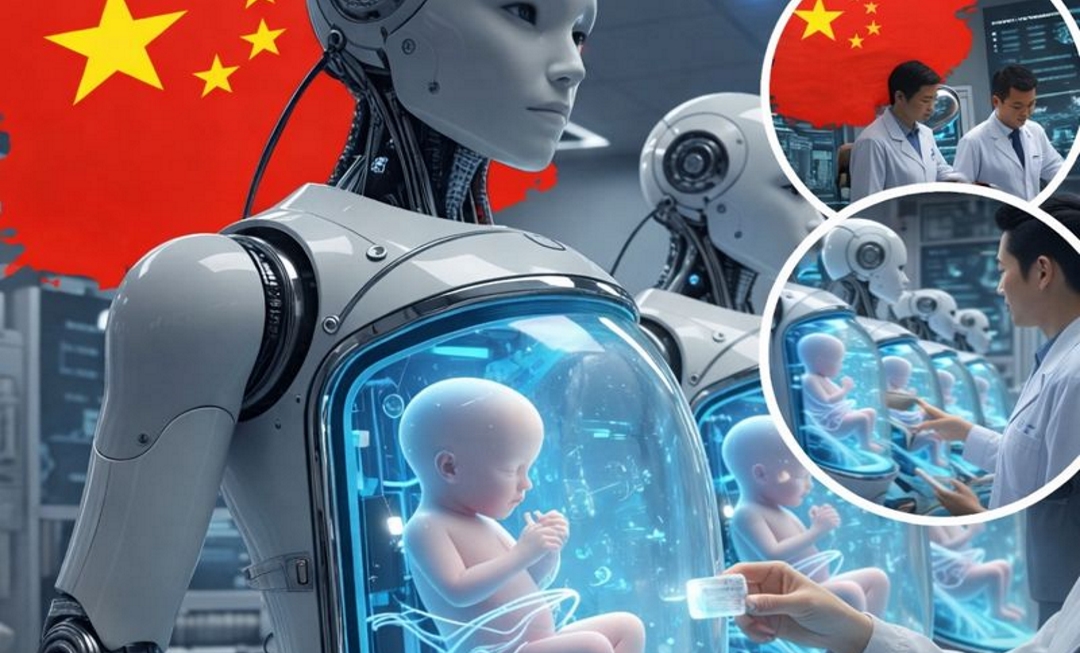
The image alone was enough to stop people cold. A humanoid robot, sleek and clinical, with a transparent chamber embedded in its torso. Inside, a developing fetus floats in blue-lit fluid, surrounded by wires, sensors, and soft pulses of artificial life support. Behind it, lab-coated researchers move calmly, as if this were just another routine experiment.
According to Chinese state-linked research outlets, the country has unveiled a conceptual prototype for an artificial gestation system — quickly dubbed a “pregnancy robot” online — designed to support fetal development outside the human body. While officials insist the technology remains experimental, the reveal immediately reignited global debate about artificial wombs, bioethics, and how far governments should go in reshaping reproduction.
China has openly invested in reproductive technology for years, particularly as its population crisis deepens. Birth rates have fallen to historic lows, pushing policymakers to explore everything from financial incentives to radical scientific interventions. Some researchers involved in the project described it as a response to labor shortages and demographic collapse, echoing ideas previously explored in recent academic discussions about artificial gestation.
Supporters argue the technology could eventually save premature infants, help women with dangerous pregnancies, and advance neonatal care. Artificial womb research already exists in limited forms, with lamb fetuses successfully sustained in lab environments, as outlined in earlier medical reporting. But the Chinese concept goes far beyond neonatal rescue, imagining full-term development entirely outside the human body.
That leap is what triggered immediate backlash. Critics warned the system blurs lines between medicine, manufacturing, and state control over reproduction. The image circulating online — a baby growing inside a machine — quickly became a symbol of dystopian fear, amplified by China’s history of strict population policies and surveillance-driven governance.
Ethicists raised concerns about consent, identity, and the psychological implications for children born without pregnancy or birth as traditionally understood. Some pointed to existing ethical frameworks that caution against rushing artificial womb technology into policy-driven use rather than strictly medical necessity.
Artificial wombs could save lives — but turning reproduction into an assembly line should terrify everyone. — Bioethics Watch (@BioethicsWatch) January 2026
Chinese officials pushed back against what they called “sensationalist interpretations,” stating the system is a controlled research model, not a government-backed plan for mass use. State media emphasized that similar technologies are being explored worldwide, framing the outrage as geopolitical bias rather than genuine concern.
Still, the geopolitical context matters. China’s rapid advancement in AI, robotics, and biotechnology has already unsettled Western governments. The idea of combining artificial intelligence with human reproduction struck many observers as crossing an invisible threshold, especially given ongoing debates around gene editing, embryo selection, and algorithmic decision-making in medicine.
Online reactions ranged from fascination to outright horror. Some users compared the imagery to science fiction, while others referenced real-world fears about bodily autonomy and state power. Viral threads dissected the technology’s implications, citing longstanding warnings that artificial gestation could fundamentally alter family structures and gender roles.
Once governments control how humans are born, nothing about freedom is guaranteed anymore. — FutureShock (@FutureShockNow) January 2026
Medical experts urged caution, noting that the technology shown appears conceptual rather than operational. Sustaining a fetus for nine months requires extraordinary biological complexity, including hormonal signaling, immune interaction, and sensory development that machines cannot yet replicate. Many emphasized that current artificial womb research focuses narrowly on saving extremely premature infants, not replacing pregnancy.
Even so, the symbolic impact of the reveal may outweigh its technical reality. The image tapped into deep anxieties about technology accelerating faster than ethical consensus. It also highlighted the growing gap between what science can imagine and what societies are prepared to accept.
As global populations age and birth rates decline, the pressure to find solutions will only intensify. Whether artificial gestation becomes a medical breakthrough or a moral red line remains uncertain. What is clear is that China’s “pregnancy robot” concept has forced the world to confront uncomfortable questions about how much control humanity is willing to surrender over its own beginnings.