
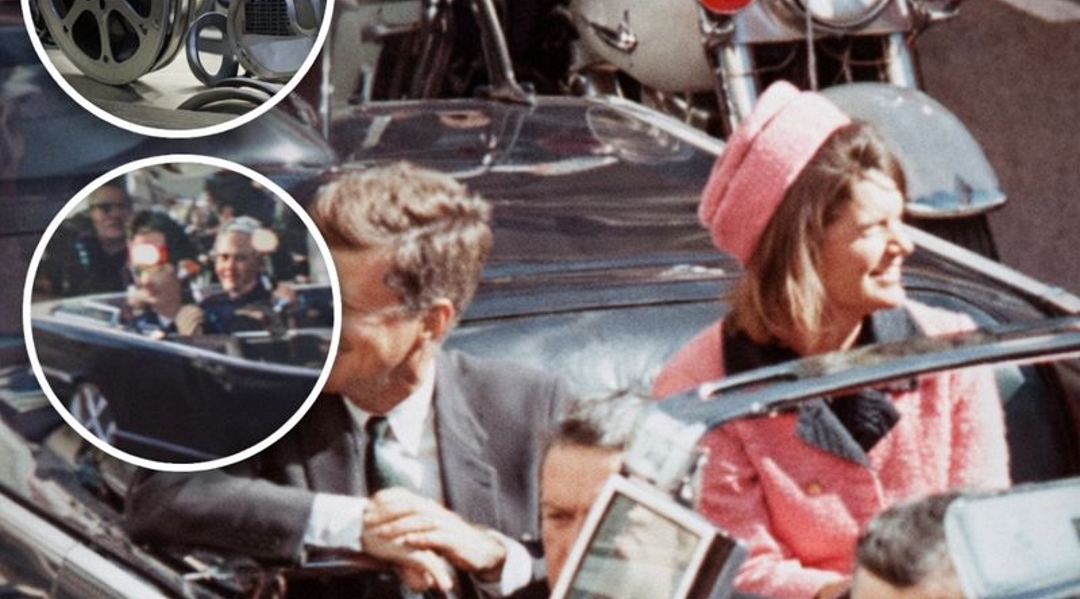
It starts the same way these stories always start: a blurry clip, a dramatic headline, and the promise that one “missing” piece of footage could finally settle the argument that has haunted America since 1963. This week, fresh posts are pushing the idea that a film of President John F. Kennedy’s assassination was supposedly kept out of public view for decades, and that it could confirm a massive 62-year conspiracy if it ever surfaced in full.
The reason it hits so hard is simple — people can picture it. Dallas. Dealey Plaza. A split-second that changed the country. And the quiet dread that maybe the public has only ever seen what it was allowed to see, while something sharper, clearer, more damning sat in a vault somewhere the whole time.
But the real story, the one that never goes viral, is that JFK’s assassination is already one of the most filmed and documented crimes in modern history. The famous footage isn’t a single reel — it’s a web of recordings, photos, witness statements, government reports, and decades of lawsuits, releases, and bitter fights over what should be public and what should stay redacted. The public obsession doesn’t come from a lack of material. It comes from the gaps, the contradictions, and the fact that the official conclusions never stopped feeling incomplete to millions of people.
The key point many people miss is that the U.S. government has, for years, been releasing assassination records through the National Archives’ JFK Assassination Records Collection and it’s not a small trickle — it’s a massive archive that has been expanded repeatedly over time, with certain pieces still withheld or partially withheld for various stated reasons.
That’s exactly where the “hidden film” idea gains traction: the assumption that if thousands of pages can remain withheld, then a reel of footage could, too. And to be fair, the government’s record on transparency hasn’t inspired trust. Every delayed release, every new batch of documents, every “we found more records” announcement reopens the wound and fuels the suspicion that the public still doesn’t have the whole picture.
In fact, not long ago, new attention landed on the fact that additional assassination-related records were located and set to be transferred to the National Archives — a reminder that even after decades, the paper trail is still being organized, discovered, and reprocessed. The Associated Press reported on the FBI saying it found thousands of new JFK records, a development that instantly reignited the familiar question: if new files can still turn up, what else has been sitting in the system unseen?
But here’s the uncomfortable reality: the viral “one film will prove it” framing almost always oversells what footage can do. Even the most famous existing films have been pored over endlessly by experts and amateurs alike, frame-by-frame, for generations — and while interpretations differ wildly, footage alone rarely delivers the clean courtroom-style certainty people crave. Cameras capture angles, not motives. They capture motion, not chains of command. They capture a moment, not the full machinery behind it.
That doesn’t mean all skepticism is nonsense. It means the deeper questions people are actually asking — about institutional behavior, intelligence oversight, withheld records, and what was known when — are questions that tend to live in documents and testimony more than in a single strip of film.
The “hidden film” rumor also thrives because it feels like the most human kind of evidence. A film is tangible. A film feels like truth you can see with your own eyes. It’s the opposite of bureaucratic language, closed-door briefings, and blacked-out paragraphs. It feels like the kind of proof that can’t be explained away with careful wording.
And yet, if a new or “lost” assassination film ever surfaced tomorrow, the fight wouldn’t end. It would mutate. People would argue about authenticity. About edits. About provenance. About whether it was the full reel or a copy. About whether it was held back intentionally or simply misplaced in the chaos of a half-century of recordkeeping. The internet would split into camps in hours, and the same old mistrust would immediately attach itself to the new artifact.
What makes this moment especially combustible is how conspiracy content now travels. A claim doesn’t need to be solid — it just needs to be emotionally loud. The phrase “hidden for decades” is rocket fuel because it implies betrayal, and betrayal is the one ingredient that can keep an old story feeling brand new.
So where does that leave the public, right now, with these new waves of posts insisting the truth is trapped inside some unreleased film? It leaves people back where they’ve been for years: stuck between the reality that a huge amount of information is already public, and the nagging fear that the most important parts might still be missing.
The only way the temperature ever drops is when transparency rises — not through sensational claims, but through verifiable releases with clear sourcing and accountability. That’s why every update about additional records, every transfer to the archives, every incremental opening of the files matters, even when it feels slow and unsatisfying. The AP’s reporting on newly found FBI records is one more reminder that the “JFK file” is not a closed book, and the public pressure to keep opening it isn’t fading with time.
And maybe that’s the most honest takeaway: the JFK assassination isn’t just a murder case in the American imagination. It’s a trust case. The reason a “hidden film” rumor still spreads like wildfire isn’t only about what happened in Dealey Plaza. It’s about everything that happened after — the decades of secrecy, the shifting disclosures, and the sense that when institutions control the evidence, the public is always left wondering what they weren’t meant to see