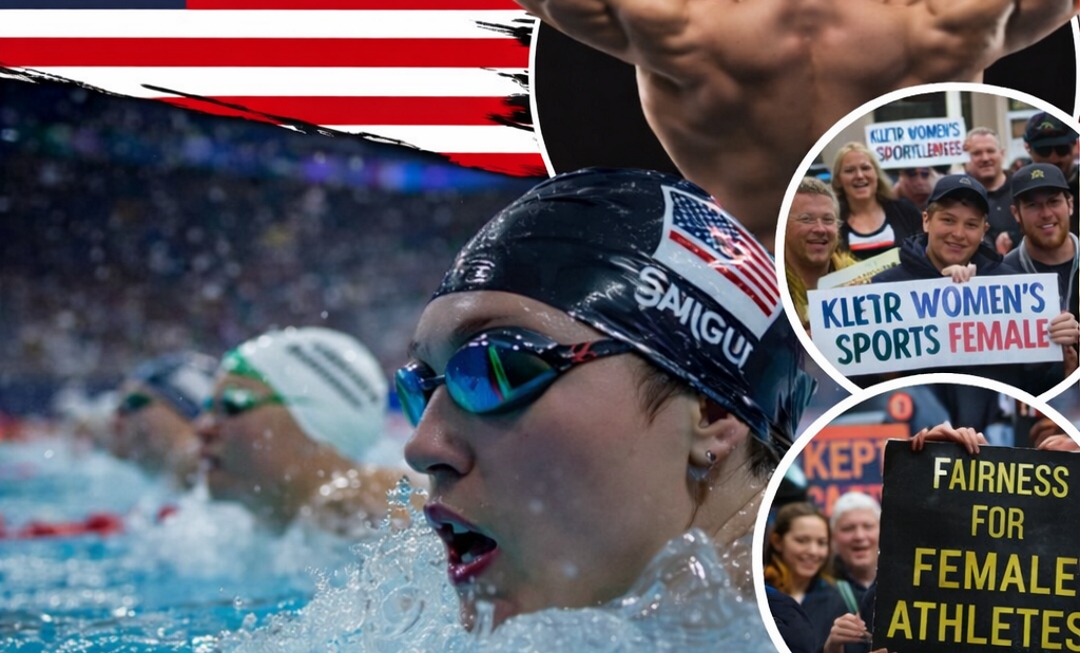
The moment captured in the image says more than any press release. A swimmer surges through the water, muscles straining, goggles cutting through the spray. Behind her, protest signs rise from the stands — some calling for fairness, others warning of exclusion. Above it all looms a larger question that U.S. colleges are now being forced to confront head-on.
Across the country, a growing number of universities are moving to exclude transgender athletes from women’s swimming programs, marking one of the most consequential shifts yet in the long-running battle over sex, gender, and competitive fairness in sports. In many cases, the changes aren’t being announced loudly. They’re appearing quietly in eligibility policies, athletic department memos, and revised compliance guidelines.
Administrators say the moves are about protecting women’s sports. Critics say they amount to blanket exclusion. Either way, the decisions reflect mounting legal pressure, donor influence, and fear of backlash from athletes who argue they’ve lost scholarships, podium spots, and records in competitions they believe were no longer level. The debate has been building for years, but recent developments pushed it into overdrive.
Several athletic departments pointed to evolving interpretations of Title IX and growing uncertainty over how federal guidance will ultimately land. Some schools referenced existing NCAA frameworks while noting that swimming, unlike many other sports, places heavy emphasis on lung capacity, strength retention, and skeletal advantages that critics argue cannot be fully mitigated by hormone suppression.
Female swimmers have increasingly gone public, describing locker room discomfort, competitive anxiety, and a sense that administrators were unwilling to listen until lawsuits and donor threats emerged. In private meetings, some athletic directors reportedly cited recent legal analysis warning that institutions could face discrimination claims from female athletes if they fail to act.
At the same time, transgender advocates argue the exclusions erase years of progress toward inclusion. They say blanket bans ignore individual circumstances and reinforce stigma. Several former collegiate swimmers who transitioned during or after their athletic careers described the policies as a personal rejection, not a neutral rule change.
Women deserve fair competition. This isn’t hate — it’s biology and safety. — Riley Gaines (@Riley_Gaines_) March 2026
What’s striking is how quickly colleges have shifted tone. Just a few years ago, many institutions publicly embraced inclusion-first messaging. Now, administrators are using language focused on “competitive equity” and “risk management.” Some internal documents cite broader cultural shifts and note that public opinion has moved faster than official policy.
Swimming has become the flashpoint because its margins are razor-thin. Hundredths of a second determine scholarships, national rankings, and Olympic pipelines. Coaches privately acknowledge that the controversy has begun to affect recruitment, with some high school athletes choosing schools based on where policies stand.
Parents, too, are increasingly vocal. Booster groups have organized letter campaigns demanding clarity, while alumni donors have reportedly withheld funding unless athletic departments take firmer stances. For smaller programs already struggling financially, the pressure is impossible to ignore.
Legal experts say the coming years will be decisive. If courts ultimately rule that excluding transgender athletes violates civil rights protections, colleges may be forced to reverse course yet again. But if lawsuits from female athletes succeed, the exclusions could spread rapidly across other women’s sports.
There is no easy answer here, but pretending this isn’t affecting women’s sports is dishonest. — Megyn Kelly (@megynkelly) March 2026
For now, many schools are opting for silence, hoping policy adjustments fly under the radar. But the images — swimmers straining, protesters shouting, athletes watching their futures shift — suggest that silence won’t last. Women’s swimming has become the testing ground for how far institutions are willing to go when ideals of inclusion collide with demands for fairness.
What began as a niche eligibility question has turned into a defining cultural battle for college athletics. And as more schools quietly redraw the lines, the ripple effects are only beginning to surface.