
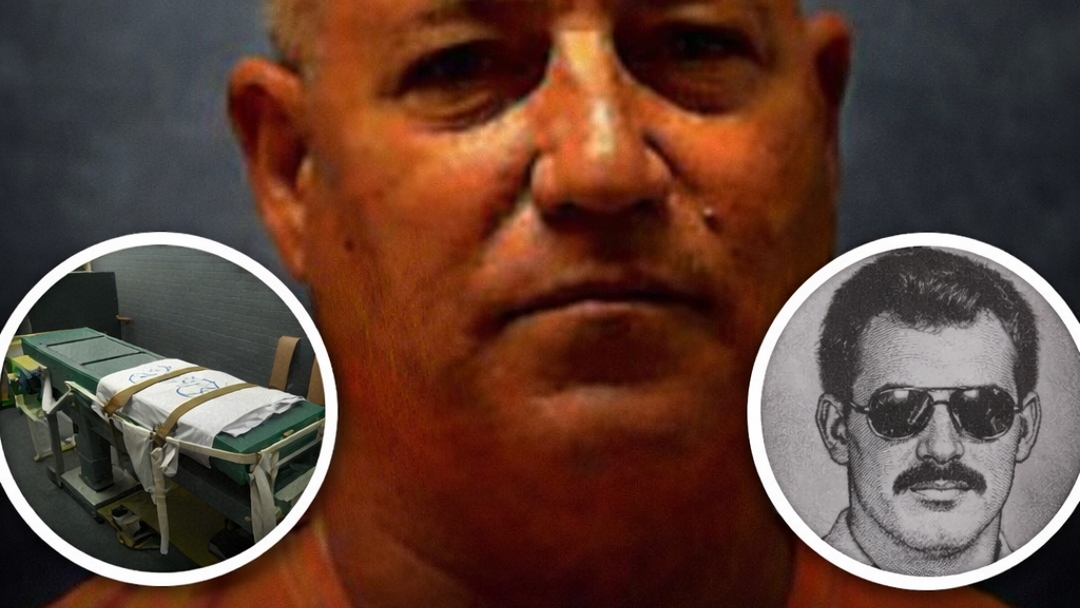
The chamber was silent except for the low hum of fluorescent lights and the measured breathing of witnesses seated behind thick glass. After more than three decades behind bars, the man convicted of a brutal 1989 killing lay strapped to a gurney, moments away from a sentence that had been debated in courtrooms and living rooms for years.
His face appeared calm. There was no visible panic, no last-second outburst. Only a brief pause before he spoke — words that would become the final line in a case that had long haunted a community.
The crime itself had stunned residents back in 1989. Prosecutors said the victim was abducted and murdered in an act that shocked even seasoned investigators. Court documents described a violent encounter, and the evidence presented at trial led jurors to return a death sentence after hours of deliberation.
Over the decades that followed, appeals wound their way through state and federal courts. Defense attorneys challenged aspects of the investigation and the sentencing process, arguing constitutional concerns and procedural flaws. Each time, higher courts upheld the conviction, clearing the path for an execution date to be set.
According to coverage from The New York Times, cases like this often stretch across generations, with families of victims reliving the trauma at every appeal. For them, the final hearing isn’t closure — it’s a reopening of wounds that never truly healed.
On the night of the execution, relatives of the victim were present. Some clasped hands. Others kept their eyes fixed forward. For years, they had waited for this moment, unsure whether it would bring peace or simply another complicated wave of emotion.
When asked if he had a final statement, the condemned man spoke deliberately. He acknowledged the gravity of the moment. He referenced faith. He addressed the victim’s family. Whether his words were seen as remorseful or restrained depended largely on who was listening.
Witnesses later described the statement as measured rather than dramatic. There was no shouting, no protest of innocence in that final minute. Just a closing sentence delivered into a room thick with memory.
Executions in the United States remain rare compared to past decades, and each one reignites debate over capital punishment. Data compiled by the Death Penalty Information Center shows a significant decline in death sentences and executions since the late 1990s, reflecting shifting public attitudes and legal scrutiny.
But statistics fade beside the human weight of a single case. For the victim’s family, the crime was not a number. It was a person — someone whose life ended abruptly in 1989. Birthdays passed without celebration. Holidays arrived with an empty chair at the table.
For the man on the gurney, the final hours were spent under close supervision. Prison officials followed protocol step by step. Medical personnel checked equipment. Legal representatives confirmed there were no last-minute stays. Everything unfolded with clinical precision.
Shortly after his final words, the process began. Witnesses observed in silence. Some closed their eyes. Others watched every second. Within minutes, the official pronouncement was made.
Outside the facility, a small crowd had gathered — some opposed to the death penalty, others supporting the sentence. Signs were held. Candles flickered. Television crews recorded reactions in the humid night air.
Legal experts note that cases from the late 1980s often relied on investigative techniques that would later evolve. DNA testing, forensic standards, and sentencing guidelines have all undergone changes since then. Yet courts repeatedly determined that the evidence met the threshold required for conviction.
The man’s final words quickly circulated in media reports the following morning. For some readers, they felt chilling. For others, they felt hollow. The impact depended less on the phrasing itself and more on the decades of history attached to it.
Capital punishment continues to divide the nation. Supporters argue it delivers justice in the most severe cases. Opponents question its morality, cost, and potential for irreversible error. Each execution forces the conversation back into the public sphere, even if only briefly.
In this case, what remains is a timeline stretching from 1989 to the execution chamber decades later — a span of time marked by appeals, hearings, and waiting. The final statement did not erase the crime. It did not undo the loss. It simply marked the end of a long legal road.
For those who sat behind the glass that night, the words lingered long after the chamber emptied. Some described them as unsettling. Others called them anticlimactic. But everyone agreed on one thing: once spoken, they could never be taken back.
And so the case that began with violence in 1989 closed not with a shout, but with a sentence — delivered in a quiet room, under bright lights, witnessed by a handful of people who will likely remember that moment for the rest of their lives.