
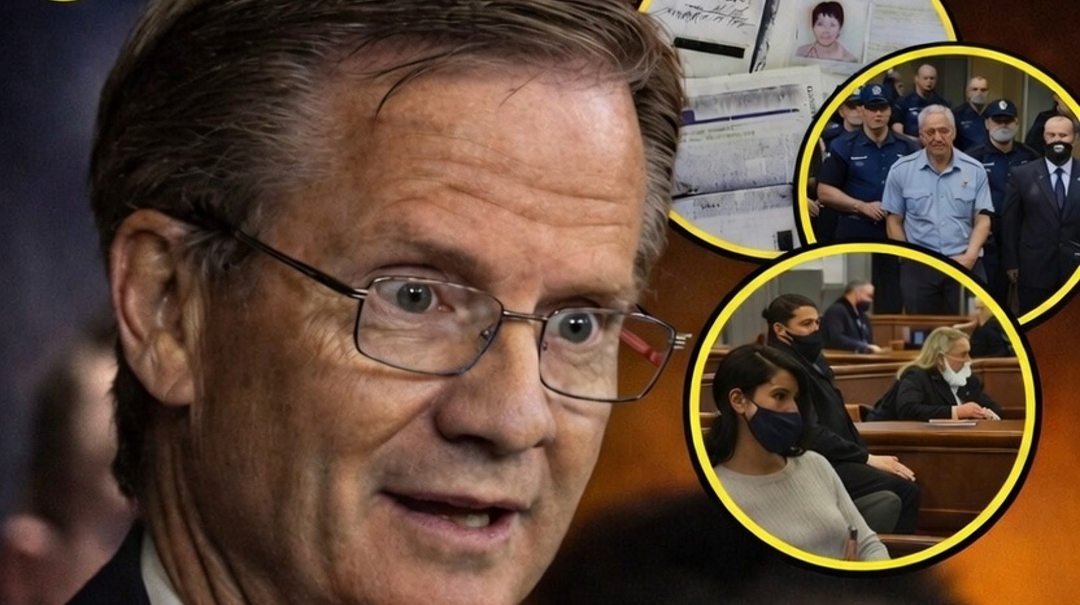
A sitting member of Congress is facing fierce backlash after making an explosive remark about the people named in the long-debated Jeffrey Epstein files.
Rep. Tim Burchett of Tennessee ignited controversy when he said individuals implicated in the records should be “found guilty, then hanged,” a statement that immediately drew national attention and criticism from both sides of the aisle.
The comment came after Burchett said he had reviewed materials connected to the Epstein investigation, including documents that have fueled years of speculation about powerful figures tied to the disgraced financier.
Epstein, who was arrested in 2019 on federal sex trafficking charges, died in custody at a Manhattan jail. Authorities ruled his death a suicide, though the case continues to spark widespread public suspicion and debate. The U.S. Department of Justice previously released findings outlining the circumstances of his death, which can be reviewed in an official DOJ report.
Despite the government’s conclusions, calls for transparency have only grown louder over the years. Court records unsealed in civil litigation involving Epstein and Ghislaine Maxwell added fuel to those demands, revealing names of associates and acquaintances that had circulated in sealed filings. A summary of those document releases was covered in detail by Reuters when the files became public.
Burchett’s remark, however, went far beyond calls for investigation or prosecution. By invoking execution, critics argue, he crossed a line that lawmakers should not approach lightly.
“We’re talking about due process,” one Democratic lawmaker said shortly after the comment circulated online. “Even in the face of heinous allegations, the rule of law matters.”
Some Republicans also distanced themselves from the statement, saying that while the Epstein case deserves full transparency, rhetoric advocating hanging people risks inflaming tensions rather than advancing justice.
The Epstein saga has become one of the most polarizing legal stories in recent American history. His high-profile connections — including politicians, business leaders, and celebrities — have fueled years of conspiracy theories and political finger-pointing.
Ghislaine Maxwell, Epstein’s longtime associate, was convicted in 2021 on federal sex trafficking charges and sentenced to 20 years in prison. Her conviction did little to quiet questions about whether others who associated with Epstein might face scrutiny.
Burchett has positioned himself as a vocal advocate for greater transparency surrounding the files. He has repeatedly argued that Americans deserve to know the full scope of Epstein’s network and whether powerful individuals escaped accountability.
Still, legal scholars warn that even in cases involving shocking allegations, public officials must avoid language that suggests punishment without trial.
“The justice system operates on evidence, charges, and verdicts,” one constitutional law expert noted. “Elected officials advocating extrajudicial punishment undermines public trust.”
Social media reactions were immediate and intense. Supporters of Burchett praised his blunt tone, saying it reflects public frustration with elite figures who appear insulated from consequences. Critics countered that such rhetoric risks normalizing extreme responses and eroding democratic norms.
For years, the Epstein files have served as political ammunition across party lines. Calls for full disclosure have come from lawmakers on both sides, though consensus on how to proceed has remained elusive.
Some members of Congress have pushed for broader document releases, while others caution that unsealing records without careful review could compromise privacy rights or ongoing investigations.
The renewed controversy underscores how the Epstein case continues to reverberate long after his death. It has become a symbol of perceived institutional failure — and a flashpoint for public anger.
Whether Burchett’s comment will lead to formal censure or simply fade into the steady churn of political headlines remains unclear. What is certain is that the Epstein files remain one of the most combustible topics in American politics.
As pressure builds for transparency, lawmakers face a delicate balance: satisfying public demand for accountability while preserving the principles of due process that underpin the justice system.
For now, the debate over what should happen next — and how far rhetoric should go — shows no sign of cooling.