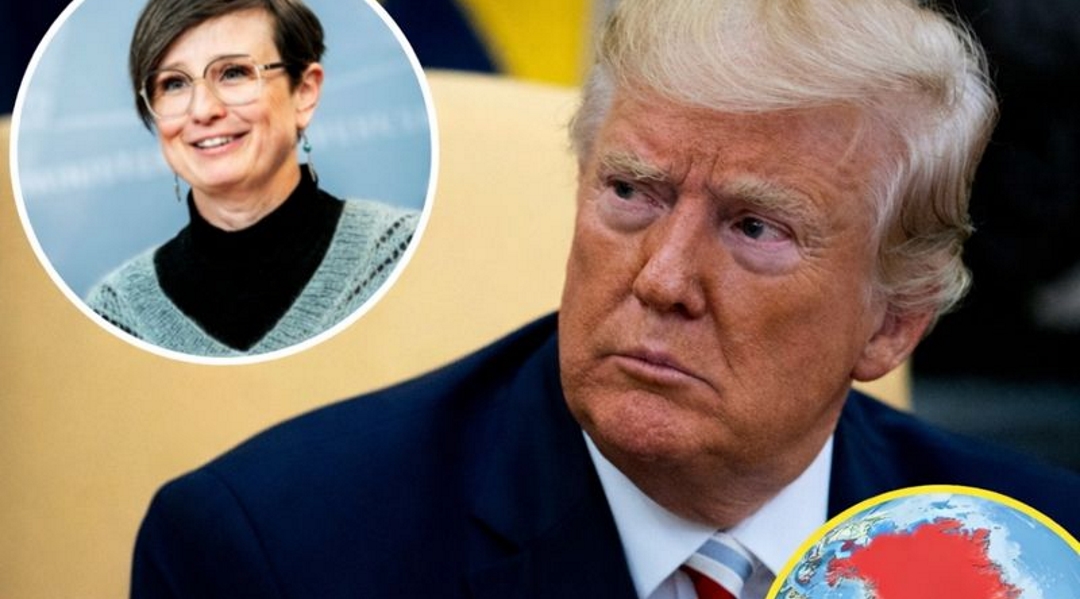
The image spread quickly online: Donald Trump looking to the side, a map of Greenland highlighted in red, and Denmark’s flag looming nearby. The headline beneath it was blunt, and so was the response that followed. A Danish member of parliament publicly dismissed Trump’s suggestion that a deal to acquire Greenland was ever on the table, calling the idea pure fiction.
The denial landed like a hard stop in a story that has lingered for years. Trump’s renewed comments about Greenland, framed as if discussions had once been serious, reignited diplomatic irritation in Copenhagen and Nuuk alike. Danish officials made it clear this time there would be no ambiguity, no polite deflection, and no quiet diplomacy.
The lawmaker said the claim simply did not match reality, pointing out that Denmark never entered talks, negotiations, or even informal exchanges about selling Greenland. According to parliamentary records and diplomatic timelines referenced in a detailed breakdown of past exchanges, no formal proposal was ever submitted by the United States.
Greenland’s own leadership echoed the message. Officials stressed that Greenland is not a commodity and never has been. While the island maintains a close relationship with Denmark, it governs its internal affairs and has repeatedly stated that its future will be decided by its people, not foreign leaders.
This latest clash revived memories of 2019, when Trump first floated the idea publicly, stunning allies and confusing diplomats. At the time, Denmark’s prime minister called the suggestion “absurd,” a remark that briefly escalated tensions and even led Trump to cancel a planned state visit.
What’s different now is the tone. Instead of brushing the claim aside, Danish lawmakers directly contradicted Trump’s narrative, saying that repeating it years later does not make it any more true. The pushback reflects growing frustration with what some European officials see as revisionist storytelling.
Greenland was never for sale. It wasn’t discussed. It wasn’t negotiated. This story didn’t happen. — Nordic Affairs (@NordicAffairs) February 2026
Experts say Greenland’s strategic importance is real, even if the deal was not. The Arctic is rapidly gaining attention as ice melt opens new shipping routes and access to rare earth minerals. Analysts writing in recent geopolitical assessments note that U.S. interest in the region has grown steadily, particularly as China and Russia expand their presence.
But interest does not equal ownership. Danish officials emphasized that cooperation already exists through NATO, research partnerships, and security agreements. They argue that pretending a secret deal once existed undermines trust and misrepresents how international diplomacy actually works.
The Danish MP also warned that such claims risk oversimplifying Greenland’s identity. The island is home to Inuit communities with a distinct culture, language, and political voice. Reducing Greenland to a strategic asset ignores decades of self-governance and autonomy efforts.
Political analysts suggest Trump’s remarks may be aimed less at Denmark and more at his domestic audience. Framing the story as a missed opportunity allows him to portray himself as bold and visionary, while casting others as obstacles. That framing, however, collapses when confronted with documented timelines.
Documents summarized in a European political history review show no evidence of negotiations beyond Trump’s public musings and informal chatter among aides after the fact.
You can’t rewrite diplomacy after the fact. Allies remember what was actually said. — EU Policy Watch (@EUPolicyWatch) February 2026
The incident also highlights how sensitive Arctic politics have become. With climate change accelerating and military interest increasing, northern nations are guarding their sovereignty more carefully than ever. Even rhetorical claims can trigger diplomatic ripples.
For Denmark, the response was about more than correcting the record. It was about drawing a clear line. Officials stressed that while cooperation with the United States remains strong, there is no room for myths that blur sovereignty or ignore democratic consent.
Whether Trump continues to repeat the claim remains to be seen. But for now, Danish lawmakers have made their position unmistakable. In their words, there was no secret agreement, no failed negotiation, and no abandoned deal — only a story that refuses to disappear.
As Arctic geopolitics heat up, both literally and figuratively, clarity may matter more than ever. And in this case, Denmark’s message was as direct as it gets.