
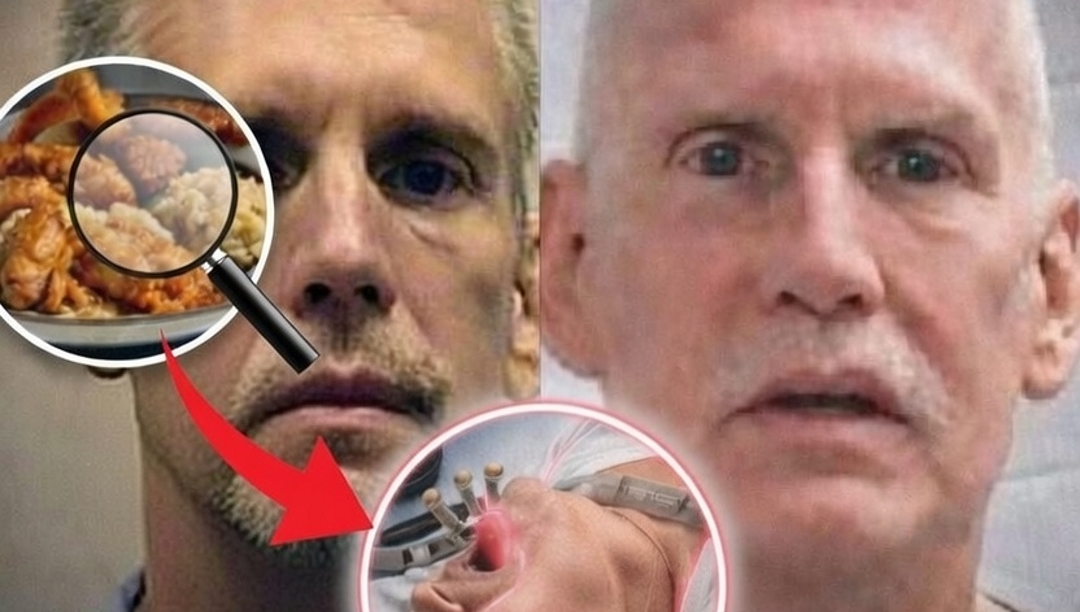
In the final hours before his execution, a death row inmate was granted what is often described as a small mercy in an otherwise merciless process: a last meal of his choosing. What followed, according to court filings, witness accounts, and medical experts, became an unexpected and deeply disturbing complication that altered the final moments of his life.
The inmate, whose execution was scheduled following years of appeals, selected a meal that appeared unremarkable on paper. Prison officials approved the request, and there was no indication that the food posed any immediate danger. But within hours, things began to go wrong.
As the execution window approached, witnesses later testified that the man began showing visible signs of distress. He complained of severe discomfort, difficulty breathing, and intense pain. Medical staff were summoned, but the situation unfolded rapidly.
According to records later reviewed by attorneys, the inmate suffered a medical emergency linked directly to the contents of his final meal. The complication triggered a cascade of physical reactions that left him struggling long before the execution procedure itself began.
Experts familiar with the case explained that digestion places significant stress on the body, particularly in high-anxiety situations. In this instance, the food reportedly caused aspiration and respiratory distress, a condition in which material enters the airway instead of the stomach.
Rather than providing comfort or closure, the final meal became the catalyst for what witnesses described as prolonged suffering. Observers noted labored breathing, visible panic, and repeated attempts by the inmate to draw air.
The execution went forward as scheduled, but the events leading up to it quickly became the focus of legal and ethical scrutiny. Attorneys argued that the man was already experiencing extreme physical distress before the state-administered procedure began.
Medical literature has long warned that eating shortly before sedation or execution can increase the risk of choking, aspiration, and respiratory failure. These risks are well documented in surgical settings, where patients are routinely required to fast beforehand.
A review of anesthesia and aspiration risks published by the National Center for Biotechnology Information outlines how stomach contents can enter the lungs under stress, causing intense pain and oxygen deprivation.
In the prison setting, however, final meal traditions often override such medical precautions. Many states do not impose strict dietary restrictions, leaving inmates free to request heavy or complex meals shortly before execution.
Following this case, critics questioned whether the tradition itself had crossed a line. What was intended as a symbolic gesture of dignity had, in this instance, contributed to severe suffering during the inmate’s final moments.
Witnesses later used the word “excruciating” to describe what they saw. The inmate reportedly remained conscious for a significant portion of the medical crisis, aware of his distress and unable to relieve it.
The incident reignited broader debates about the death penalty and execution protocols. Advocacy groups argued that the state had a responsibility to prevent foreseeable medical complications, regardless of the prisoner’s crimes.
Legal experts noted that while courts have ruled that executions must avoid “cruel and unusual punishment,” the definition remains narrowly interpreted. Complications that arise indirectly, such as medical reactions to food, often fall into a gray area.
A separate analysis of execution-related complications published by the Death Penalty Information Center documents multiple cases where unexpected medical events led to prolonged or visibly painful deaths.
In response to this case, some states quietly reviewed their final meal policies. A few jurisdictions already limit or have eliminated last meals altogether, citing logistical concerns and public controversy.
Others have begun consulting medical professionals to assess whether fasting requirements should be implemented before executions, similar to surgical protocols. Supporters argue this would reduce the risk of suffering, while opponents see it as stripping away one of the few remaining humane gestures.
For the inmate at the center of this case, those debates came too late. His final hours were shaped not just by the machinery of the justice system, but by a decision meant to offer comfort that instead brought intense physical pain.
The story has since become a cautionary example cited by legal scholars, ethicists, and medical professionals alike. It underscores how even small traditions, when placed inside extreme circumstances, can carry devastating consequences.
As the death penalty continues to face scrutiny across the United States, this case remains a haunting reminder that the details matter. In a system designed to control every variable, one overlooked decision turned a final meal into a fatal mistake.