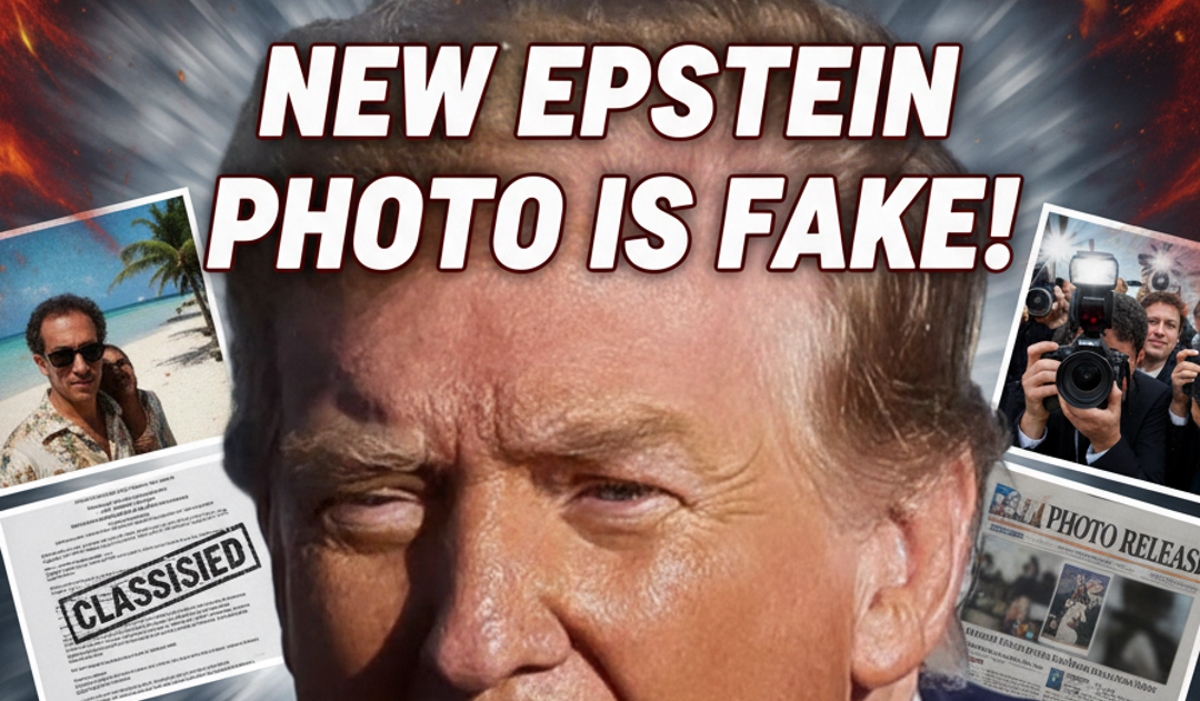
The political world lurched into another whirlwind this week after viral posts claiming “new Epstein photos” began circulating online — igniting a wave of speculation, outrage, and confusion that dominated social feeds for hours before former President Donald Trump finally broke his silence with a terse five-word response. The online frenzy, which had already reached millions across platforms tracked in ongoing digital-trend analysis, quickly transformed the rumor into a full-blown political flashpoint.
It all began when screenshots, blurred images, and unverified content labeled as “new Epstein photos” surged across X and Telegram, pushed by anonymous accounts that frequently appear in disinformation tracking released by researchers in past misinformation briefings. Many of the posts offered no sourcing, no time stamps, and no verifiable context — yet the claims spread with startling velocity, echoing patterns documented in Brookings studies on viral political rumors.
Within hours, hashtags referencing Epstein, Trump, and alleged “new evidence” catapulted into the top trending topics. Some users argued the images were digitally altered, pointing to earlier deepfake investigations outlined in a New York Times report. Others insisted major media outlets were “suppressing” information — a claim debunked repeatedly in Reuters fact-check archives relating to Epstein-themed conspiracy cycles.
But the turning point came when Trump himself responded. According to UNILAD’s coverage, the former president issued a blunt five-word statement after being asked about the viral posts: “It’s all fake news again.” The phrase — instantly clipped, shared, and memed — added to the escalating dispute over what, if anything, the circulating images represented.
Trump finally responds to the online “Epstein photos” frenzy: “It’s all fake news again.” The internet is losing its mind. — Capitol Intel (@CapitolIntel) Dec 13, 2025
The reaction was immediate. Supporters seized on Trump’s dismissal, arguing the images were part of a coordinated misinformation push — the kind dissected in Vox’s breakdown of political outrage cycles. Critics, however, claimed Trump’s statement was an attempt to avoid engaging with a topic loaded with decades of public suspicion.
In reality, no reputable outlet has confirmed any “newly released” Epstein photos, and the images circulating online match patterns of recycled, altered, or AI-generated content identified in The Guardian’s reporting on deepfake politics. Even long-time Epstein investigators noted that no such release has been filed in any public court database, including those monitored through federal PACER records.
No, there has been NO “new Epstein photo release.” Every image making the rounds is either old, edited, or pulled from unrelated archives. — VerifySource (@VerifySource) Dec 13, 2025
Yet the lack of verification did little to slow the momentum. Influencers began creating speculative threads connecting the rumor to older flight logs and social networks previously mapped in a New York Times interactive. These resurfaced materials — none of which contained new imagery — were recirculated by users claiming they provided “context” for the alleged photo dump. The narrative grew more chaotic as political commentators injected their own interpretations into the mix.
By late afternoon, media forensics accounts were posting breakdowns identifying compression artifacts, sentence-level mismatches, and AI fingerprinting in several of the viral images. The inconsistencies aligned closely with patterns discussed in BBC analyses of Epstein-related misinformation. But as misinformation experts often note, corrections rarely spread as far or as fast as the original rumor.
Meanwhile, Trump’s five-word comment became a rallying cry. Supporters reposted the clip as proof of media deception, while critics dismissed it as deflection. The clip’s spread resembled high-velocity political moments tracked in Axios trend monitoring, where brief statements often overshadow more substantive discussions.
Wild how a five-word Trump quote can drown out an entire day of fact-checks, context, and reporting. The machine keeps spinning. — Signal Index (@SignalIndex) Dec 13, 2025
Legal analysts also weighed in. Several pointed out that the online rumor did not originate from any legal filing, investigative release, or court-mandated disclosure — details consistent with past explanations found in Lawfare’s Epstein-related case summaries. They emphasized that genuine evidence cannot legally be “leaked” onto social platforms without immediate traceability in public documents.
The speculation also revived broader concerns about misinformation during election cycles. Political scientists referenced findings from a Pew Research Center study showing that belief in false political claims tends to spike in the months leading up to major elections, particularly when associated with high-profile figures like Trump.
At the same time, cultural theorists highlighted how the Epstein narrative has become a kind of perpetual engine for internet conspiracy culture — a phenomenon explored in ProPublica’s reporting on conspiracy psychology. Regardless of whether new evidence emerges, the topic continues to trigger widespread suspicion across the political spectrum.
Throughout the storm, one fact remained constant: no credible outlet confirmed any new Epstein photo release, no law enforcement agency referenced such a development, and no court filing documented it. The images that fueled the controversy appeared entirely disconnected from any verifiable source.
But the digital fire had already done its work. Trump’s short dismissal became the day’s defining soundbite, eclipsing the unverified content that sparked it. The result was a political spectacle combining rumor, reaction, and rapid-fire amplification — the exact formula modern misinformation thrives upon.