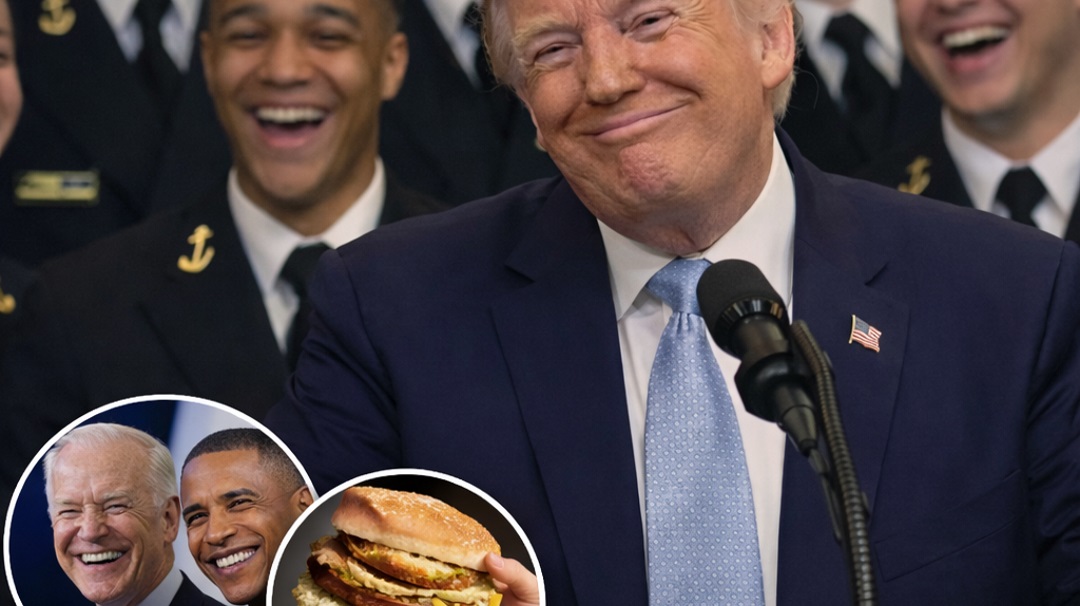

The image is almost playful at first glance. Donald Trump mid-expression, holiday lights behind him, family snapshots tucked into the frame. But the headline beneath it lands with weight: his fortune has nearly tripled during his presidency. That claim has lingered for years, resurfacing now as Trump once again dominates headlines and campaign conversations.
Money and Trump have always been inseparable. Long before politics, his name was already a brand, a signal of luxury, excess, and controversy. But once he entered the White House, the intersection of power and profit became something far more complicated.
During his presidency, watchdog groups and financial analysts began tracking how Trump’s wealth moved while he held office. According to one closely watched estimate, his net worth fluctuated wildly but ultimately rebounded sharply, driven by branding, licensing, and renewed investor interest tied to his political visibility.
The Trump Organization insisted there was nothing unusual about that growth. Company representatives argued that assets rose and fell with the market, and that Trump had stepped back from daily operations. Yet critics weren’t convinced, pointing to patterns that raised eyebrows across ethics circles in Washington.
Foreign delegations booked Trump-branded hotels. Political events were hosted at Trump-owned properties. Memberships at Mar-a-Lago surged, according to one financial breakdown that showed revenues climbing during peak political moments. Each instance, on its own, might have seemed minor. Together, they painted a larger picture.
Supporters counter that Trump’s wealth growth is proof he didn’t need politics for money — that his business empire was resilient enough to survive scrutiny, boycotts, and relentless media pressure. They often cite market-driven explanations, arguing that brand recognition alone can dramatically inflate asset values.
Trump didn’t get rich because of politics. He got richer because his name became the most recognized brand on earth. That’s not corruption — that’s capitalism. — Liberty View (@LibertyViewUSA) November 29, 2025
Still, the optics were impossible to ignore. Ethics lawyers warned early on that refusing to fully divest created unavoidable conflicts. In a widely cited argument, legal experts noted that even indirect benefit undermines public trust, regardless of intent.
Trump himself dismissed those concerns repeatedly. He framed accusations as partisan attacks, insisting that the presidency cost him money, not earned it. At rallies, he told supporters he was “losing millions,” a claim that clashed with external valuations but resonated with his base.
Behind the scenes, the numbers told a more nuanced story. Some properties struggled during his term, especially hotels hit by travel downturns. Others surged. Golf courses and private clubs, fueled by loyal supporters and political networking, reportedly became more valuable than ever.
What makes the image especially potent now is its timing. As Trump campaigns again, wealth is no longer just background noise — it’s part of the narrative. Allies present his financial success as proof of independence. Critics frame it as evidence that the system worked for him while millions struggled.
A president whose fortune grows while in office should never be brushed off as normal. This isn’t about Trump — it’s about precedent. — Ethics First (@EthicsFirstNow) December 6, 2025
That tension has followed Trump beyond the White House. Court filings, financial disclosures, and ongoing investigations continue to probe the true scope of his wealth and how it evolved. Even now, analysts disagree on the exact figures, with estimates varying by billions.
Yet perception often matters more than precision. To supporters, the image reinforces a familiar story: a billionaire outsider who thrived despite opposition. To critics, it captures something darker — the merging of political power and personal profit in ways that still haven’t been fully reckoned with.
Whether Trump’s fortune truly tripled or simply rebounded at the right moment, the conversation isn’t fading. If anything, it’s intensifying. The image doesn’t just ask how much he made. It forces a deeper question about what Americans are willing to accept from those who lead them.