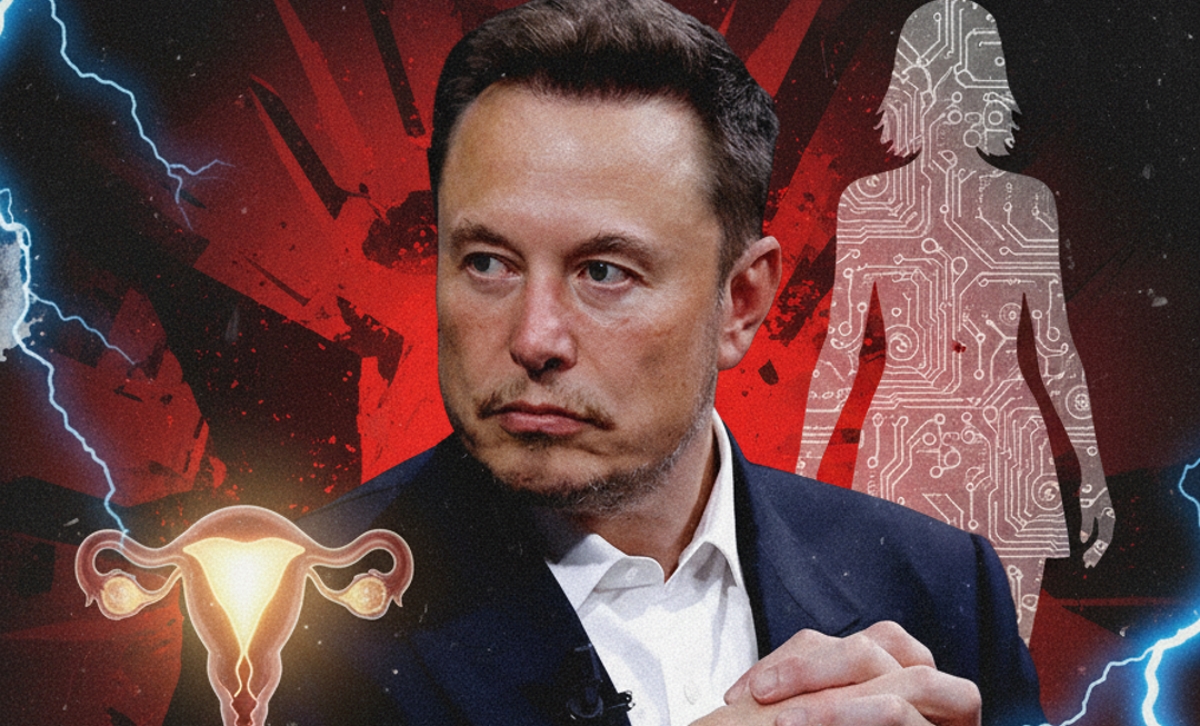
Elon Musk reignited one of the most volatile cultural debates in the world after posting a stark message about gender that ricocheted across social media and political circles within minutes. The quote, shared without caveats or explanation, instantly drew fierce reactions from supporters and critics alike, echoing earlier moments analyzed in coverage of Musk’s pattern of ideological flashpoints that have repeatedly turned his platform into a global battleground.
The statement — “If you have a womb, you are a woman. Otherwise, you are not.” — landed amid already heightened tensions over gender identity, reproductive rights, and free speech. Commentators noted that Musk’s phrasing aligned closely with arguments promoted by gender-critical activists, positions previously examined in reporting on Musk’s past remarks that tracked how his views have hardened over time.
Elon Musk just reduced gender to a single organ and set the internet on fire — again. — Alex Chen (@alexchenwrites) Dec 2025
Within hours, LGBTQ+ advocacy groups condemned the statement as dehumanizing, warning that such rhetoric can fuel discrimination and harassment. Those concerns mirror findings highlighted in research on the impact of public rhetoric showing that high-profile comments often correlate with spikes in online abuse.
Supporters of Musk, however, rushed to his defense, arguing that he was expressing a biological definition rather than an attack on individuals. Conservative commentators framed the backlash as an example of “speech policing,” a narrative consistent with arguments surfaced in political analysis of Musk’s free-speech absolutism and his belief that controversy itself is evidence of open debate.
People may not like Elon’s wording, but biology debates shouldn’t be censored. That’s the real issue here. — Grant H. (@GrantDebates) Dec 2025
The clash quickly expanded beyond Musk himself, dragging in lawmakers, academics, and corporate leaders who questioned whether the world’s richest man bears special responsibility for how his words shape discourse. Scholars studying platform power have long warned about this dynamic, a concern detailed in analysis of influence and amplification that explains how a single post can eclipse nuanced discussion.
Musk’s history on the issue added fuel to the fire. He has previously criticized the use of preferred pronouns and clashed publicly with transgender activists, positions that resurfaced in timelines after users shared contextual breakdowns of his earlier statements showing a consistent ideological throughline.
This isn’t an isolated tweet. It’s part of a pattern — and patterns shape culture. — Naomi R. (@NaomiRights) Dec 2025
Medical and legal experts pushed back on the simplification embedded in the statement, pointing out that sex and gender are treated differently across scientific, legal, and social frameworks. These distinctions are outlined in professional guidance on gender identity frequently cited in policy debates.
Still, Musk showed no sign of retreat. Allies say his refusal to soften language is intentional — part of a broader rejection of what he views as enforced consensus. That posture has become central to his public persona, a shift documented in profiles charting his evolution from tech visionary to culture-war provocateur.
As the debate raged, the practical consequences were already visible. Advocacy organizations reported an uptick in hostile messages, while conservative groups celebrated the post as a victory against what they call ideological overreach. Researchers note that these polarized reactions are exactly how online conflicts escalate, a cycle mapped out in studies of digital polarization examining why such disputes rarely cool down quickly.
What began as a single sentence has once again positioned Musk at the center of a global argument over identity, power, and speech. Whether seen as blunt truth-telling or harmful reductionism, the statement underscores a reality that has followed him for years: when Elon Musk speaks, the conversation rarely stays contained.