
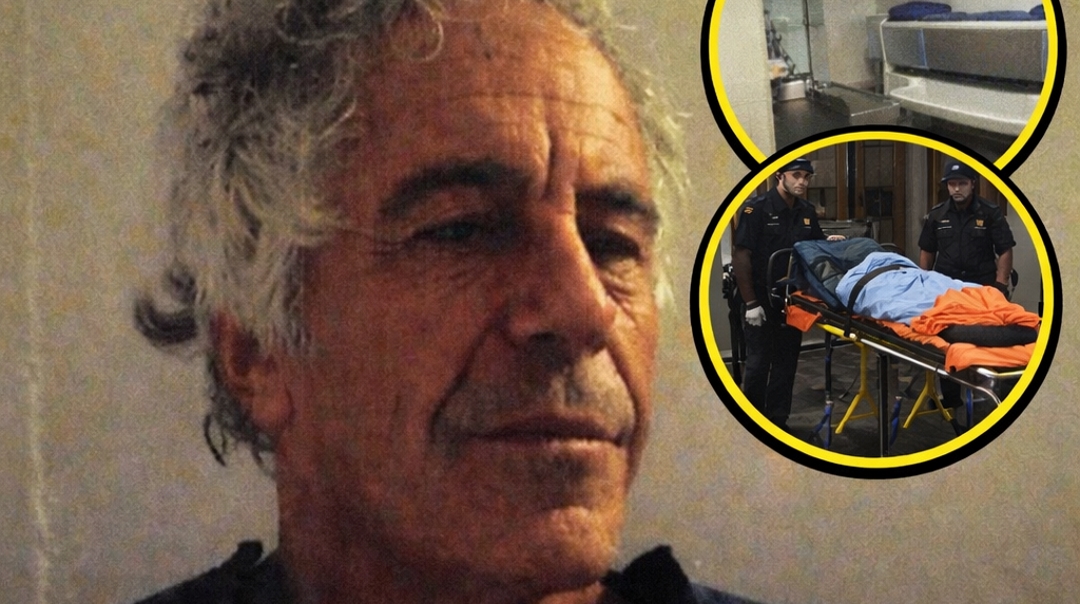
Years after Jeffrey Epstein was found dead in a federal jail cell, the official ruling of suicide continues to face renewed public scrutiny.
Epstein, the disgraced financier awaiting trial on federal sex trafficking charges, was discovered unresponsive at the Metropolitan Correctional Center in New York in August 2019. The New York City medical examiner ruled his death a suicide by hanging, a conclusion detailed at the time by The New York Times’ reporting on the autopsy findings.
But in the years since, lingering doubts have persisted — fueled by procedural failures inside the jail, malfunctioning cameras, and the high-profile nature of the case.
At the time of his death, Epstein was under suicide watch following an earlier incident in his cell. He was later removed from that status, a decision that drew immediate criticism. Two correctional officers assigned to monitor him reportedly fell asleep during their shift, and required check-ins were not conducted as scheduled.
Further complicating matters, surveillance cameras outside Epstein’s cell were not functioning properly on the night he died. Officials later confirmed that some footage was unusable due to technical errors.
The Justice Department’s Office of Inspector General conducted a lengthy investigation into the circumstances surrounding the death. In a comprehensive report released in 2023 and summarized by the Department of Justice’s Inspector General, investigators concluded that a combination of negligence, staffing shortages, and policy failures created an environment where Epstein was able to take his own life.
The report found no evidence of a criminal conspiracy or homicide. However, it sharply criticized systemic breakdowns within the Bureau of Prisons, describing “serious failures” in supervision and accountability.
Still, for many Americans, the official explanation has not quelled suspicion.
Epstein’s connections to powerful figures in politics, business, and entertainment have fueled ongoing speculation. His death occurred weeks after explosive court documents and flight logs detailing his network began drawing renewed attention.
Public skepticism intensified because Epstein was widely seen as a central figure in a sprawling investigation that had the potential to implicate prominent individuals. His death abruptly ended the possibility of a public trial that could have aired testimony and evidence in open court.
In the absence of courtroom proceedings, conspiracy theories filled the vacuum.
Law enforcement officials have repeatedly rejected claims that Epstein was murdered. Then-Attorney General William Barr publicly stated there was no evidence of foul play, reinforcing the medical examiner’s findings.
Nonetheless, political leaders across party lines have occasionally referenced unanswered questions surrounding the case, keeping the issue alive in public discourse.
Experts caution that procedural incompetence and conspiracy are not the same thing. Federal prisons have long faced scrutiny over staffing shortages, security lapses, and underfunding — issues that were documented well before Epstein’s incarceration.
Indeed, the Inspector General’s report painted a picture of chronic administrative failures at the facility, including falsified records and neglected safety protocols.
Epstein’s guards ultimately faced charges related to falsifying records but avoided prison time after reaching deferred prosecution agreements. Their handling of required checks was described as grossly negligent, but prosecutors did not allege involvement in any coordinated plot.
The broader case against Epstein’s associates has continued independently. Ghislaine Maxwell, his longtime associate, was convicted in 2021 on federal sex trafficking charges and sentenced to 20 years in prison.
For families of victims, the renewed speculation offers little closure. Many have expressed frustration that Epstein’s death prevented a full public reckoning of his actions.
Legal analysts emphasize that while public doubt persists, no official investigation has produced evidence contradicting the medical examiner’s suicide determination.
As time passes, the case remains a flashpoint in debates over transparency, institutional accountability, and public trust.
Whether viewed as a tragic culmination of systemic prison failures or as an unresolved chapter in a larger scandal, Epstein’s death continues to occupy a contentious space in the national conversation — one where official conclusions and public perception remain uneasily intertwined.