
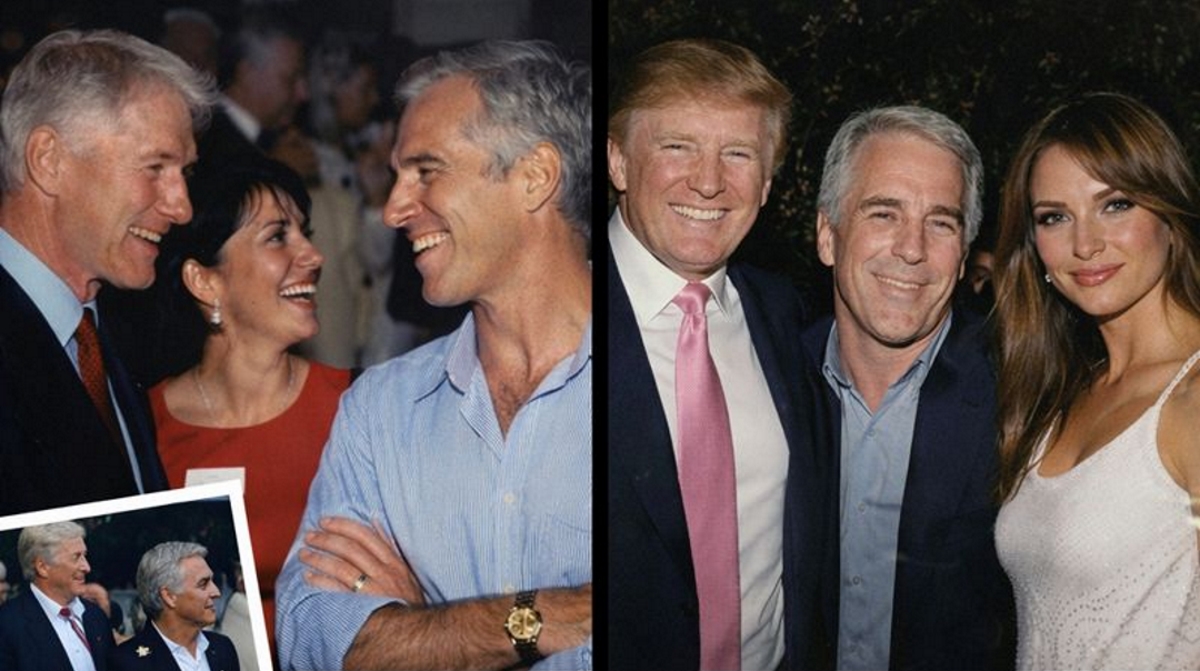
A fresh batch of newly surfaced photographs linked to Jeffrey Epstein has reignited public scrutiny, reviving long-simmering questions about how deeply the disgraced financier embedded himself among America’s most powerful figures. The images, which include Epstein alongside Donald Trump and Bill Clinton at past public events, spread rapidly online and reopened debates many believed had already run their course.
The photos themselves are not new in origin — most were taken decades ago — but their reappearance in a single cluster has intensified attention. Shared widely across social media, the images arrived amid renewed demands for transparency around Epstein’s network, sealed documents, and the full scope of who crossed paths with him before his crimes were fully exposed.
Both have long acknowledged past, limited social contact with Epstein. Neither man has been charged with any wrongdoing related to Epstein, and both have repeatedly denied knowledge of his criminal activity at the time the photos were taken.
Trump has said he cut ties with Epstein years before Epstein’s arrest, while Clinton has stated that he was unaware of Epstein’s crimes and severed contact long before 2019. Those explanations have been reiterated many times, including in background that keeps resurfacing whenever new material circulates.
Still, the images struck a nerve. Seeing Epstein smiling beside presidents at parties and public gatherings made visible what had long been abstract: his proximity to power was not fringe or accidental. That dynamic was documented years ago in the investigation that cracked his protection, which detailed how Epstein cultivated legitimacy through elite access.
Photos don’t prove crimes, but they do prove access — and that still matters. — Investigative journalist (@ArchiveFiles) Dec 2025
Experts caution against drawing conclusions based solely on proximity. Large public events, charity functions, and social gatherings often put powerful people in the same frame without implying friendship or endorsement. Legal analysts stress that guilt by association is a dangerous shortcut, a point underscored in explanations that get lost online when emotions run hot.
Yet the emotional response has been undeniable. For many observers, the resurfaced photos symbolize a broader failure — not of individuals alone, but of systems that allowed Epstein to move freely among elites for years. The images feel unsettling precisely because they look ordinary, echoing concerns raised in essays people still quote about elite immunity.
Social media reaction has split predictably. Some users argue the renewed focus distracts from victims and risks fueling conspiracy theories. Others insist the photos are relevant because they highlight how warnings were ignored and access went unquestioned.
The most disturbing part is how normal it all looks. — Media critic (@CultureLens) Dec 2025
Advocacy groups for survivors have urged restraint, reminding the public that accountability should center on harm rather than celebrity fascination. They warn that endless speculation can eclipse the real damage Epstein inflicted, guidance echoed repeatedly in reminders that rarely trend.
The photos have also renewed pressure to release remaining sealed Epstein-related records. Lawmakers and watchdogs argue that transparency is the only way to restore trust, especially after years of partial disclosures. That demand has been growing steadily, as outlined in policy debates still unfolding about unresolved questions.
For Trump and Clinton, the renewed circulation represents a familiar cycle. Each wave of Epstein material revives scrutiny, prompts restated denials, and fades — only to return again when another image, document, or rumor emerges. Neither man faces new allegations tied to the photos, but the shadow persists.
Journalists covering the story stress the importance of separating documentation from insinuation. The existence of a photograph confirms a moment in time, not intent, knowledge, or culpability. At the same time, ignoring the broader pattern of access risks minimizing how Epstein exploited prestige to protect himself.
This isn’t about one photo — it’s about how power protected someone for years. — Accountability advocate (@OpenFilesNow) Dec 2025
As the images continue to circulate, they serve less as evidence than as reminders. Epstein did not operate in isolation. He moved through rooms filled with influence, often unquestioned, often unchallenged.
Whether the renewed attention leads to meaningful transparency or simply another cycle of outrage remains uncertain. What is clear is that the public appetite for answers has not faded — and that every resurfaced image reopens a wound that never fully healed.