
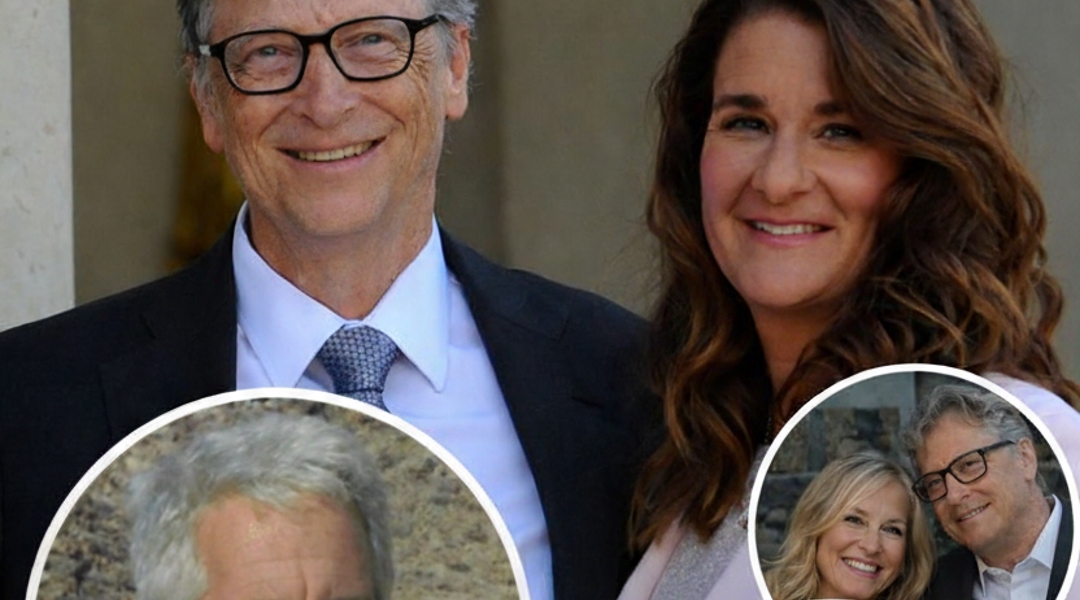
A newly released batch of documents tied to the Jeffrey Epstein investigation has reignited global controversy, dragging some of the world’s most powerful names back into the spotlight — including Microsoft co-founder Bill Gates.
The material, made public as part of a massive document release ordered by U.S. authorities, contains internal emails, notes, and communications gathered during years of investigation into Epstein’s activities and relationships. Buried among the millions of pages is a particularly shocking claim involving Gates, his alleged interactions with Epstein, and an accusation that has spread rapidly across social media.
According to one document attributed to Epstein himself, Gates allegedly contracted a sexually transmitted disease after encounters with women described as Russian. The same document claims that Gates then attempted to secretly provide antibiotics to his then-wife, Melinda French Gates, without revealing the alleged source of the infection.
The allegation appears in a draft email linked to Epstein, a convicted sex offender with a documented history of manipulation, exaggeration, and coercion. While the claim has ignited outrage and disbelief online, it is crucial to note that the document reflects Epstein’s words and assertions — not verified medical records or sworn testimony.
Still, the content has proven incendiary.
Within hours of the files becoming public, screenshots of the allegation began circulating widely, amplified by viral headlines and social media accounts eager to highlight the most sensational details. The claim quickly became one of the most discussed revelations from the release, despite its unverified nature.
Bill Gates’ representatives responded swiftly and forcefully. A spokesperson for Gates categorically denied the allegation, calling it “completely false” and “absurd,” and stressing that Epstein was known to fabricate or distort information about people he sought to control or retaliate against.
“These claims are untrue,” Gates’ team said, emphasizing that the documents do not constitute proof and should not be interpreted as factual accounts.
The controversy has reopened scrutiny of Gates’ acknowledged past association with Epstein. Gates has previously admitted to meeting Epstein multiple times in the early 2010s, primarily to discuss philanthropy and global health initiatives — interactions he later described publicly as a “huge mistake.”
Those meetings, while never alleged to be criminal, became a source of public discomfort after Epstein’s 2019 arrest and subsequent death in jail. Gates has consistently maintained that he severed contact with Epstein once it became clear the relationship served no productive purpose.
The newly released files are part of a sweeping disclosure effort intended to increase transparency around the Epstein investigation. The documents include everything from contact lists and travel records to internal communications and draft correspondence. Importantly, inclusion of a name within the files does not equate to wrongdoing, nor does it imply criminal conduct.
Legal experts have cautioned that raw document dumps of this magnitude are ripe for misinterpretation. Draft emails, hearsay, and unverified claims often appear alongside factual records, creating a chaotic mix that can be easily weaponized online.
“You are essentially releasing the investigative filing cabinet,” one former federal prosecutor noted. “It contains truth, speculation, lies, and everything in between.”
In this case, the allegation involving Gates has been traced back to Epstein’s own words, raising further questions about motive. Epstein was known to exaggerate his influence and spread damaging narratives about powerful individuals, particularly when relationships soured or leverage was lost.
Despite those caveats, the emotional impact of the claim has been significant. For many observers, the allegation reinforces broader distrust of elites and institutions, especially in the wake of Epstein’s long-documented access to wealth, power, and political influence.
The timing of the release has only intensified the reaction. Coming amid renewed public demands for accountability and transparency, the files have fueled anger that Epstein died before standing trial, leaving many questions permanently unanswered.
Melinda French Gates has not publicly commented on the specific allegation contained in the files. She and Bill Gates finalized their divorce in 2021, citing irreconcilable differences. In past interviews, she acknowledged that Gates’ association with Epstein contributed to tensions in their marriage, though she did not elaborate further.
As the story continues to unfold, journalists and analysts are urging caution. The Epstein files are expected to be dissected for months, if not years, with new names and claims surfacing as the material is reviewed in detail.
For now, the Gates allegation remains exactly what it is: a claim contained in a document authored by Epstein, firmly denied by Gates, and unsupported by independent evidence.