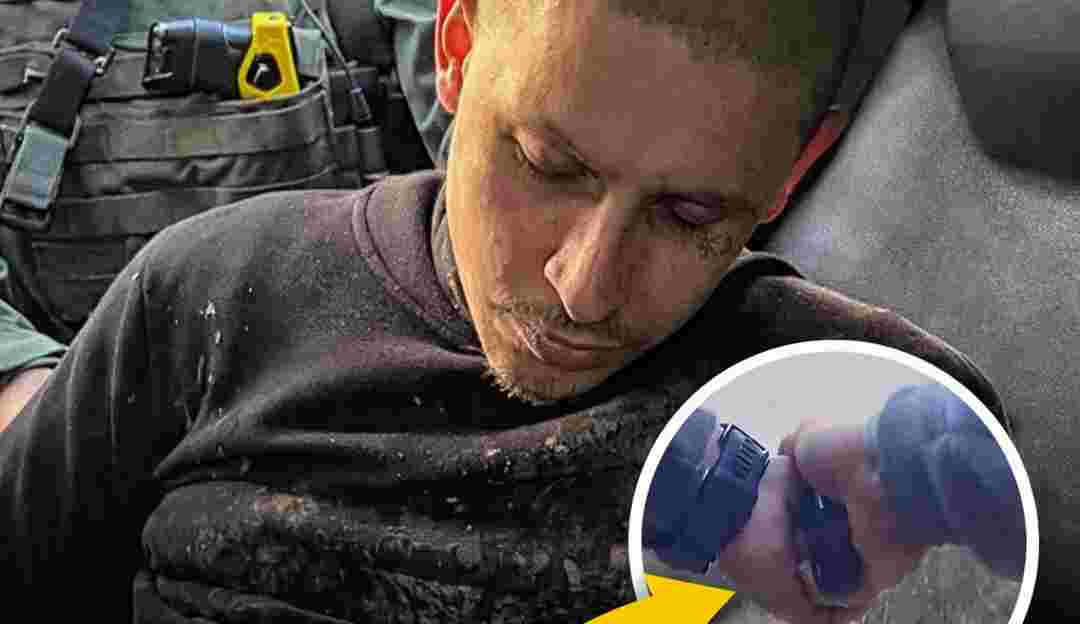
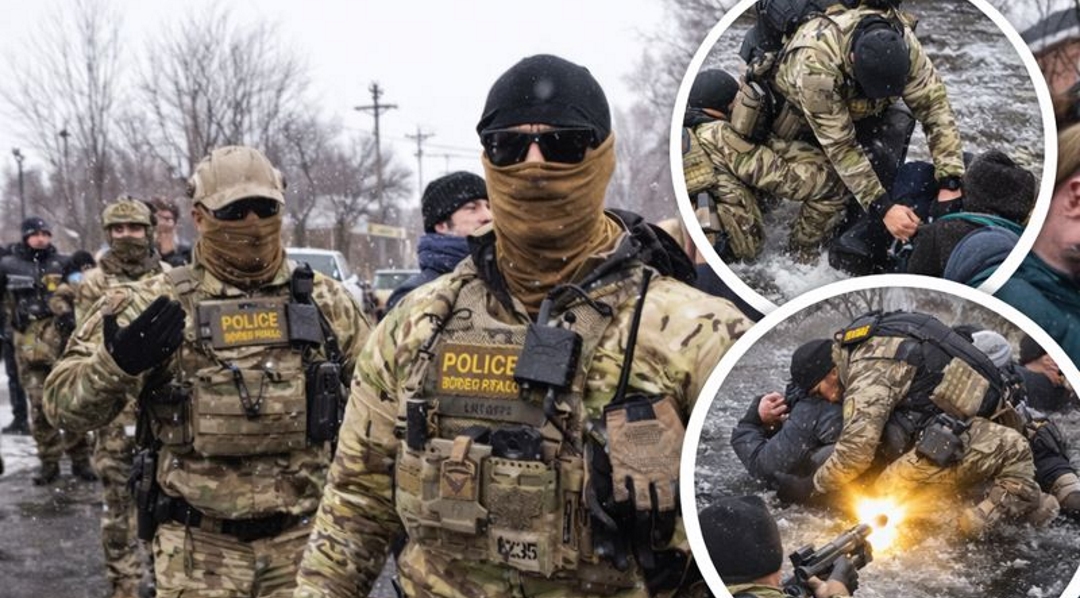
A shooting involving federal border enforcement agents in Minneapolis is under investigation after a man was shot multiple times following a physical struggle that left him restrained on the ground. The incident has sparked intense scrutiny and renewed debate over the use of force showing federal agents operating far from the U.S.–Mexico border.
The encounter unfolded during a law enforcement operation when agents attempted to detain a man who authorities say resisted arrest. Witnesses reported a chaotic scene in which several officers wrestled the man to the pavement before gunfire erupted, details later outlined in local reporting from Minneapolis.
According to preliminary statements summarized in national coverage, the agents involved were part of a federal task force operating in coordination with local law enforcement. Officials have not publicly identified the man who was shot or disclosed his condition beyond confirming he was transported to a hospital.
Cell phone videos and photographs circulated online shortly after the shooting, prompting questions about whether lethal force was justified once the man was already restrained. Civil rights attorneys cited by legal analysis reporting emphasized that the use of deadly force against a subdued individual raises serious constitutional concerns.
Federal authorities said the shooting is being reviewed internally, while state officials confirmed an independent investigation is also underway. Oversight agencies noted that when federal agents discharge weapons during arrests, multiple layers of review are typically triggered, a process described in Justice Department use-of-force guidelines.
The incident has drawn particular attention because of Minneapolis’s history with police violence and federal intervention. Community leaders told international outlets that the presence of heavily armed federal agents in routine operations continues to inflame tensions, especially in neighborhoods still grappling with the legacy of past killings.
Legal experts say clarity will hinge on body camera footage, forensic evidence, and witness testimony. Prosecutors will need to determine whether the agents reasonably perceived an imminent threat at the moment shots were fired — a standard outlined in Supreme Court precedent and discussed in analysis of use-of-force law.
Advocacy groups are calling for transparency, demanding the immediate release of video evidence and the identities of those involved. They argue that public trust depends on swift disclosure, especially when lethal force is used during an arrest rather than a pursuit.
Federal officials have urged patience as the investigation proceeds, stressing that conclusions should not be drawn before all evidence is reviewed. Still, the shooting has already reignited broader concerns about accountability, militarization, and the expanding role of federal agents in domestic law enforcement.
As investigators work to reconstruct what happened in the final moments before gunfire, the case is likely to become another flashpoint in the national conversation over policing, oversight, and the limits of force.