
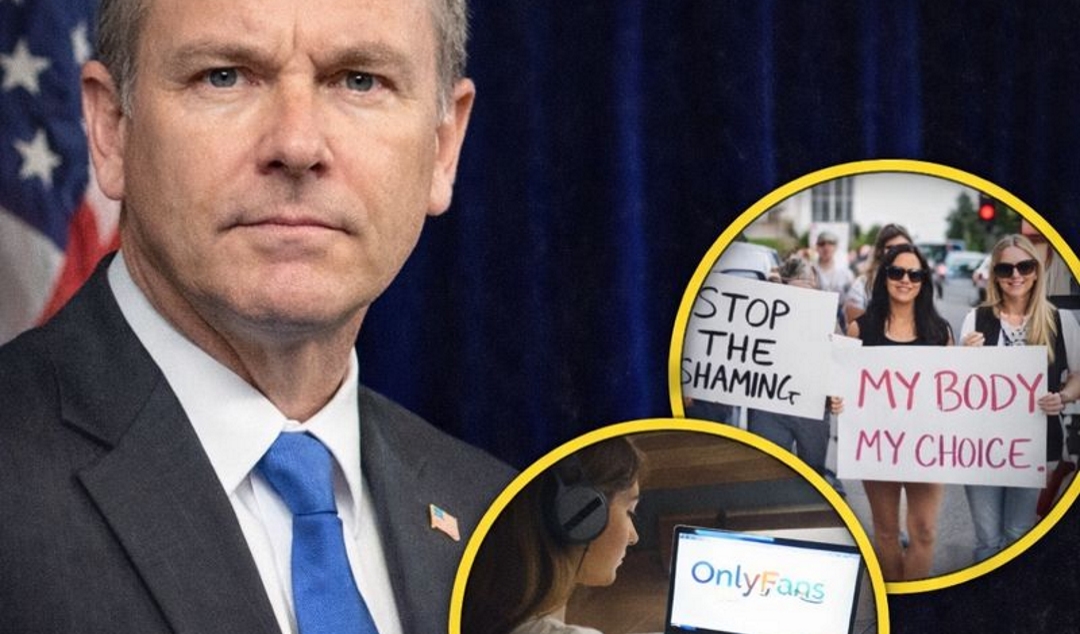
It started as a policy line buried inside a campaign pitch, but within hours it detonated into a full-blown culture war. A Florida political candidate is now facing fierce national backlash after proposing what critics are calling a targeted “sin tax” aimed directly at OnlyFans models and adult content creators.
The candidate, whose campaign has leaned heavily on social conservatism, framed the proposal as a way to “restore moral balance” while generating new state revenue. But the language quickly raised alarms, especially among digital workers who saw it as a direct attempt to penalize women — and marginalized creators — for how they earn a living.
At the center of the controversy is the explosive growth of subscription-based adult platforms, particularly OnlyFans, which has been widely reported as a financial lifeline for creators during economic instability, layoffs, and inflation. Many users pointed out that the platform already pays taxes like any other business, making the idea of a special levy feel punitive rather than practical.
Within hours, screenshots of the proposal spread across social media, sparking outrage from sex workers, free-speech advocates, and even fiscal conservatives who questioned whether the plan could survive legal scrutiny. Some critics compared it to past moral panics that attempted to regulate bodies rather than industries, echoing themes explored in longstanding free expression battles.
Supporters of the candidate argued the tax would discourage “exploitative content” and promote traditional values. But opponents fired back, noting that the proposal doesn’t target gambling platforms, alcohol brands, or massive porn conglomerates — only individual creators monetizing directly.
Calling it a ‘sin tax’ tells you everything. This isn’t about revenue — it’s about control. — Kat Tenbarge (@kattenbarge) May 9, 2024
Legal analysts were quick to flag potential constitutional issues, particularly selective enforcement and equal protection concerns. Taxing a specific group of online workers based on content type could invite lawsuits similar to those discussed in recent constitutional breakdowns of morality-based legislation.
Creators themselves responded with fury and fear. Many shared stories of how platforms like OnlyFans allowed them to escape abusive jobs, pay off medical debt, or support families. The idea that their income could be singled out by politicians struck many as both humiliating and dangerous.
“They don’t see us as workers,” one Florida-based creator wrote in a viral thread. “They see us as symbols to attack.” Similar testimonies have appeared in coverage examining the realities of modern digital sex work.
The backlash wasn’t limited to adult industry circles. Economists questioned the feasibility of enforcing such a tax on a global platform headquartered outside the state. Others warned it could simply push creators toward unregulated spaces, undermining consumer safety — a risk highlighted in broader gig economy research.
Politicians love ‘sin taxes’ until they realize they’re punishing people who already pay their share. — Rep. Anna Eskamani (@AnnaForFlorida) May 9, 2024
As criticism mounted, the campaign attempted to clarify the proposal, insisting it was about “fair taxation.” But the phrasing had already done its damage. Activists argued that labeling legal labor as sinful reinforces stigma that fuels harassment and discrimination.
The controversy has now spilled beyond Florida, reigniting national debates over bodily autonomy, digital labor rights, and how far governments should go in policing morality. What began as a campaign talking point has become a litmus test for how America treats workers whose jobs challenge traditional norms.
For many watching, the question is no longer about taxes — it’s about power. Who gets to decide which jobs are respectable, which bodies are taxable, and whose livelihoods are fair game in an election year.