
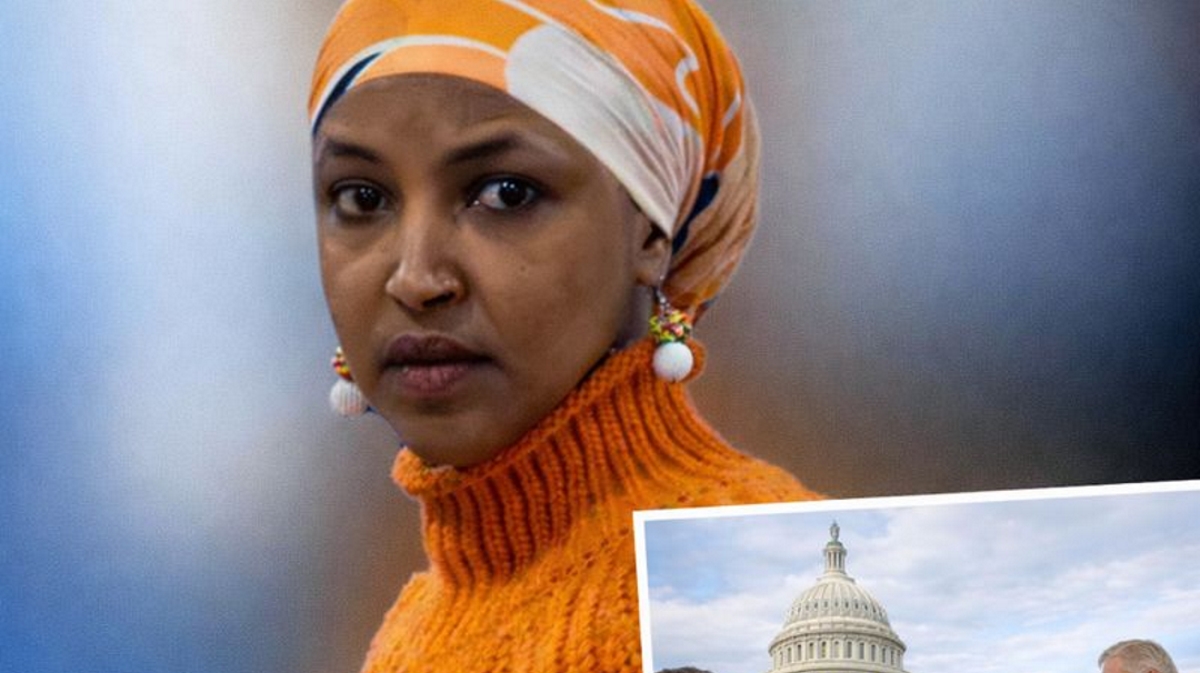
The push to remove Rep. Ilhan Omar from Congress has surged back into the national spotlight as Republican lawmakers intensify efforts they claim are rooted in accountability, but critics say are driven by political retaliation. What began as scattered condemnation has now hardened into coordinated calls for expulsion, censure, or permanent removal.
The renewed campaign follows a series of comments and votes that GOP leaders argue disqualify Omar from serving, framing her rhetoric as incompatible with national security and congressional norms. Behind closed doors, party strategists have reportedly discussed how far they can push the issue without triggering backlash from voters already exhausted by institutional chaos.
Omar, one of the most visible progressive voices in Congress, has long been a lightning rod. Since her first term, she has faced disproportionate scrutiny, much of it amplified through cable news and social platforms that frame her as an existential threat rather than a legislator with policy positions.
This time, however, the pressure feels different. House Republicans have leaned heavily into procedural language, citing ethics rules, decorum standards, and precedent. Several members referenced earlier committee removals as justification for going further.
Democrats argue the effort is less about conduct and more about silencing dissent. They note that similar or harsher statements from other lawmakers have gone unpunished, raising concerns about selective enforcement fueled by ideology, identity, and electoral calculation.
Inside Omar’s district, reaction has been fierce but predictable. Supporters say the campaign against her reinforces a pattern of targeting outspoken women of color, while opponents argue she courts controversy deliberately. Local organizers described the moment as politically destabilizing, pointing to fractured community responses unfolding across Minnesota.
Constitutional scholars caution that expelling a sitting member is rare and historically reserved for extreme circumstances, such as criminal conviction or direct support for insurrection. Attempts to stretch that threshold risk normalizing removal as a partisan weapon.
Behind the scenes, some Republicans privately worry the strategy could backfire. Polling suggests voters may tolerate censure but recoil at expulsion, especially when it appears driven by speech rather than action. One senior aide described the debate as “how much is too much before it looks like revenge.”
Omar has responded defiantly, calling the effort an attack on free expression and democratic representation. In recent remarks, she framed the push as an attempt to intimidate lawmakers into conformity, warning that today’s target could easily become tomorrow’s precedent.
Her allies have amplified that message, pointing to historical safeguards designed to prevent exactly this kind of political overreach. They argue that disagreement, even sharp disagreement, is not grounds for erasure.
Conservative media outlets have seized on the story, portraying the effort as long-overdue accountability. Segments routinely frame Omar as emblematic of what they describe as radical drift within the Democratic Party, tying her comments to broader cultural and geopolitical anxieties.
That framing has intensified pressure on GOP leadership to act decisively. Some lawmakers fear that anything short of removal will be portrayed as weakness, even as others quietly urge restraint to avoid deepening institutional instability.
The situation has also reignited debate about how Congress polices itself. Ethics committees move slowly, and informal norms have eroded over the past decade. As a result, disciplinary actions increasingly play out in the media before any formal process unfolds.
For Omar, the stakes are personal and political. Removal would not only end her term but send a chilling message to dissenting voices across the chamber. For Congress, the stakes are structural, testing whether partisan power can override democratic mandate.
As the push continues, neither side appears willing to de-escalate. Republicans frame the moment as a necessary stand. Democrats warn it is a dangerous escalation. And the public watches another norm strain under the weight of modern politics.
Whether the effort succeeds or collapses, its impact will linger. The attempt to remove a sitting member for speech alone marks a turning point, one that could reshape how power is wielded long after the headlines fade.