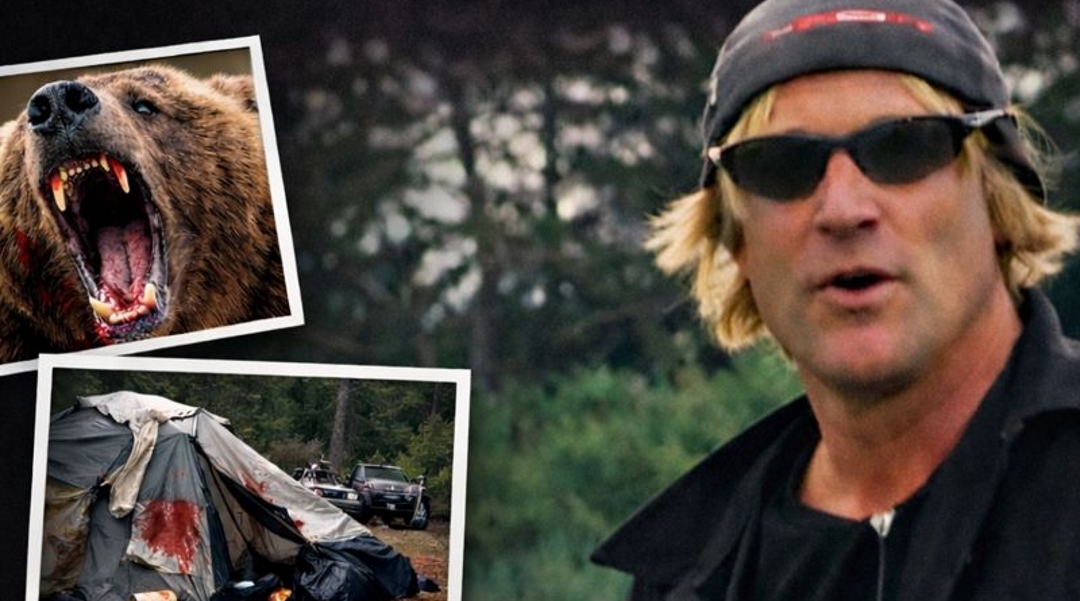
The image is jarring even decades later. A man standing confidently in the wilderness, a roaring bear frozen in mid-snarl, a blood-stained campsite left behind. The story behind it remains one of the most unsettling wildlife tragedies ever documented — not because it was filmed, but because the most horrifying part was recorded and never released.
In October 2003, Timothy Treadwell and his girlfriend, Amie Huguenard, were killed by a grizzly bear in Katmai National Park, Alaska. Treadwell had spent 13 summers living among wild bears, filming himself up close and insisting he had formed a bond with them. Park officials had repeatedly warned him that his behavior was dangerous, a concern detailed in official park summaries that later resurfaced after the attack.
What separates this tragedy from countless other fatal wildlife encounters is the audio. On the day they were killed, Treadwell’s camera was running — but the lens cap was on. The device captured sound only. That recording, recovered by authorities, documents the final moments of both victims. It has never been released to the public.
According to investigators, the audio lasts several minutes and captures Treadwell shouting as the bear attacks, followed by desperate attempts by Huguenard to fend the animal off. Those details were later confirmed by people who heard the tape, including filmmaker Werner Herzog, who examined the recording while making his documentary. Herzog’s reaction, described in one revealing interview, was chilling — he urged that the tape should never be listened to again.
Authorities say the bear involved was an older male, possibly stressed by the late season when food is scarce. The couple had extended their stay beyond the usual departure window, placing them in increased danger. Rangers later killed two bears suspected to be involved, a decision explained in retrospective reporting from Alaska marking the anniversary of the deaths.
Treadwell’s final spoken words on the tape reportedly included frantic warnings to Amie and anguished realizations that his philosophy about bears had failed him. Friends later said he believed the bears accepted him as a protector, not a threat — a belief that had already alarmed wildlife experts long before the fatal encounter.
The Grizzly Man audio was never released for a reason. Everyone who heard it said it was unbearable. — True Crime Files (@TrueCrimeFiles) October 5, 2023
When Herzog released *Grizzly Man* in 2005, he chose not to include the audio, opting instead to show his own reaction while listening through headphones. That creative decision sparked debate — but it also reinforced how disturbing the recording truly was. Herzog later said the tape was “the most frightening thing I have ever heard,” a remark revisited in analysis of the film’s impact.
For many, the tragedy reshaped conversations about wildlife respect versus obsession. Treadwell’s passion for bears was genuine, but his refusal to accept their unpredictability proved fatal. Biologists emphasize that grizzlies are not capable of recognizing friendship, a reality underscored in broader discussions about human-animal encounters that continue to cite the case as a warning.
Amie Huguenard, who had little prior wilderness experience, is often described by friends as an unwilling participant in the final decision to stay longer that season. Her family later expressed heartbreak that she paid the ultimate price for trusting someone else’s judgment.
Every time Grizzly Man resurfaces, it reminds people that loving wildlife doesn’t mean they love you back. — Nature Watch (@NatureWatchers) October 6, 2023
Today, the tape remains sealed, reportedly kept by a friend of Treadwell’s who promised never to let it be heard. Authorities have supported that decision, arguing it serves no purpose beyond sensationalism.
The image now circulating is more than a headline. It represents a moment where idealism collided violently with nature. The final words of the so-called “Grizzly Man” were not heroic or poetic — they were human, terrified, and irreversible.
Two decades later, the story endures not because it was filmed, but because it stands as one of the clearest reminders that the wild does not bend to belief, intention, or love.