
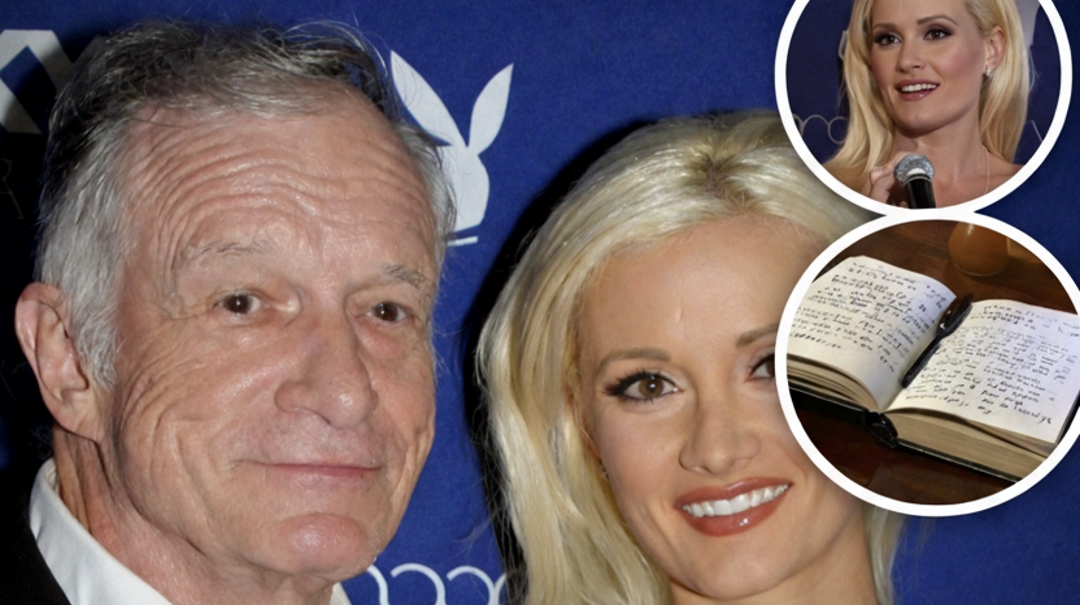
Years after the Playboy Mansion stopped being the epicenter of Hollywood excess, former Playboy Bunny Holly Madison says there are still secrets most people don’t fully understand. In recent interviews and renewed discussion around her memoirs, Madison has described what she claims was a meticulously kept “black book” belonging to Hugh Hefner—one that, according to her, documented far more than guest lists or phone numbers.
Madison, who was one of Hefner’s long-term girlfriends in the early 2000s and a central figure on the reality show “The Girls Next Door,” has spent the past decade slowly reframing what life inside the mansion was really like. What once appeared glamorous on television, she now describes as tightly controlled, psychologically damaging, and built on power imbalances that were hidden in plain sight.
The so-called black book has become a symbol of that hidden structure. Madison says Hefner was obsessive about record-keeping, documenting personal details about women, guests, and intimate encounters. According to her, this wasn’t done casually—it was systematic, deliberate, and deeply unsettling once you understood its purpose.
She has claimed that the book included names, dates, and private information that reinforced Hefner’s control over the people around him. In her telling, it functioned less like a diary and more like leverage, a way to remind women that nothing inside the mansion was ever truly private.
Madison has been careful to say she never personally read every page of the book, but she insists its existence was well known among the women who lived there. The idea that your name, your behavior, and your most intimate moments might be recorded created an atmosphere of constant anxiety, she says—one where compliance felt safer than resistance.
Her comments echo broader revelations that surfaced in the A&E docuseries “Secrets of Playboy,” which reframed Hefner not as a harmless provocateur but as a man who built an empire on control. As reporting on the series explained, multiple former associates described systems of surveillance, punishment, and reward that kept women compliant and isolated.
For Madison, the black book fits squarely into that system. She says it reinforced the idea that Hefner was always watching, always remembering, and always holding something over you. Even years later, the thought of it still unsettles her.
What makes her account particularly striking is how normal it all seemed at the time. The mansion was filled with rules—curfews, dress codes, mandatory group activities—that were presented as part of the lifestyle. Madison has said the black book felt like an extension of those rules, another invisible boundary you didn’t cross.
She has also described how the book contributed to competition and paranoia among the women. If everything was being tracked, then favor, punishment, or eviction could feel arbitrary. That uncertainty, she argues, kept people compliant without the need for constant confrontation.
Hefner himself often framed his control as benevolence, portraying the mansion as a safe haven and himself as a protector. Madison now says that framing masked a far darker reality, one where autonomy slowly eroded until women felt trapped by fear, dependency, and public perception.
Critics of Madison’s claims have argued that she stayed at the mansion by choice and benefited from the platform it gave her. Madison doesn’t deny that she gained fame and financial stability, but she rejects the idea that consent within such a power imbalance is simple. She has said repeatedly that leaving felt impossible until she had external support and a clearer understanding of how manipulated she had been.
What has changed in recent years is how audiences receive these stories. In the early 2000s, Playboy was still widely treated as aspirational. Today, there is far more skepticism about institutions that profit from sexualized power dynamics. Madison’s accounts are now often viewed through that lens, not as bitterness, but as delayed clarity.
The black book, whether seen as literal documentation or symbolic control, has become shorthand for everything Madison says was wrong with the Playboy world. It represents secrecy, imbalance, and the quiet normalization of behavior that would be alarming if seen outside that bubble.
Other former Bunnies have supported aspects of her account, describing similar feelings of being monitored and managed. While details vary, the common thread is a sense that nothing inside the mansion was accidental. Everything, from relationships to rules, served Hefner’s authority.
As analysis of the cultural reckoning around Playboy has noted, the brand’s legacy is now inseparable from these testimonies. What once symbolized liberation is increasingly associated with exploitation and silence.
Madison has said she speaks out not to shock, but to correct the record. She believes the glossy image of the mansion erased the experiences of the women inside it, and that acknowledging tools like the black book helps explain why so many felt powerless for so long.
Hefner, who died in 2017, never publicly addressed Madison’s specific claims about the black book. His supporters have continued to frame him as a complex figure of his era, while critics argue that complexity should not excuse harm.
For Madison, the conversation isn’t about rewriting history for drama. It’s about naming systems that thrived because no one questioned them. The black book, in her telling, wasn’t just a notebook—it was a reminder that control doesn’t always look like force. Sometimes it looks like smiles, parties, and secrets written down where you can never quite see them.
Years after leaving the mansion, Madison says reclaiming her story has been part of healing. And while the revelations continue to unsettle fans who once viewed Playboy through a nostalgic lens, she insists that discomfort is necessary. Only by facing what was hidden, she argues, can the myth finally lose its power.