
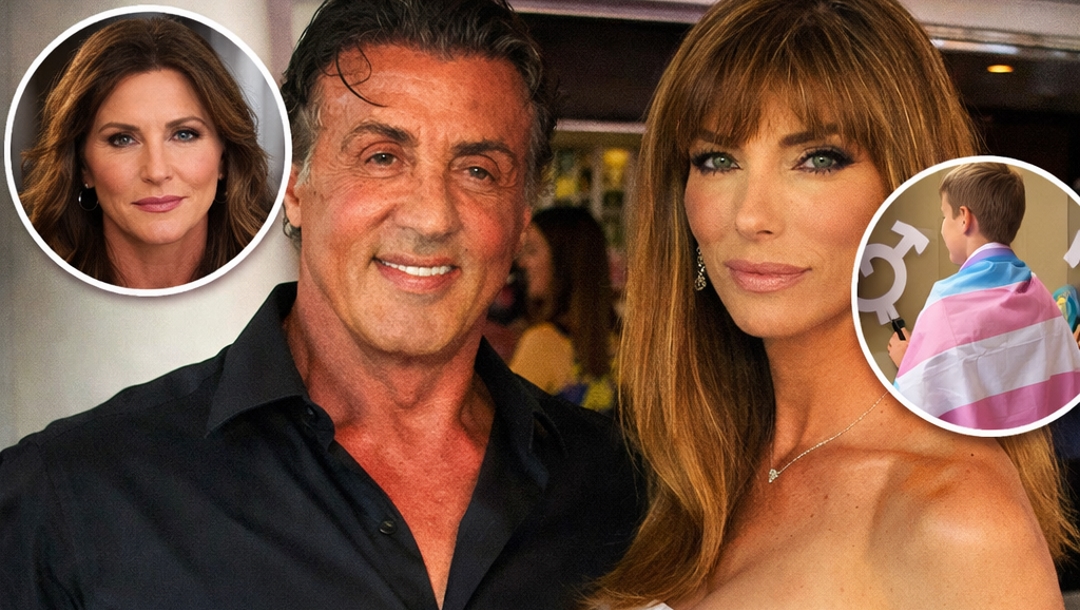
A heated cultural debate is once again spilling into the entertainment world after Jennifer Flavin, the wife of actor Sylvester Stallone, shared comments that quickly caught the attention of both supporters and critics across social media.
Within hours, celebrities, commentators, and fans were weighing in, turning a single remark into a wider conversation about parenting, politics, and how Hollywood engages with one of the most sensitive issues in modern culture.
The discussion began when Flavin reportedly spoke about what she described as growing concern among some parents regarding the number of young people identifying as transgender. Her comments circulated rapidly online, with clips and quotes being shared across multiple platforms.
For some, her words reflected a viewpoint they believe is often ignored in mainstream entertainment circles. Others saw the remarks as harmful or overly simplistic in a complex conversation about identity and healthcare.
That divide is what turned the moment into a flashpoint.
Several public figures responded almost immediately. Some defended Flavin’s right to express concern about issues affecting families. Others urged caution, arguing that conversations about transgender youth require sensitivity and accurate information.
Hollywood has increasingly become a space where cultural and political discussions unfold publicly. Social media has made it almost impossible for celebrities to stay on the sidelines when major social topics emerge.
In this case, the reactions came fast.
Actors, writers, and influencers began posting their perspectives, with some calling for empathy toward transgender young people and their families. Others stressed the importance of open dialogue without immediately labeling differing viewpoints as malicious.
Supporters of Flavin argued that questions about medical decisions, parental rights, and social pressure are legitimate topics that should be discussed openly. Critics countered that framing the issue incorrectly can contribute to stigma faced by transgender individuals.
The result has been a familiar online dynamic: thousands of people debating a complicated topic in real time.
Experts say the broader conversation reflects a cultural shift happening far beyond Hollywood. Discussions about gender identity, youth healthcare, and parental guidance have increasingly moved into the public arena over the past decade.
Research groups and medical organizations continue to study the issue as more families navigate questions about gender identity. According to reporting that has tracked the rise in young people identifying as transgender, experts say the reasons are complex and still being explored.
Major health organizations stress that care decisions typically involve medical professionals, parents, and the young people themselves. The American Academy of Pediatrics has published guidance on gender-affirming care, emphasizing individualized support and mental health considerations.
Background information about those medical recommendations can be found in resources such as the American Academy of Pediatrics policy statement on gender-affirming care.
At the same time, surveys and data analysis show the number of young people identifying as transgender has increased in recent years, which has fueled political, medical, and social debates across the United States and other countries.
Public discussion about those trends has appeared in numerous studies and reports, including broader analysis of youth identity data such as research examining how younger generations describe gender identity.
As those debates expand, celebrities often become part of the conversation — sometimes intentionally, sometimes not.
For Jennifer Flavin, the reaction illustrates how quickly personal comments can ripple through the entertainment industry. Being connected to one of Hollywood’s most recognizable actors means anything she says publicly attracts attention far beyond a typical social media discussion.
Sources close to the situation say Flavin did not appear to anticipate the scale of the reaction when the comments first circulated.
But once the discussion began trending, it was clear the topic had struck a nerve.
Some voices within the entertainment community have called for cooler heads and more thoughtful dialogue. They argue that complex social issues cannot be resolved through viral posts or heated comment sections.
Others believe the conversation itself is valuable, even when it becomes uncomfortable.
“These are conversations society is still learning how to have,” one media analyst noted in a recent interview discussing the situation. “Celebrities speaking about it can amplify both understanding and misunderstanding at the same time.”
That tension is part of why debates like this often explode online.
Hollywood has always been a reflection of broader cultural battles, from civil rights to marriage equality to mental health awareness. The topic of gender identity has simply become the latest front in that ongoing discussion.
For fans watching the situation unfold, reactions remain sharply divided.
Some believe Flavin was voicing concerns shared by many parents who feel uncertain navigating new social and medical landscapes. Others argue that public figures must be careful not to contribute to narratives that could negatively affect vulnerable young people.
What’s clear is that the conversation is unlikely to fade quickly.
With social media amplifying every response and every counter-response, the debate has taken on a life of its own — stretching far beyond the original comment that started it.
Whether the moment leads to deeper discussion or simply becomes another viral controversy remains to be seen.
But once again, Hollywood has found itself at the center of a national conversation that extends well beyond the entertainment industry.