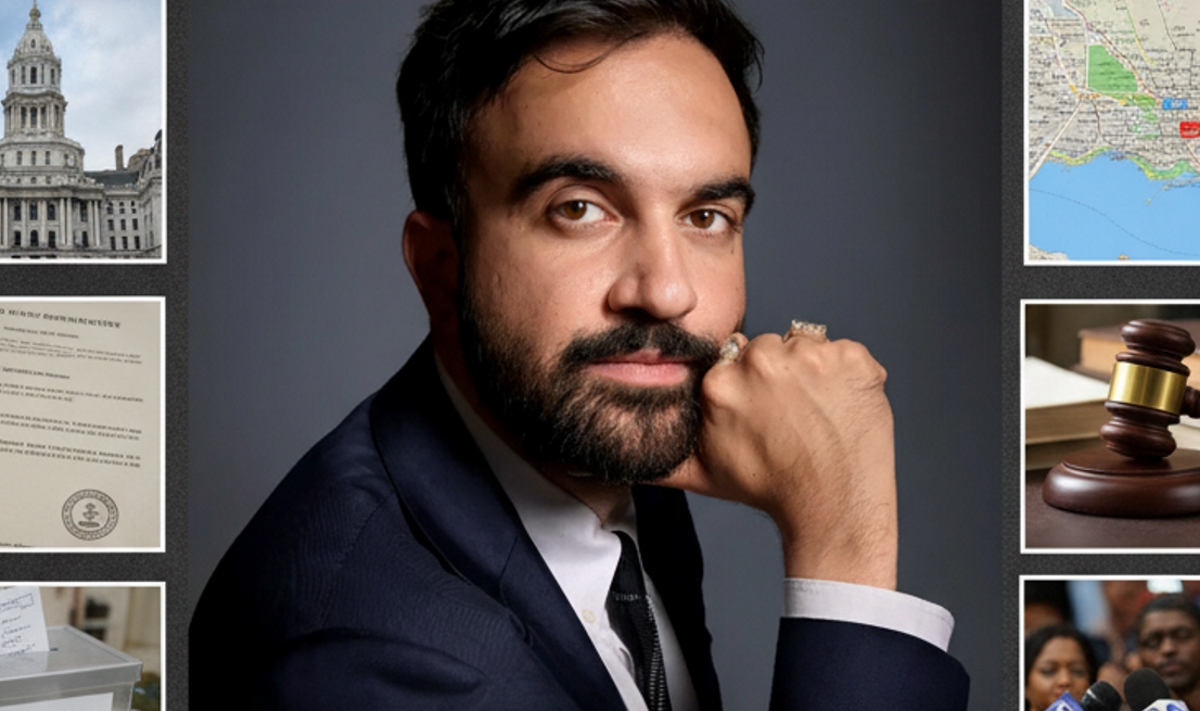
For several frantic hours this week, a bizarre political rumor swept through New York City — one claiming that State Assemblymember Zohran Mamdani had been “quietly sworn in” as the city’s 111th mayor. The claim, which began on social platforms before spilling into group chats and neighborhood forums, spread with a velocity similar to the misinformation surges mapped in a research analysis on rumor dynamics, turning a routine procedural filing into a full-blown online storm.
The rumor originated from a misinterpreted document circulating alongside screenshots of older municipal listings, some of which were similar to archival entries featured in the NYC Municipal Archives reference pages. Users claimed the document listed Mamdani as the “incoming 111th mayor,” despite New York City having only 110 officially recognized mayors to date — a fact clearly explained in the city’s own mayoral history overview.
Within minutes, speculation mutated into certainty, as political commentators, satirical accounts, and confused residents amplified the claim. Mixed into the chaos were posts referencing budget disputes similar to those detailed in a recent fiscal-reporting breakdown, giving the rumor an air of legitimacy it never actually had.
Wait… why is everyone saying Zohran Mamdani is the “111th Mayor of NYC”? Did something happen overnight?? — J.S. (@CityBeatJS) Dec 12, 2025
Political researchers watching the chaos unfold warned that this kind of misunderstanding is precisely the pattern predicted in a Pew polarization study, which found that ambiguous government language, combined with oversaturated online discourse, can cause even the most implausible claims to spread unchecked.
As the rumor ballooned, several users began tying it to legitimate conversations about municipal succession — a topic explored in City Council legal summaries that outline emergency leadership protocols. But none of those documents even remotely suggested that Mamdani, who serves in the State Assembly, could assume mayoral authority.
The confusion deepened when political influencers misread a legislative update linked to Albany records similar to those cited in the State Assembly member directory. That update, which only referenced Mamdani’s committee role, was quickly reframed as proof that “something was happening behind the scenes.”
People keep sending me screenshots like “SEE??” None of the docs say anything about him becoming mayor. Y’all are reading way too fast. — L.M. (@PolicyLensLM) Dec 12, 2025
The rumor escalated even further when out-of-context clips resurfaced from an interview in which Mamdani discussed municipal housing issues — an interview archived inside a public-policy conversation that had nothing to do with mayoral succession. But viewers, encountering the clip alongside the viral misinformation, interpreted it as a “hint.”
Fueling the online spiral were maps of alleged “administrative transitions,” screenshots of urban planning documents like those housed in the Department of City Planning database, and stray references to leadership reform proposals similar to those outlined in a governance-review briefing. None of them supported the rumor — but combined, they gave casual viewers the illusion of evidence.
Critics quickly pointed out that the rumor contradicted every official source, including the formal mayoral listings verified through New York City’s archival FAQs. Even still, the misinformation kept spreading, boosted by accounts referencing unrelated controversies such as campaign-finance audits similar to those reported in a recent political finance analysis.
This whole “111th mayor” thing is a perfect example of how NYC political myths are born. One wrong screenshot and BOOM — a whole narrative. — R.T. (@UrbanIntelRT) Dec 12, 2025
By midday, journalists began debunking the story, citing clarifications tied to mayoral succession laws summarized in a legal charter overview. They also noted that the list of New York’s mayors — last updated in public references maintained by the Unified Court System archives — includes no such change or pending alteration.
Meanwhile, misinformation experts drew parallels between the frenzy and documented cases in which political rumors snowballed following small clerical quirks — patterns observed in a misinformation-behavior research study. Even minor formatting oddities in public-facing documents can trigger misinterpretation when amplified through social networks.
Several commentators suggested the confusion may have been exacerbated by rising distrust in municipal institutions — distrust highlighted throughout a national trust-in-government survey showing that Americans increasingly assume political chaos even where none exists.
We’ve reached a point where people think ANYTHING is possible in NYC politics. Even Assemblymembers randomly becoming mayor. — A.P. (@CivicWatchAP) Dec 12, 2025
The situation intensified further when an old map of city administrative zones — similar to those preserved through NYC planning open-data resources — was re-circulated online. The outdated labeling of several districts convinced some viewers that a transition was secretly underway.
Still others pointed to an unrelated legislative announcement about municipal autonomy, echoing policy discussions cited within a statewide legislative roundup. Though the announcement had no bearing on mayoral succession, it was quickly reframed by rumor-spreading accounts as “evidence” that a political shift was imminent.
When reporters finally reached Mamdani’s office for comment, aides simply pointed them toward his official biography posted on the New York Assembly’s website — which clearly states he is an Assemblymember representing Queens’ 36th district, not a municipal executive.
By late afternoon, the rumor began to dissipate, replaced by waves of correction threads and posts linking to city-records explanations mirrored in archival guidance pages. But for many New Yorkers, the episode became yet another reminder of how fast misinformation can travel — especially when wrapped in official-looking language, municipal jargon, and screenshots that appear legitimate at first glance.
In the end, the shocking part wasn’t the rumor itself — it was how quickly thousands believed that a state legislator could become New York City’s mayor overnight, without an election, a resignation, a death, or any constitutional mechanism supporting such a transition. The frenzy underscored the same vulnerabilities experts warned about in a NATO communication-strategy review: when public trust erodes, even the most implausible claims can ignite a firestorm.