
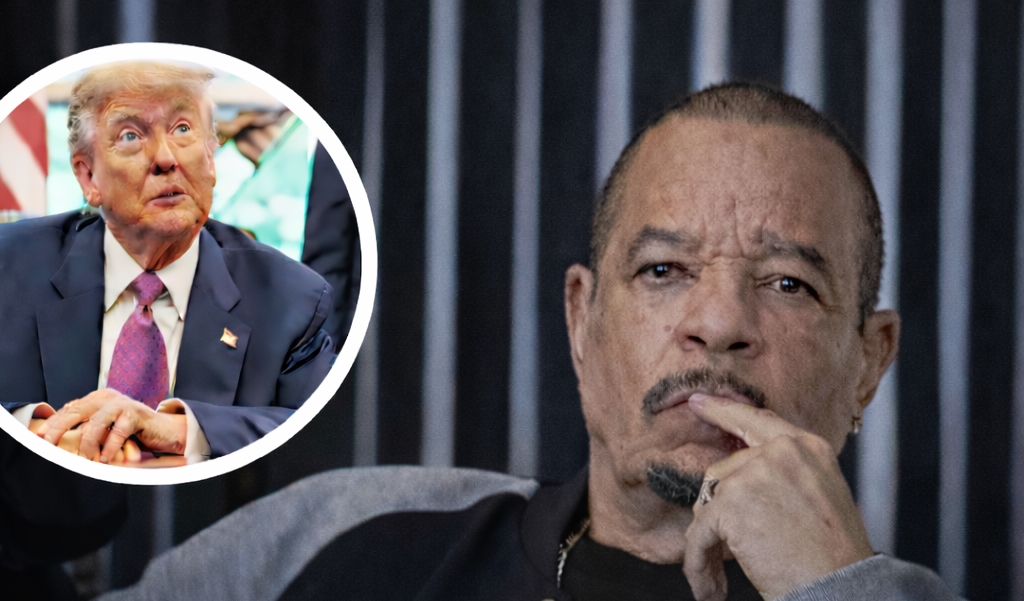
Rapper and actor Ice-T found himself at the center of a social media firestorm this week after a comment comparing Donald Trump to Satan ricocheted across platforms and ignited fierce debate. The remark, which critics called inflammatory and supporters described as dark humor, quickly became one of the most shared political soundbites of the day.
The controversy began when Ice-T reacted to online comparisons between Trump and the devil. In a response that many interpreted as escalating the rhetoric, he suggested that while “Satan is evil,” he believed Trump was worse. Within hours, the comment was clipped, reposted, and dissected across X, Instagram, and cable talk shows.
Ice-T, best known for his music career and long-running role on Law & Order: Special Victims Unit, has never shied away from political commentary. Over the years, he has criticized both parties and frequently waded into debates about policing, civil rights, and media narratives.
This time, however, the tone struck many as unusually sharp. Conservative commentators accused him of crossing a line, arguing that comparing a political figure to Satan dehumanizes opponents and fuels polarization. Several called for public figures to tone down language in an already volatile political climate.
Supporters countered that hyperbolic comparisons have long been part of political speech in America. They argued that entertainers, especially those known for blunt expression, are entitled to their opinions—even provocative ones—without facing coordinated outrage campaigns.
Donald Trump himself has frequently been both the subject and source of biting rhetoric. Throughout his political career, he has labeled critics with nicknames, dismissed media outlets as “fake news,” and used stark language to describe opponents. His defenders say such style is part of his brand; his critics argue it has normalized combative discourse.
The latest flare-up underscores how quickly a single sentence can transform into a national conversation. Within hours, media outlets were running segments analyzing the cultural impact of celebrity speech, while trending hashtags amplified both condemnation and applause.
Observers also noted that comparisons involving religious imagery often carry added emotional weight. Invoking Satan—regardless of intent—tends to trigger reactions far beyond typical political insults, especially among religious audiences who see such language as morally charged rather than metaphorical.
Ice-T did not appear to issue a formal apology or retraction. Instead, he posted follow-up comments suggesting that critics were missing the broader point: that he was expressing frustration, not issuing a literal theological comparison.
Free speech advocates pointed out that provocative speech, even when offensive to some, remains protected expression. The principle is enshrined in the First Amendment, which broadly safeguards political commentary. The American Civil Liberties Union has long maintained that freedom of expression includes speech that shocks or angers, a standard that has been tested repeatedly in the age of social media.
Yet legal protection does not shield public figures from backlash. In the digital era, reputational consequences often unfold in real time. Brand partnerships, fan bases, and media relationships can all shift within days—or hours—of a viral moment.
Political analysts say episodes like this reveal a deeper problem: the merging of entertainment and governance. When celebrities comment on politics, their remarks carry the megaphone of fandom. When politicians respond, they elevate the exchange further, creating a loop that feeds outrage and attention.
For Trump’s supporters, the comment reinforced a belief that cultural elites unfairly demonize him. For his critics, it was another example of someone voicing what they see as profound dissatisfaction with his leadership style and policies.
The broader question remains whether such rhetorical escalations contribute anything meaningful to public discourse. In a polarized environment, metaphors involving absolute evil can harden positions rather than invite debate. But for some audiences, shock value cuts through the noise in ways careful phrasing cannot.
As the clip continues to circulate, it serves as a reminder of how celebrity speech operates in 2026: instant amplification, partisan interpretation, and relentless replay. Whether the moment fades quickly or lingers as part of the culture war narrative depends largely on who keeps talking about it next.
For now, Ice-T’s comment stands as another flashpoint in the ongoing collision between pop culture and politics—a reminder that in the modern era, even a metaphor can ignite a national controversy.