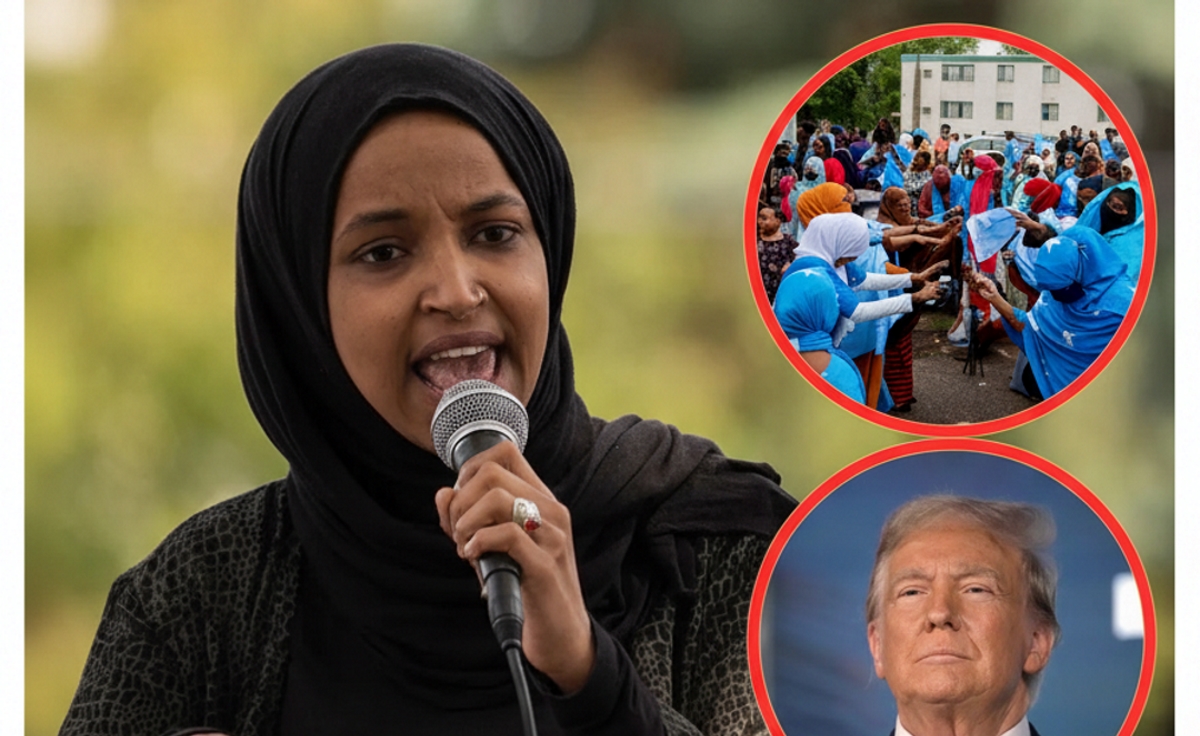
Rep. Ilhan Omar sounded an alarm this week about a dramatic spike in violent threats against her, a pattern confirmed across multiple federal cases and documented earlier through a detailed NBC review of prior prosecutions. Her warning landed at the same moment Donald Trump renewed calls for sweeping deportation actions, rhetoric that analysts say is heightening fear within Minnesota’s large Somali community — one of the most politically engaged African diasporas in the country.
Omar told reporters that her office has tracked a rise in explicit threats referencing Trump’s campaign messaging, echoing concerns raised in a Washington Post analysis of targeted harassment that detailed how political language often escalates into real-world danger. Community leaders say the environment has shifted sharply since Trump began promising “the largest deportation operation in American history,” a phrase highlighted in a CNN breakdown of his immigration proposals.
The tension escalated further when Omar described Somali families in her district as “living in fear,” citing conversations similar to those documented in a Minnesota Public Radio feature capturing community anxiety. One Minneapolis organizer posted an emotional response on social media:
People think this is politics. It’s not. Somali moms in Minneapolis are asking if they need emergency plans. That’s the reality. — H. Warsame (@HWCommunity) Dec 9, 2025
Federal officials have already prosecuted multiple individuals for threatening to kill Omar, including cases outlined in a Justice Department sentencing release that confirmed how frequently threats escalate into actionable criminal investigations. Public-safety experts note that spikes in political harassment often correlate with periods of heightened campaign rhetoric, especially when immigration becomes a central issue.
The renewed threats emerged only days after Trump again invoked mass-removal plans on national television, echoing language referenced inside a Reuters overview of his deportation pledge. Omar said those comments “pour gasoline” on tensions that already run high in Minnesota, where immigrant communities have historically been targeted by misinformation and online harassment.
One political scientist captured the dynamic in a post that gained rapid traction:
Every time Trump pushes mass-deportation messaging, threats against Omar spike. The data points line up. This isn’t hypothetical. — Dr. Lena Cole (@LColeResearch) Dec 9, 2025
Local Somali leaders say families are especially alarmed because the community has long been used as political shorthand — a pattern examined in a Guardian cultural profile exploring how national narratives often distort Somali American life in Minnesota. Those concerns intensified after Trump previously singled out Somali refugees during campaign stops in the state, a moment reconstructed through an Associated Press political recap.
Omar’s warning also drew attention to law-enforcement challenges in responding to politically motivated threats. Officials have struggled to keep up with surges in hate-driven communications, a problem highlighted in an FBI overview of rising hate-crime indicators. Digital threats in particular have grown difficult to track, and prosecutors say political figures of color face a disproportionately high volume of targeted harassment.
Ilhan Omar isn’t exaggerating. Federal data shows threats against lawmakers, especially women of color, jumping every election cycle. — S. Marlow (@SMarlowPolicy) Dec 9, 2025
In Minnesota, the anxiety extends beyond Omar herself. Community advocates say young Somali men fear that stepped-up deportation rhetoric could spill into policy, even though legal pathways, refugee protections, and due-process requirements make mass expulsions unlikely. Those nuances were detailed in a Brookings legal analysis, which noted that large-scale removals face major constitutional obstacles.
Still, rhetoric alone can reshape reality. Parents in Cedar-Riverside report teenagers deleting social media accounts out of fear of backlash. Mosque leaders say attendance dipped after particularly intense political news cycles, reflecting patterns mirrored inside a Vox report on community fear during past elections. Omar says her office now works closely with federal agencies to track threats — a necessity born from years of harassment, not political theater.
As national debates over deportation expand and threats against public officials rise, the divide between political rhetoric and lived experience becomes more pronounced. For Somali families in Minnesota, Omar says, the anxiety is real — not hypothetical, not exaggerated, but immediate.